
Mountain Bikes, Trail Access, and the Navajo Economy
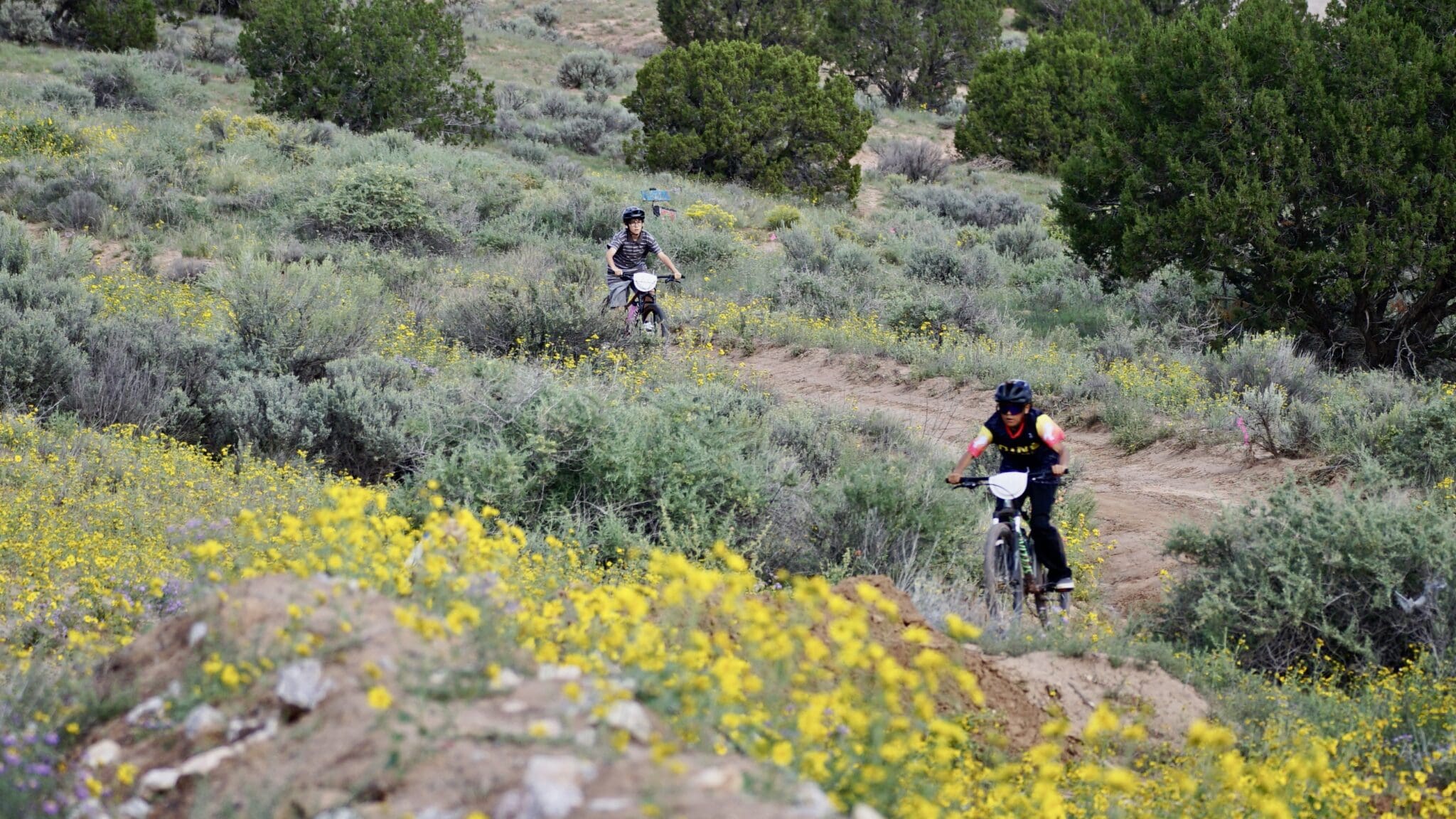
Youth competing in the Silver Stallion Junior Stampede / Photo by Adrian Herder, Tó Nizhóní Ání
Mountain Bikes, Trail Access, and the Navajo Economy
Adrian Herder, Makaius Marks, and Nicole Horseherder | October 16, 2026
Tó Nizhóní Ání (TNA) members recently participated in the second Annual Navajo Mountain Bike Festival in Window Rock, Arizona. This community-driven festival celebrates the growing mountain bike community on the reservation and advocates for trail access and infrastructure on the Navajo Nation.
The event would not be possible without event organizers and co-founders: MT Garcia and Terence Yazzie. Both grew up in the community of Leupp, Arizona, riding bikes to get around and pass the time. “It was a tool for commuting as a teenager into young adulthood. Of traversing our border town in Flagstaff,” said Garcia.
However, the rapid growth and interest in mountain biking on Navajo has hit a snag, Trail Access. While the Navajo Nation has an endless number of spectacular trails and trail potential, accessing them requires identification, mapping, and, most importantly, an invitation. Without access, these trails remain hidden gems.
“It was a tool for commuting as a teenager into young adulthood. Of traversing our border town in Flagstaff.”
Trail Building and Stewardship
Access to more trails was one of the discussions at the Navajo Mountain Bike Festival in Window Rock. Terence Yazzie and MT Garcia are not only the co-founders of the Navajo Mountain Bike Festival but also the co-founders of a professional trail-building company called Yazh Trailz. According to their website, Yazh Trailz is a Diné (Navajo)-led company that “develops exceptional trails that connect people to nature, promote environmental stewardship, and bring communities together through a shared love of the outdoors.”
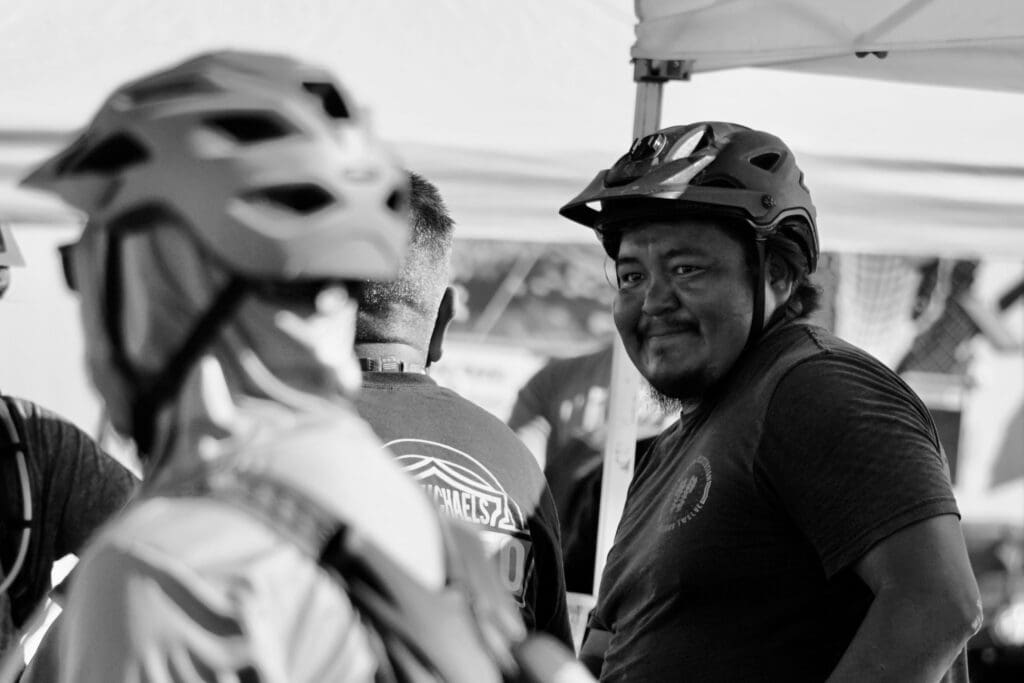
Terrance Yazh, Yazh Trailz co-owner / Photo by Adrian Herder, Tó Nizhóní Ání
“In our culture, Yáazh is a child of the family,” says Yazzie. “So I am a child of the [Navajo] Nation, and I like to build trails. And Yazh Trailz is where we ended up.” Both Terence and Mt. Have led efforts to build at least 20 miles of trails in the Leupp area and host bikers in their backyard on a regular basis.
Trail-Based Economy
In Arizona alone, outdoor recreation generates $15 billion for the state’s economy, according to the most recent data from the U.S. Bureau of Economic Analysis. With this in mind, Tó Nizhóní Ání looks to the Diné groups working to expand outdoor recreation opportunities on the Navajo Nation.
Rather than waiting for the Navajo Nation tribal government to consider this trail-based economy, grassroots Organizers like Garcia and Yazzie, along with others, are coming together to envision and celebrate its potential.
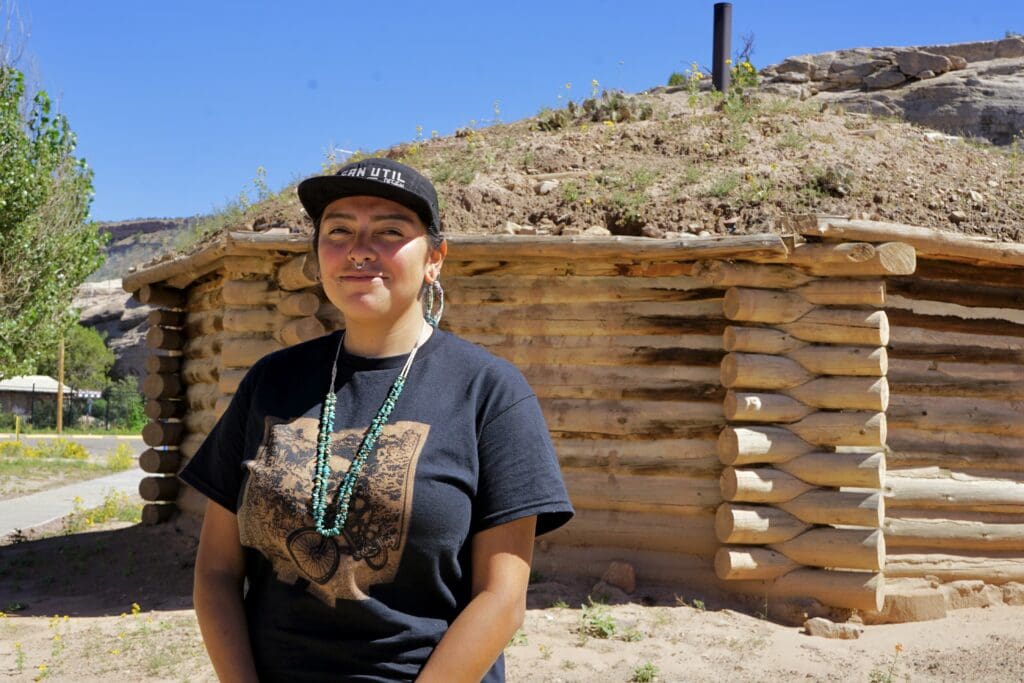
MT Garcia, Yazh Trailz co-owner / Photo by Adrian Herder, Tó Nizhóní Ání
“As Indigenous communities, we can grow our trails because we see a lot of the trail population. If you look on Strava or these different trail maps,” said Garcia, “there are tons of trails that are highlighted all around the reservation, but the reservation is this dark spot.”
Trail-based economies are nothing new; many rural communities across the United States have embraced trails as a means to reinvigorate their local economies. From northwest Arkansas to the Grand Mesa, Uncompahgre and Gunnison National Forests in Colorado, to Sedona, Arizona. These places are a few examples of towns, communities, and regions that have embraced trails.
Trail Access in the White Mountains
Sunrise Park Resort was another key sponsor of this year’s festival. Nestled in the White Mountains, it is an enterprise of the White Mountain Apache Tribe. According to their website, Sunrise is a year-round recreation destination, offering a wide range of activities including skiing, snowboarding, and ski biking in the winter, and zip-lining, mountain biking, and archery in the summer.
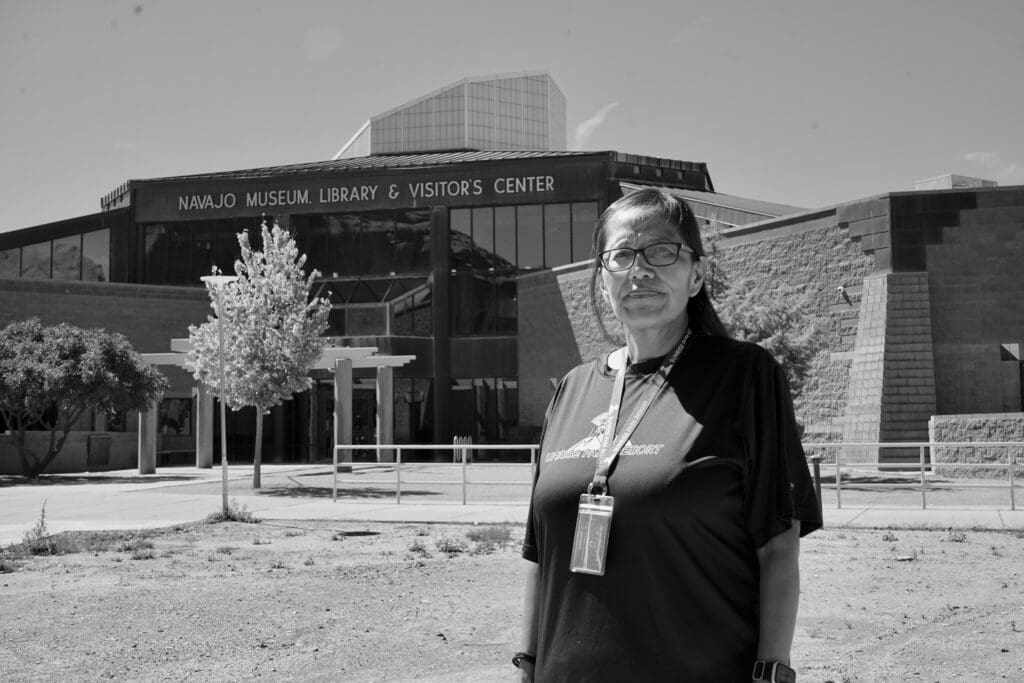
April Dickens standing before the Navajo Nation Museum / Photo by Adrian Herder, Tó Nizhóní Ání
“A lot of kids are not fortunate to be able to do that, to partake in these activities,” said April Dickens, Tribal Relations with the Sunrise Park Resort. “Coming back now and seeing the potential it has, I really appreciate what can be done.”
“Coming back now and seeing the potential it has, I really appreciate what can be done.”
Dickens is a White Mountain Apache tribal member who recently returned to work for Sunrise. Over the years, she has seen how outdoor recreation has benefited the tribe, not only through revenue but also by bringing people from across the state to the White Mountains.
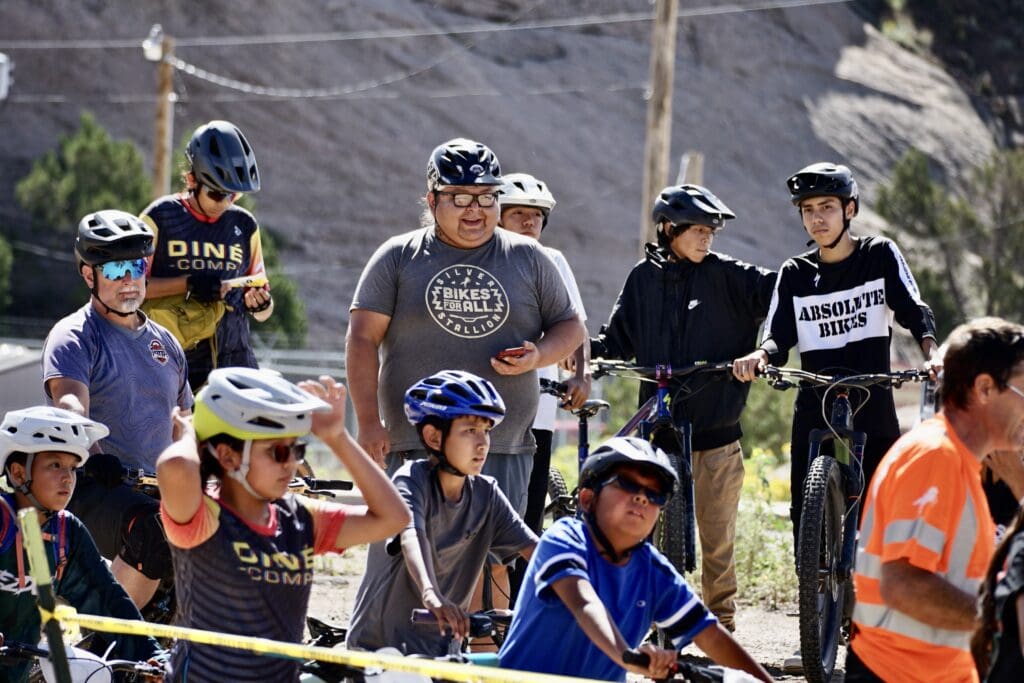
Diné youth lining up for the Silver Stallion youth race / Photo by Adrian Herder, Tó Nizhóní Ání
During the festival, Dickens noticed many Diné tribal members who had taken up mountain biking. Seeing this brought back memories of when her tribe would take youth on exploration days, introducing them to various outdoor activities in the community.
One of Sunrise’s goals is to get more tribal members on the mountain to experience its outdoor recreation opportunities. Unlike the White Mountain Apache Tribe, the Navajo Nation offers fewer mountain biking opportunities and less trail access.
Legacy of Extraction
Throughout the festival weekend, TNA shared information about the organization’s current initiatives and demonstrated how to make seed pellets and wool logs for festival-goers. Both methods are easily accessible to most people at a low cost, utilize locally sourced materials, and are used in TNA’s watershed projects.
“When thinking about sustainable trail building, we must also think about the impact of water and its erosive effects on the structures that are built, like jumps, rock rolls, berms, or switchbacks.”
In a sense, trail building and watershed restoration are similar in that it requires looking at the land, its contours, the availability of material and placement of material in a way that complements the land. “When thinking about sustainable trail building, we must also think about the impact of water and its erosive effects on the structures that are built, like jumps, rock rolls, berms, or switchbacks,” says Andrew Atencia, TNA restoration program manager and an avid mountain biker.
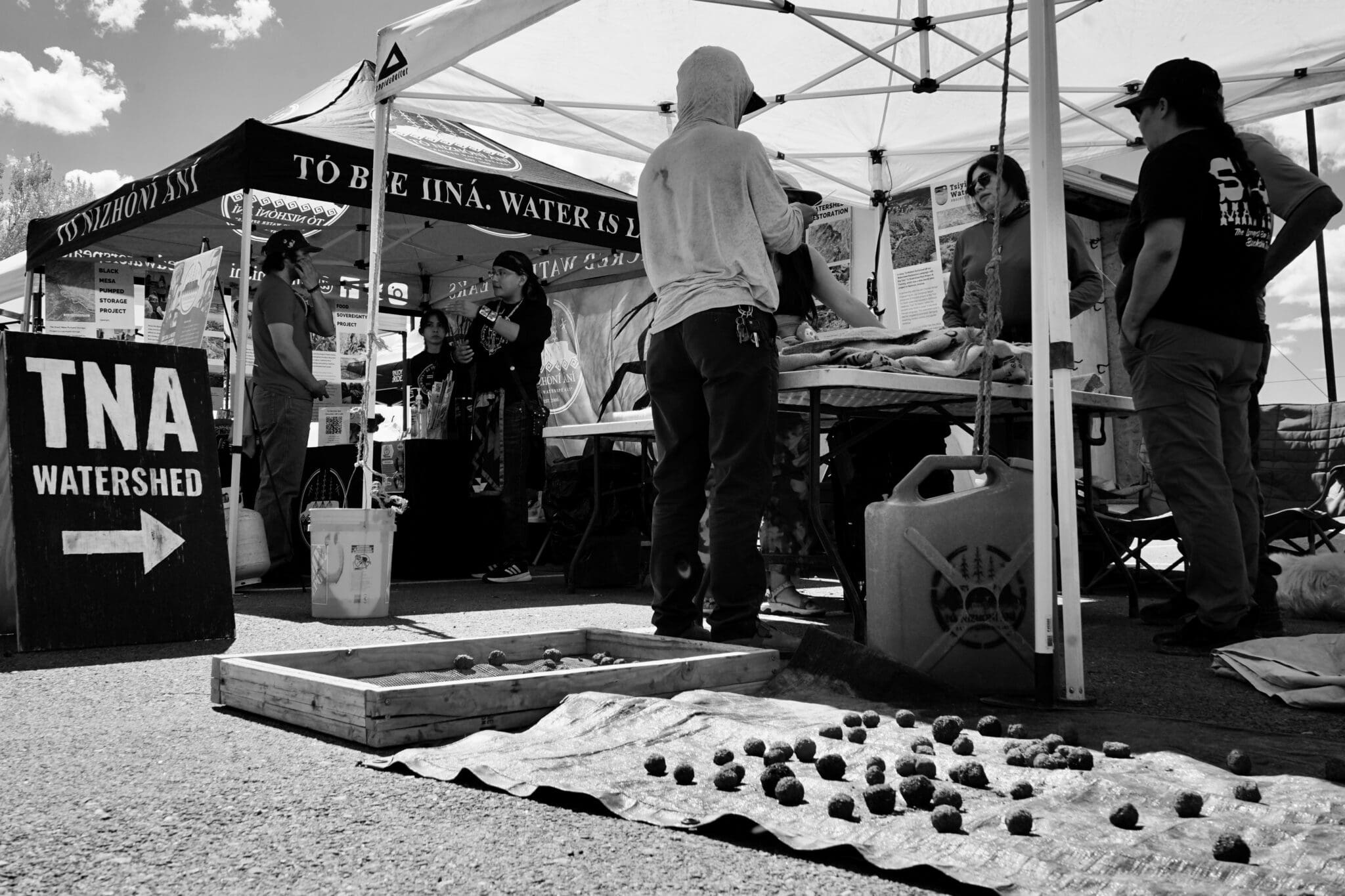
Tó Nizhóní Ání team members tabling at the festival / Photo by Adrian Herder, Tó Nizhóní Ání
While mountain bikers are busy building or restoring trails for biking, TNA members are busy restoring lands impacted by coal mining. For almost half a century, the Navajo Nation benefited from resource extraction, such as coal mining. While the benefits came in the form of jobs and revenue, the impacts on the land and water left the region scarred. When industry withdrew, it left the Navajo Nation scrambling to find another revenue source and the community grappling with the environmental damages of mining.
Germaine Simonson, a 25th Navajo Nation Council Delegate and festival attendee, understands coal’s impacts because she represents the Black Mesa region (Dził Yíjiin), home to Arizona’s only coal mines.
“While that revenue from coal was coming in, there should have been a transition plan for the day the coal stopped.”

J19, Kayenta Mine, 2021 / Photo by Eco Flight
“While that revenue from coal was coming in, there should have been a transition plan for the day the coal stopped” says Simonson. “And that was the time to build other things with money while it was coming in or enter into other economic activities.”
Black Mesa’s history is common on the Navajo Nation. Many communities throughout the reservation have a legacy of extraction and contamination. The Navajo Nation is at a pivotal moment: continue the legacy of extraction or find new ways to bring revenue to the Nation. Revenue that doesn’t scar the land or damage water resources.
Hopes for the Future
Given our nation’s extractive history, events like the Navajo Mountain Bike Festival offer a glimpse of hope for the reservation’s outdoor recreation potential. It signals the need to end more extraction, which will degrade the land and water further.
Simonson can see a cycling opportunity on Black Mesa, where the coal was once mined. Using the haul roads as a cross-country cycling route. “This place would be amazing; because it’s a lot of rolling hills,” said Simonson, “being in the bike industry, we’ve learned that road cycling or even just cross-country riding there are teams across the country that are looking for just endless roads to practice on.
Simonson is no stranger to the mountain bike movement; she helped initiate Rezduro, the first mountain bike enduro race on the Navajo Nation. This race brought Diné mountain bikers from across the Navajo Nation together in the heart of the Black Mesa region to ride trails in the remote community of Hardrock, Arizona.
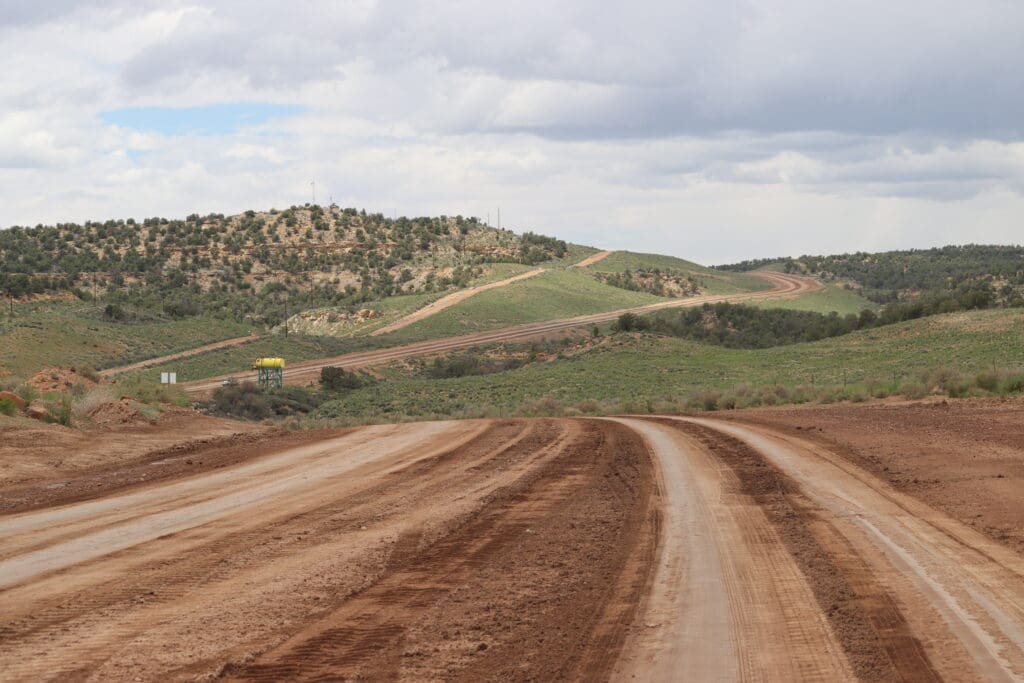
Kayenta Mine Haul Route / Photo by Adrian Herder, Tó Nizhóní Ání
These are just one of many ideas out there, but it ultimately falls back on the community and what they want. The mountain bike festival is similar to the Rezduro experience; it brought Diné people together to celebrate trails and the Navajo Nation’s beautiful landscapes.
Now in its second year, the festival highlights the potential to bring jobs and revenue to the nation.
“I believe we can develop not only trail systems for economic purposes and not just for outdoor recreation purposes, but hopefully for our careers and something that the rest of us can fall in love with.”
“I believe we can develop not only trail systems for economic purposes and not just for outdoor recreation purposes, but hopefully for our careers and something that the rest of us can fall in love with,” says Yazzie.
Holding this festival at the doorstep of the Navajo Nation’s capital is critical to showing that Window Rock, Arizona, has the elements needed for a successful trail economy: paved roads, parking lots, restaurants, and hotels.
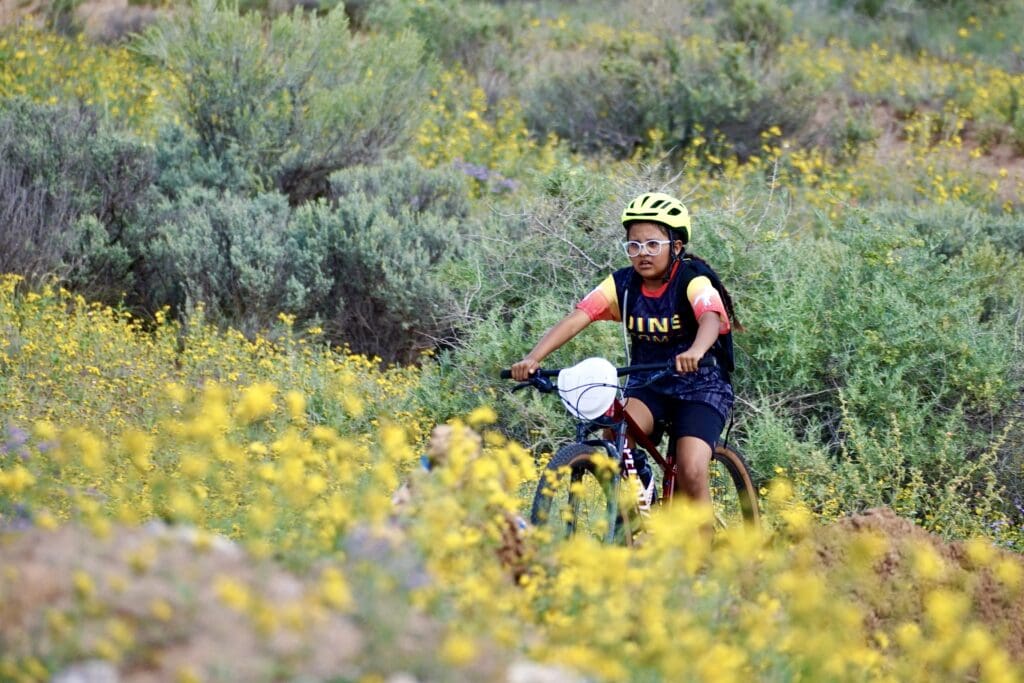
Diné Youth at the Navajo Mountain Bike Festival / Photo by Adrian Herder, Tó Nizhóní Ání
“We want to share that with our decision makers; there is an opportunity there.”
“We want to share that with our decision makers; there is an opportunity there,” says Garcia. “Instead of resorting to something that is disruptive and destroys the land, we can take care of and steward the land.”
Both MT and Terence are among the many Diné mountain bike enthusiasts who see mountain biking as having the potential to build healthy communities and healthy people. With the support it needs, this movement could bring the outdoor recreation economy to the Navajo Nation.
Short Films
THE TRAILS BEFORE US follows 17-year-old Nigel James, a Diné mountain biker, as he hosts the first Enduro race in the Navajo Nation. Through revitalizing old sheep and livestock trails on his grandparents’ land, Nigel and a new generation of riders honor the connection to their land, community, and culture.
“IN THE DIRT” is a documentary film about a group of passionate Native American cyclists who attempt to bring the sport of mountain biking to the Navajo Nation, where no bike shops exist.
The Tour De SiiHasin brings the community together as an act of cultural connection and healing. The program was started by only a handful of riders to address suicide prevention on the reservation and has evolved into a community-led act of strength, wellness and togetherness.
Groups/Movements to Follow:
For more information about this story, email Adrian Herder, TNA Media Manager, at Adrian@tonizhoniani.org.
