Navajo BIA officials invited to see watershed efforts in Hardrock
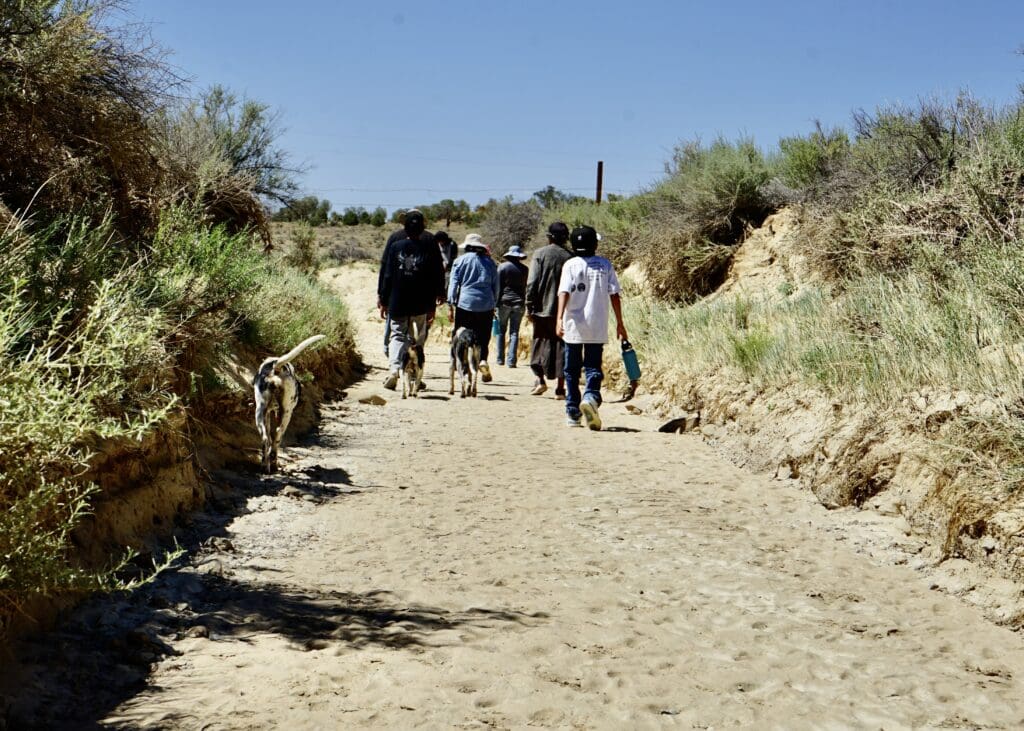
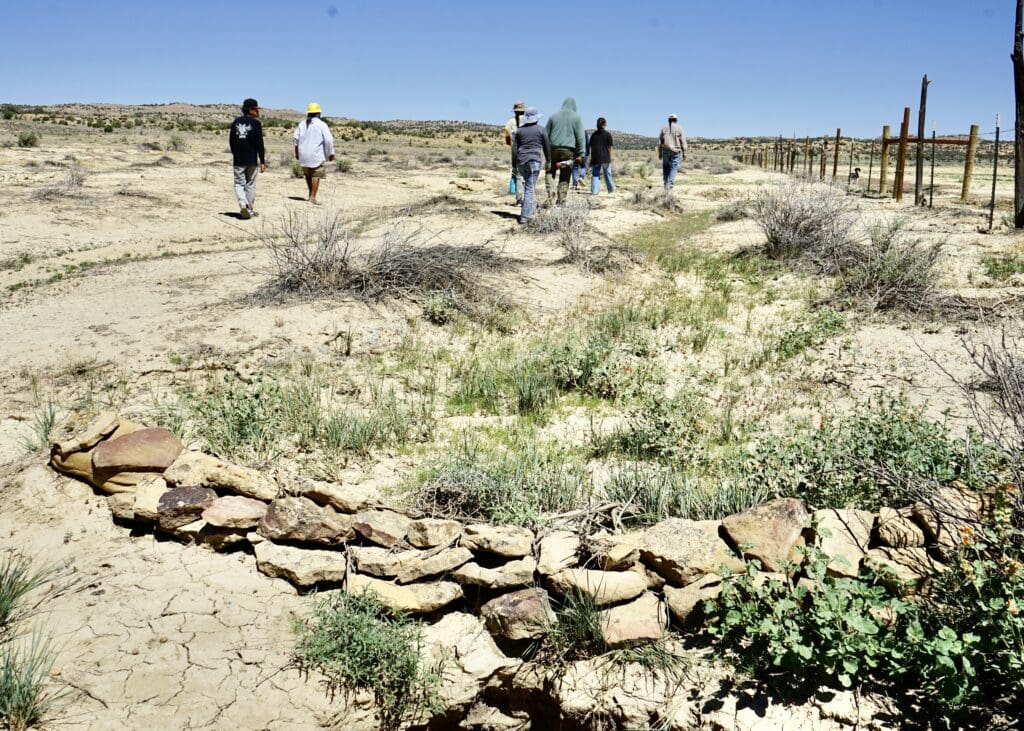
HARDROCK, Ariz. – On Tuesday, August 4, 2026, the Tó Nizhóní Ání (TNA) watershed restoration and food sovereignty crew members invited representatives from the Navajo BIA office to walk the watershed to learn about the organization’s restorative economy efforts on Black Mesa. This tour provided the opportunity for TNA team members, guests, and the local family to visit old and recent erosion control structures and inspect the recent wool-in-watershed restoration method.
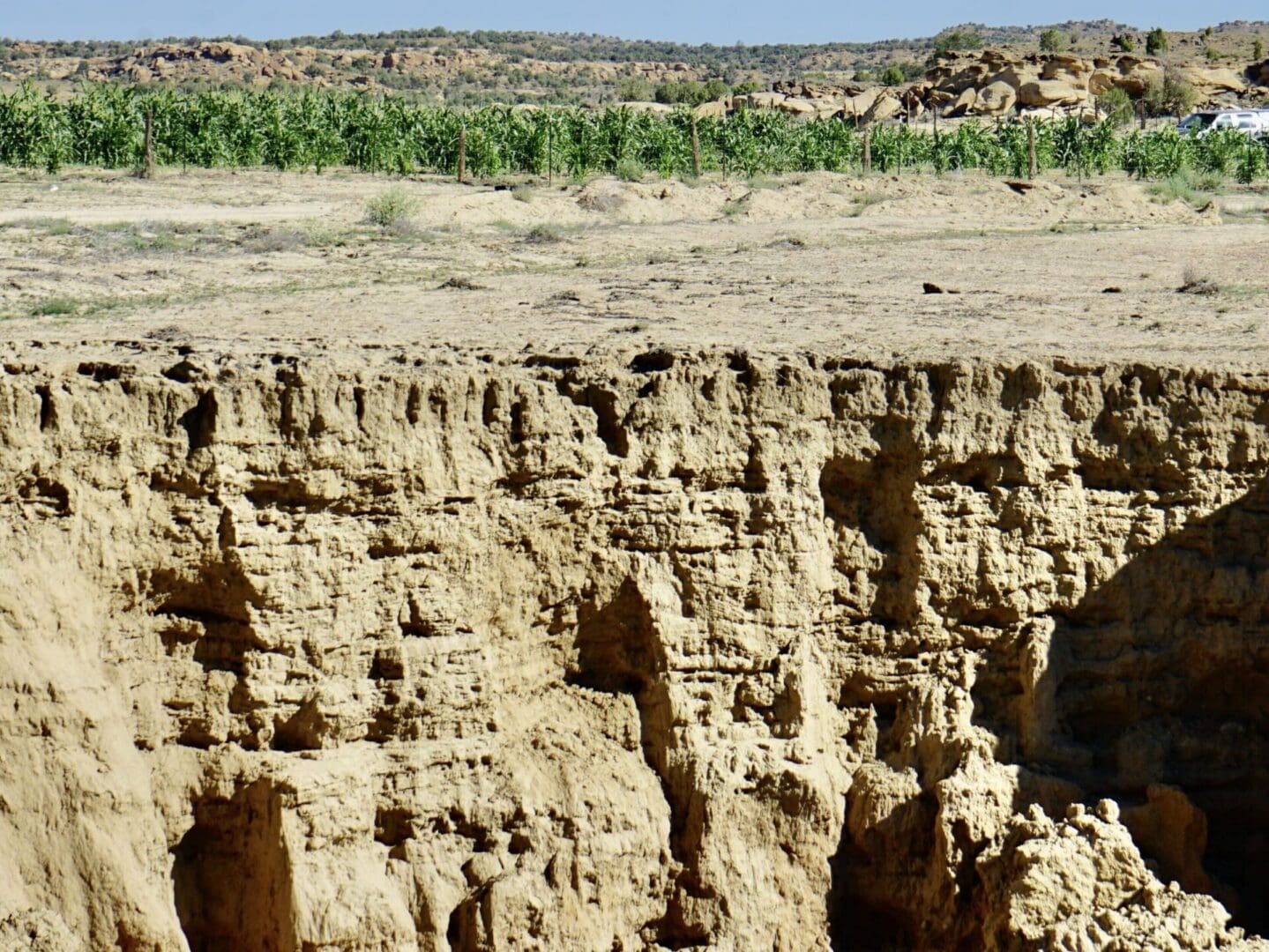
Renee Benally, a BIA Natural Resource Specialist from Tuba City, AZ, made the trek out to Black Mesa and met the TNA teams at the Cottonwood Farm plot in northeast Hardrock. Cottonwood Farm is where the heart of the TNA watershed restoration efforts began. Tó Nizhóní Ání food sovereignty coordinator Audrey Naraindrankura has seen over the years how an encroaching wash could potentially impact a historic farm plot, threatening a vital Diné (Navajo) food system.
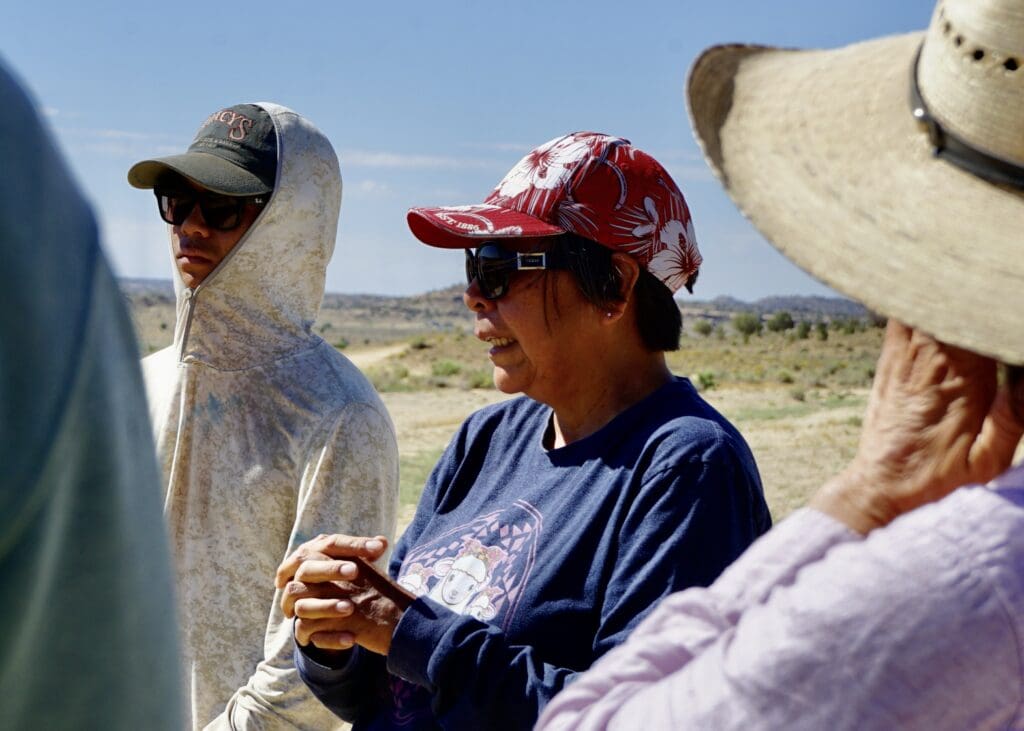
“If we allow erosion to take this cornfield from us, what does that say about us as Diné people,” said Audrey Naraindrakura. “We will lose the ability to feed ourselves, which worries me.”
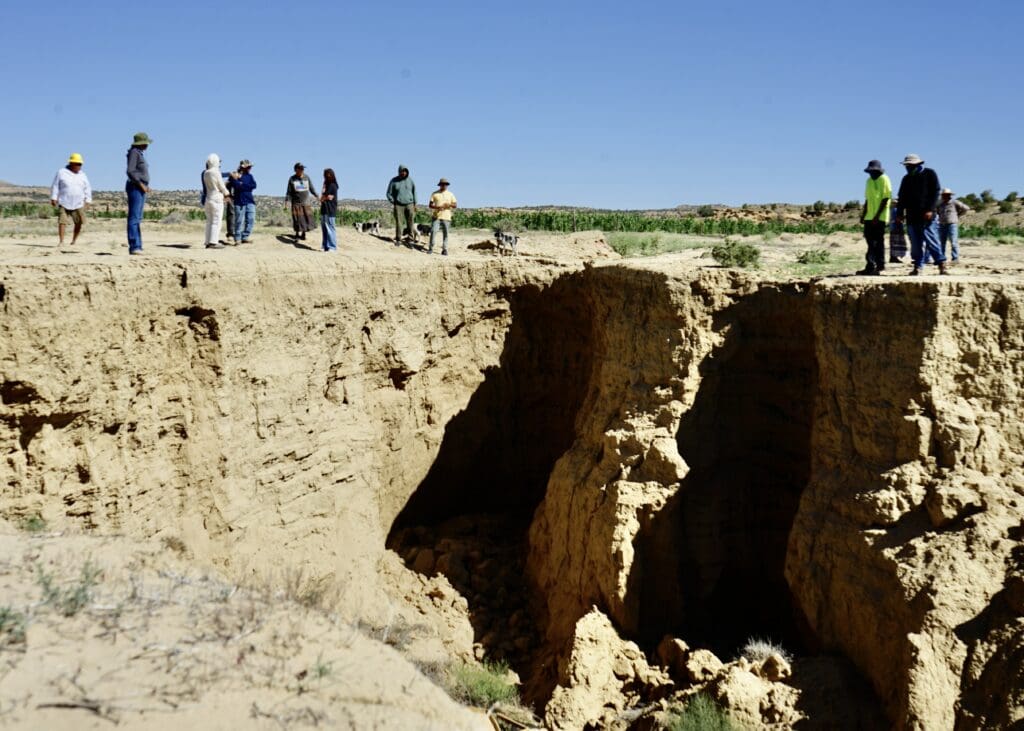
TNA community organizer/watershed restoration lead Andrew Atencia began the tour at the encroaching wash south of Cottonwood Farms. The wash is part of the Tsiyi’ Tó (Wood Springs) watershed that discharges into the Oraibi Wash. Andrew and Renee discussed the soil types, erosion rates, and who could potentially be a part of this fight to prevent further erosion.
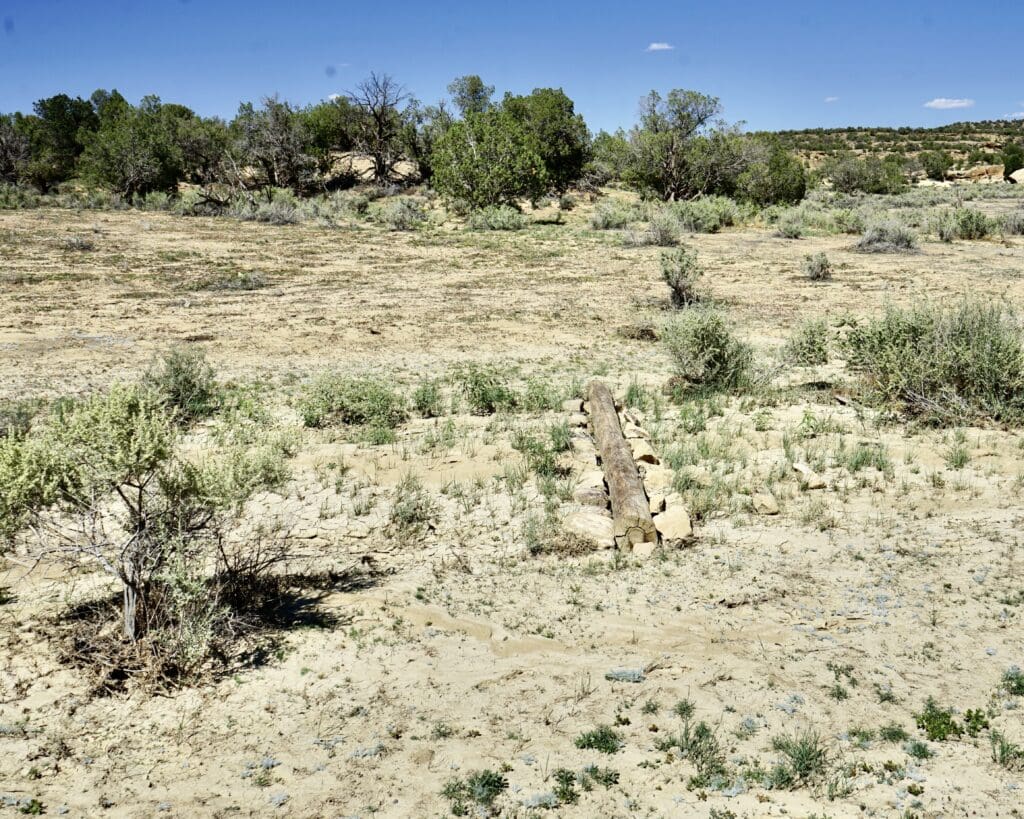
The tour continued from Cottonwood Farms toward the headwaters of the Tsiyi’ Tó (Wood Springs) wash, where the bulk of the watershed work lay. In June 2024, TNA initiated its first watershed efforts with the Tsiyi’ Tó Watershed Pilot Project and Training. The first watershed structure visited was one of the largest structures that also sustained the heaviest impact in the recent rainstorm in late July. Andrew showed Renee photos of the road-crossing structure that was created and added to over the year before it was swept away by over 4 feet of water.
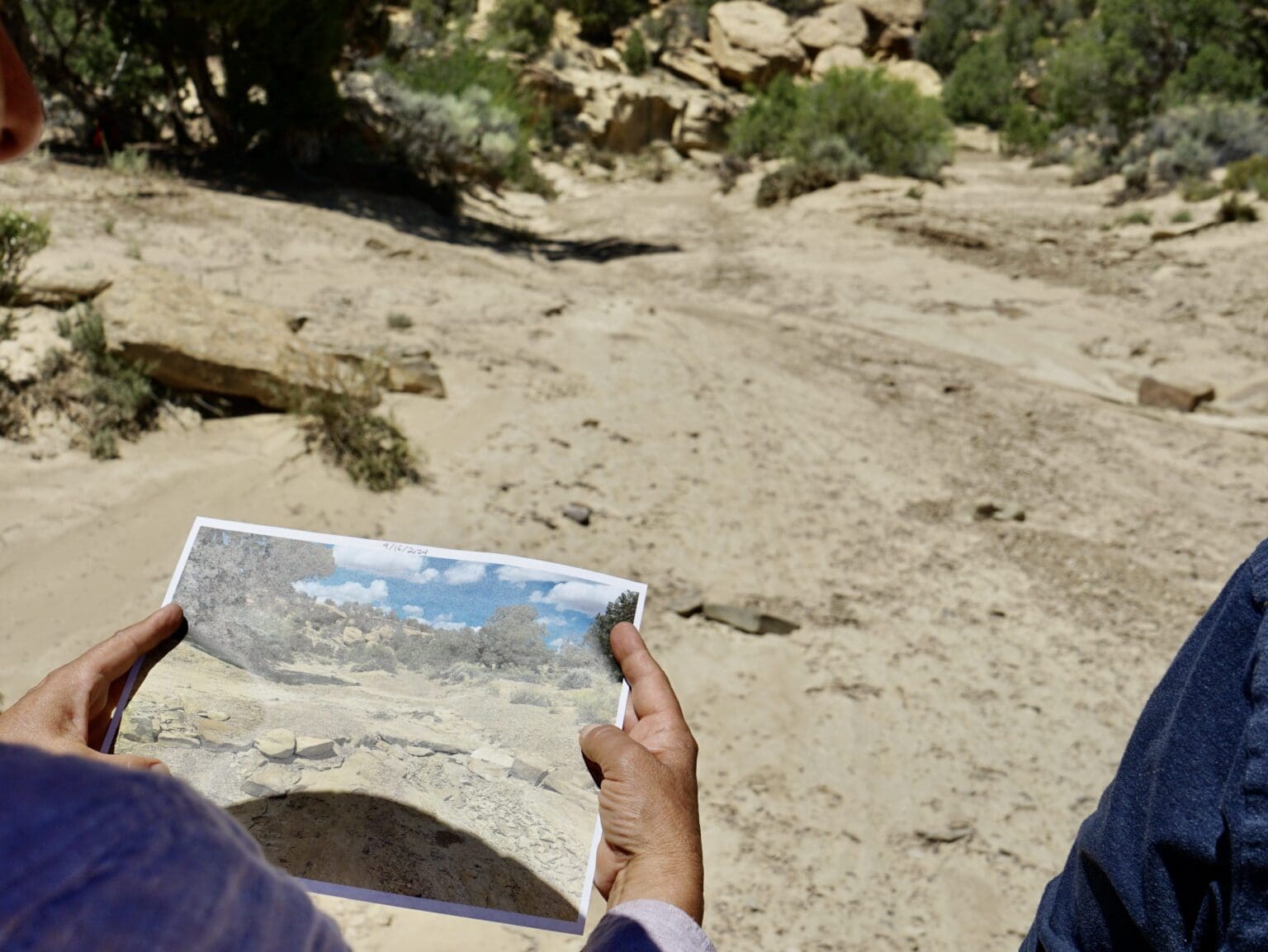
“After three years post-construction of the largest structures, we now have an opportunity to review our work and showcase our findings to the land stewards and Natural Resource experts in our field,” said Andrew Atencia. “What I’ve learned today is how strong and widespread water can be, even in small watersheds.”
Throughout the tour, Renee provided great feedback to the TNA team on ways to tackle future watershed structures while also reminding us about incorporating key stakeholders and potential partners in resolution efforts. Before the day concluded, crew members from the Warpath Valley Watershed helped patch up, plug-and-spread structures that were disturbed by the recent runoff from significant rainfall. This tour allowed TNA crew members to inspect and analyze the erosion control structures in the Tsiyi’ Tó Watershed, one of them being the wool logs, which proved to hold up with the recent rainfall.
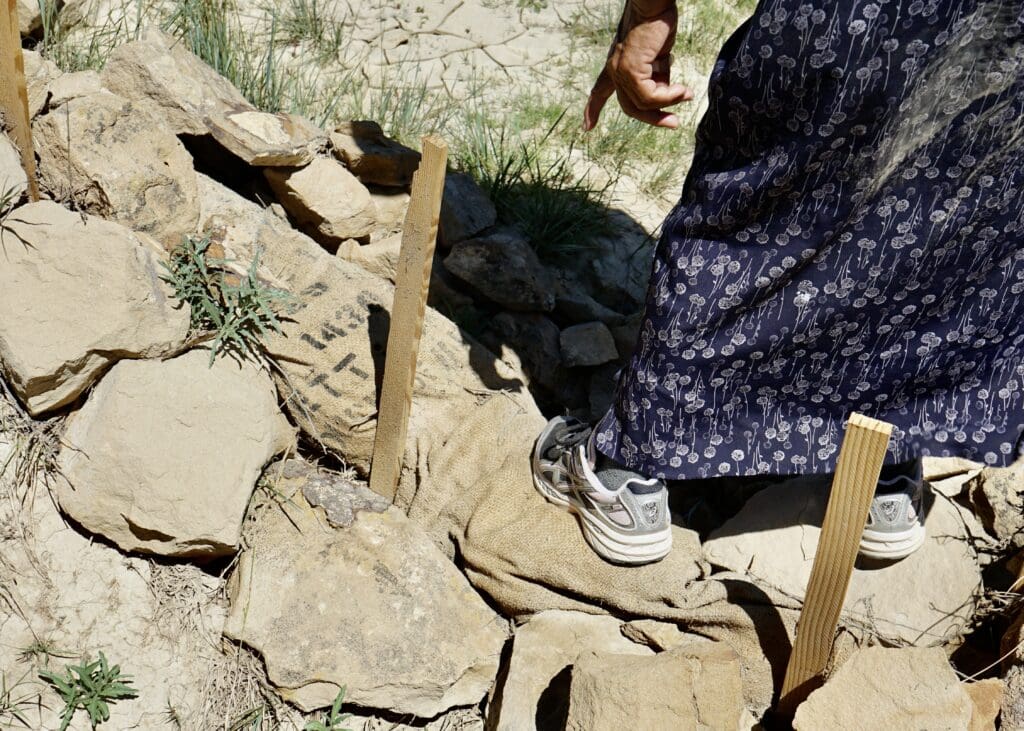
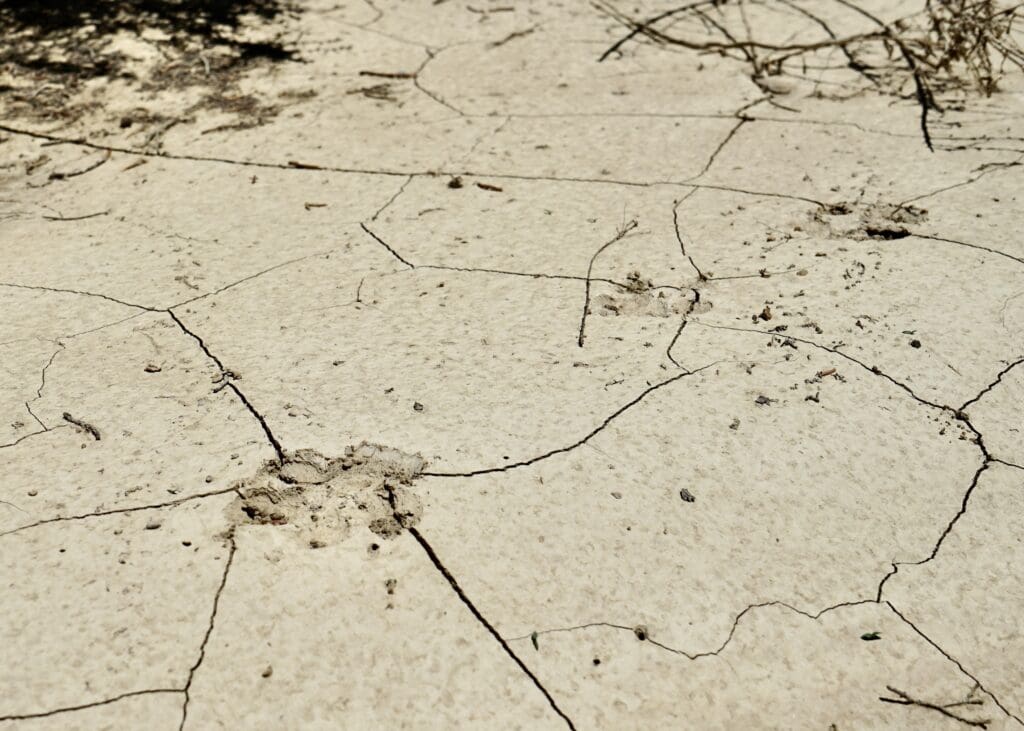
The surplus wool stuffed into sewn jute bags, wool logs, have shown to be an effective erosion control technique. If clay is caught within the wool logs and is left to harden after a rainstorm, the structure becomes as dense as rocks, creating strength and resiliency in widening/incising drainages.
Tó Nizhóní Ání appreciates Renne Benally for making the trip out to Black Mesa to see the watershed work in action. For more information or to learn more about Tó Nizhóní Ání’s watershed restoration efforts, contact Andrew@tonizhoniani.org.