
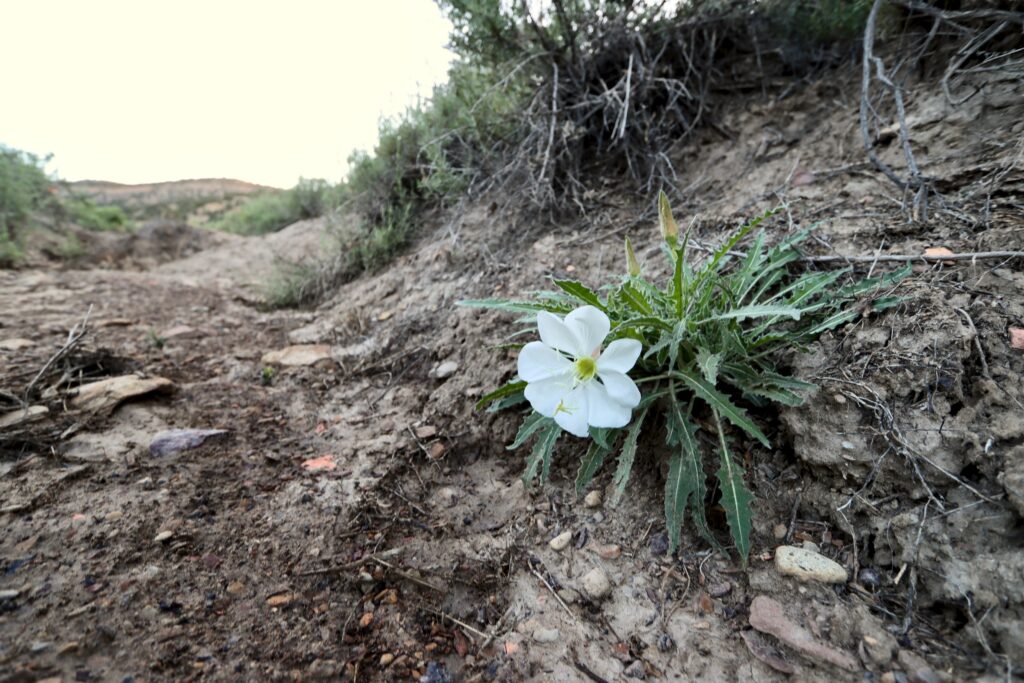
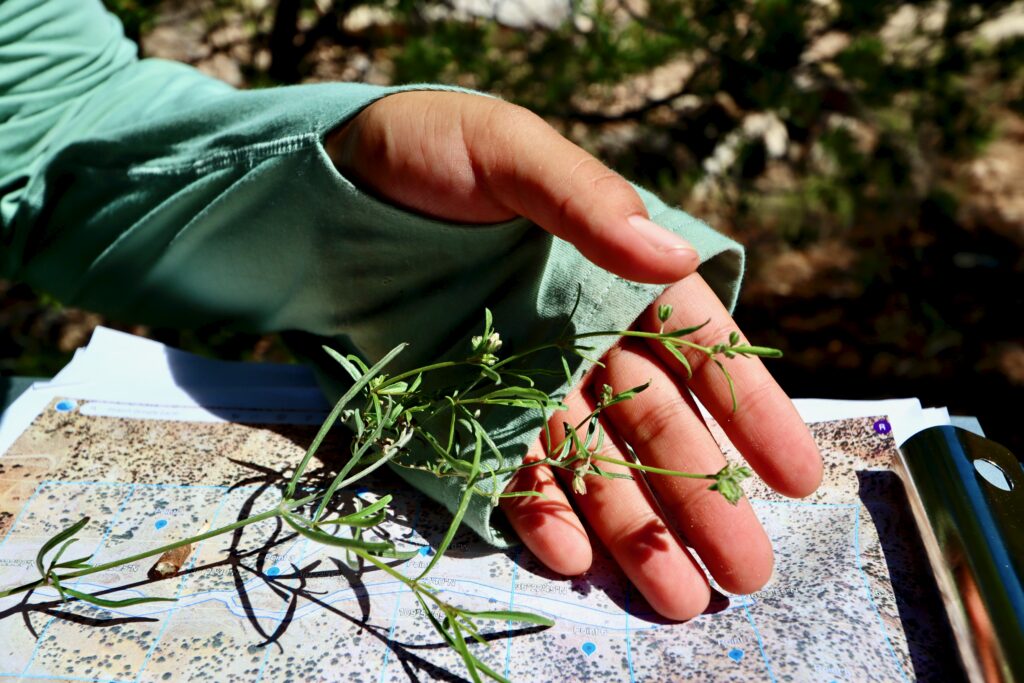
BLACK MESA, Ariz. — On July 30, 2026, Tó Nizhóní Ání’s Black Mesa Plant Project interns walked 10 sample sites in the Háájíbáhá (Warpath Valley) watershed to record the plants of the watershed where Watershed Restoration crews were working. Interns recognized many of the plants from their summer research and collected whole-plant samples to identify for the Watershed Project.
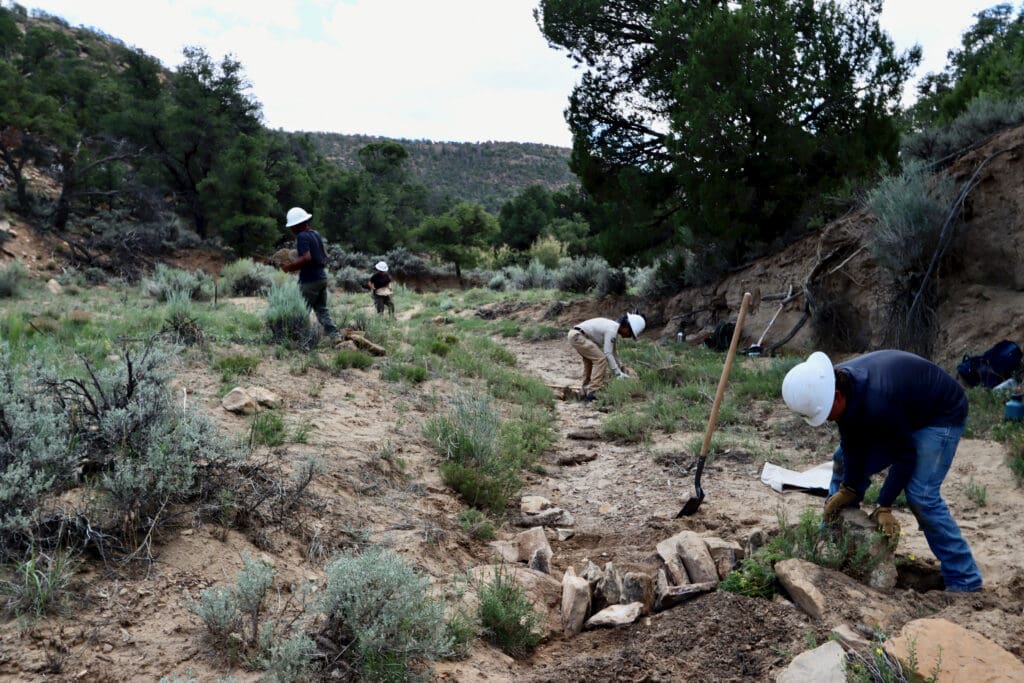
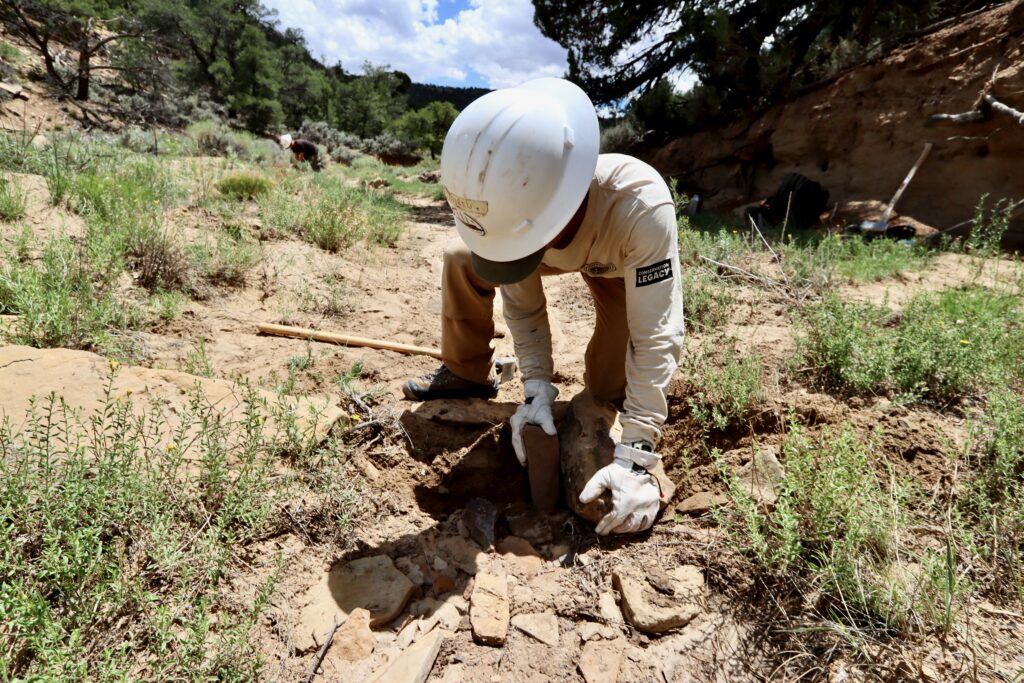
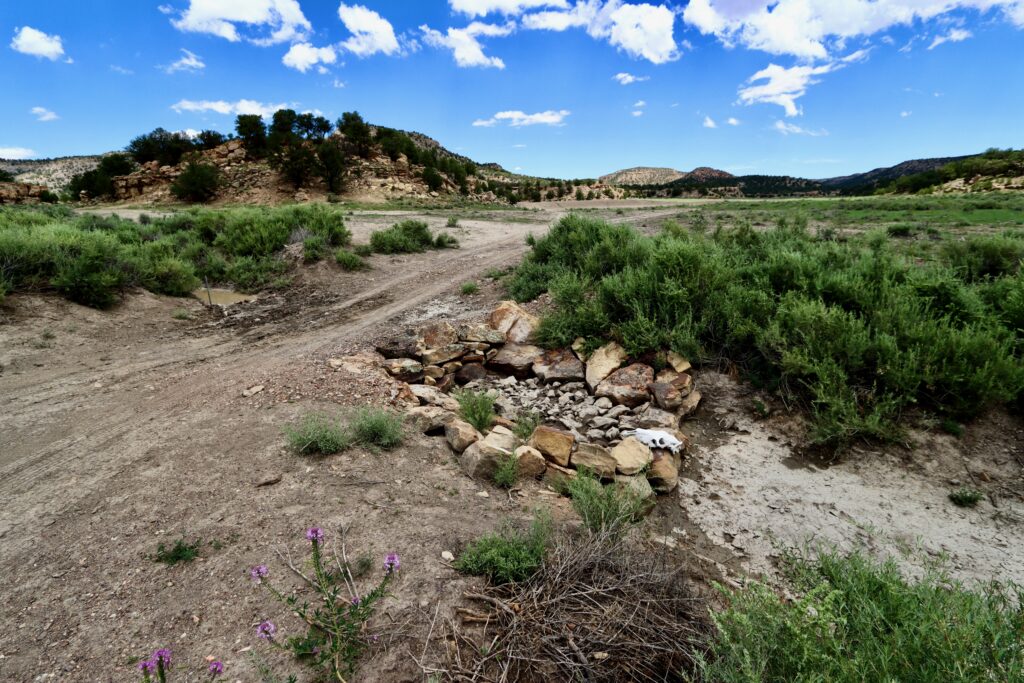
That same week, Tó Nizhóní Ání (TNA) Watershed Restoration crew built 27 erosion structures, including 15 one-rock dams, during July 27-31 build session. This build session spanned the Háájíbáhá, Twin Valley and Homestead watersheds, all tributaries to the Oraibi Wash.
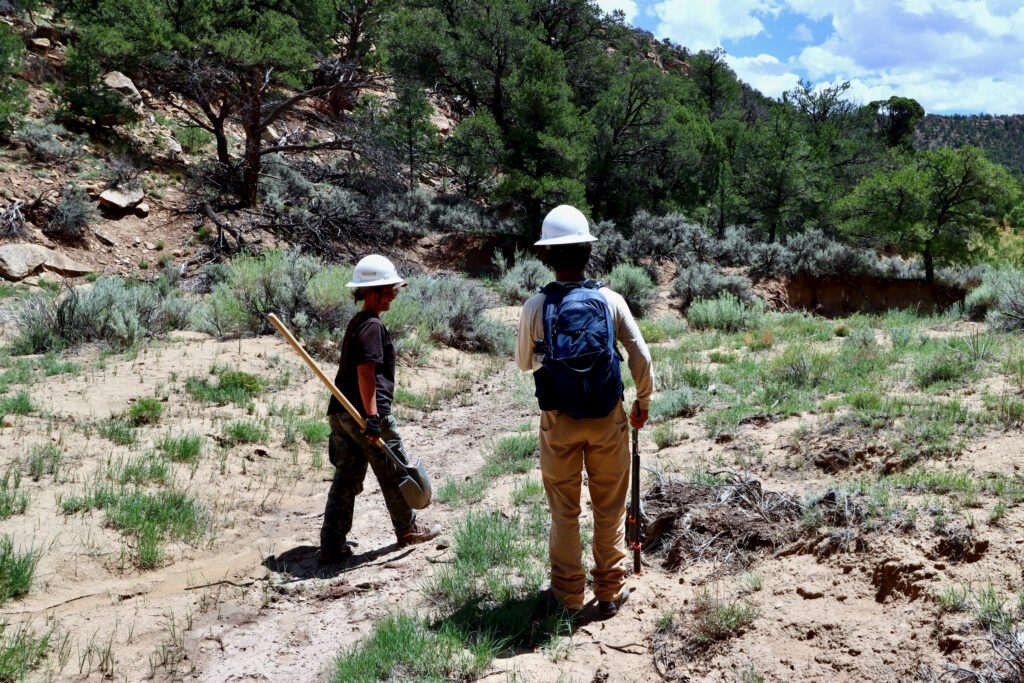
Watershed Project Lead Andrew Atencia brought the Plant Project interns from Flagstaff for the survey. The crew traversed the highlands and washes of the watershed. At each of the 10 randomly selected sites, the survey logged elevation, coordinates, plant community, and locality.
The older structures on the site had already changed what grows there. “The land surrounding the older watershed structures was well supported. Grasses grew taller and moisture stuck to the surface for longer,” Atencia said.
“It was especially grounding to be away from the city and surrounded by land,” said Kaya Dickson, a DYN summer intern. “From being in the field, we learned to identify the flora from previous work with the DYN project and connect with them, deepening our understanding of how it relates to watershed work.”
“Thanks to the Watershed crew, we got to interact with the plants outside of our qualitative research, and we ended our internship camping, hiking, and exploring a section of Warpath Valley, one of the farther-reaching areas of the Black Mesa Plateau,” said intern Raeanna Johnson.
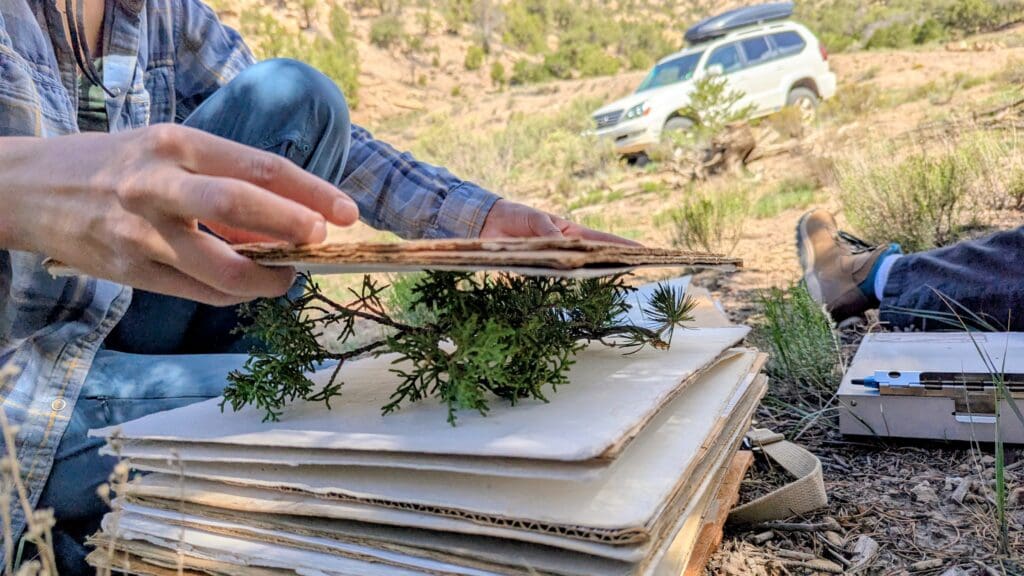
The goal is to document the vegetation and plants of Háájíbáhá, so the Watershed crew has a clearer picture of the native plant habitats they are working to protect and restore. Every plant documented adds to the record of Black Mesa’s native plant community, and the habitat that’s being sustained by watershed restoration.
On Aug. 12, the DYN summer interns presented their findings from a summer of research on the Plants of Hard Rock Chapter. Both campaigns build toward a sustainable and restored Black Mesa in this lifetime.
Join our email list to keep up with TNA’s efforts. For more information, or to bring Watershed Restoration lessons to your classroom, contact Watershed Project Lead Andrew Atencia at Andrew@tonizhoniani.org.
Correction, Sept. 30, 2026: An earlier version of this post described parts of the Native Plant Project crew’s July 30 work inaccurately, and some photos gave the wrong picture of it. We’ve corrected the text and photos.
