
Celebrating Black Mesa’s Potato
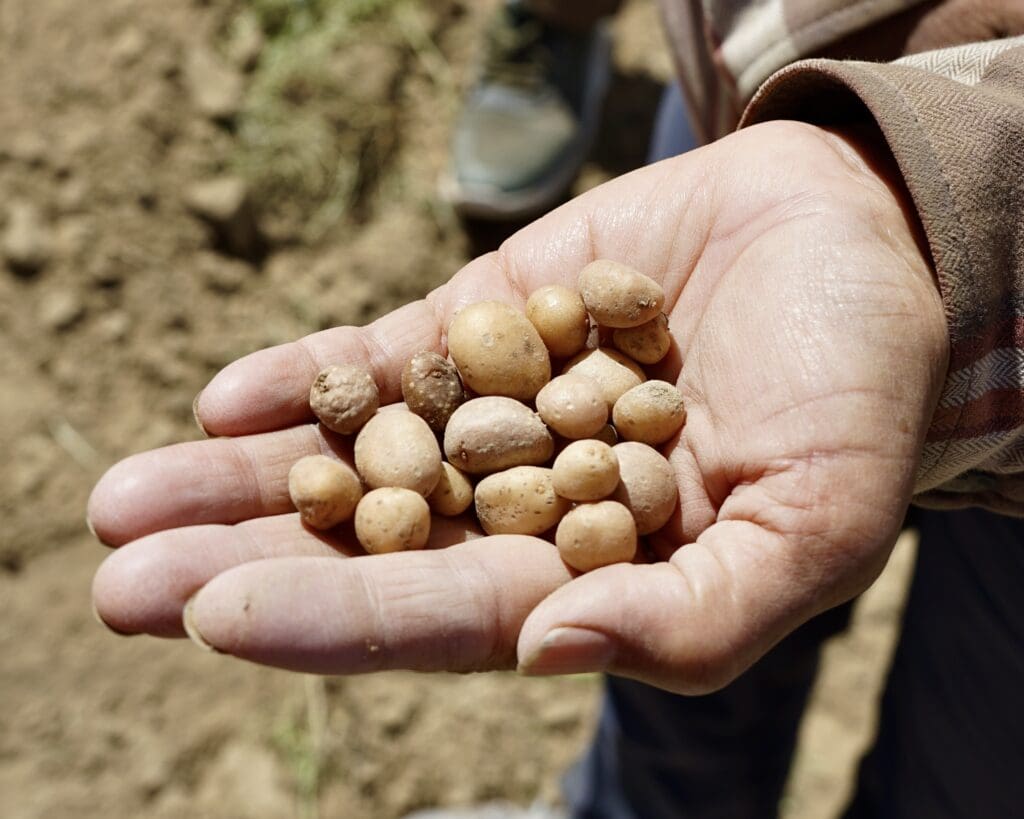
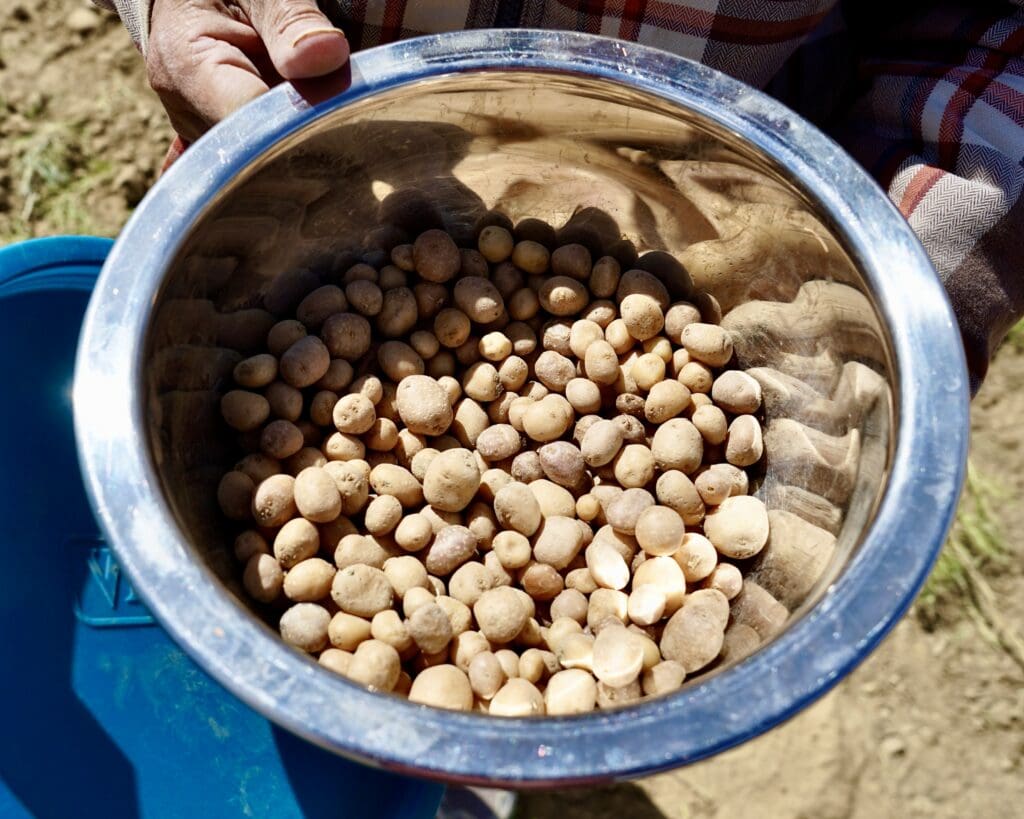
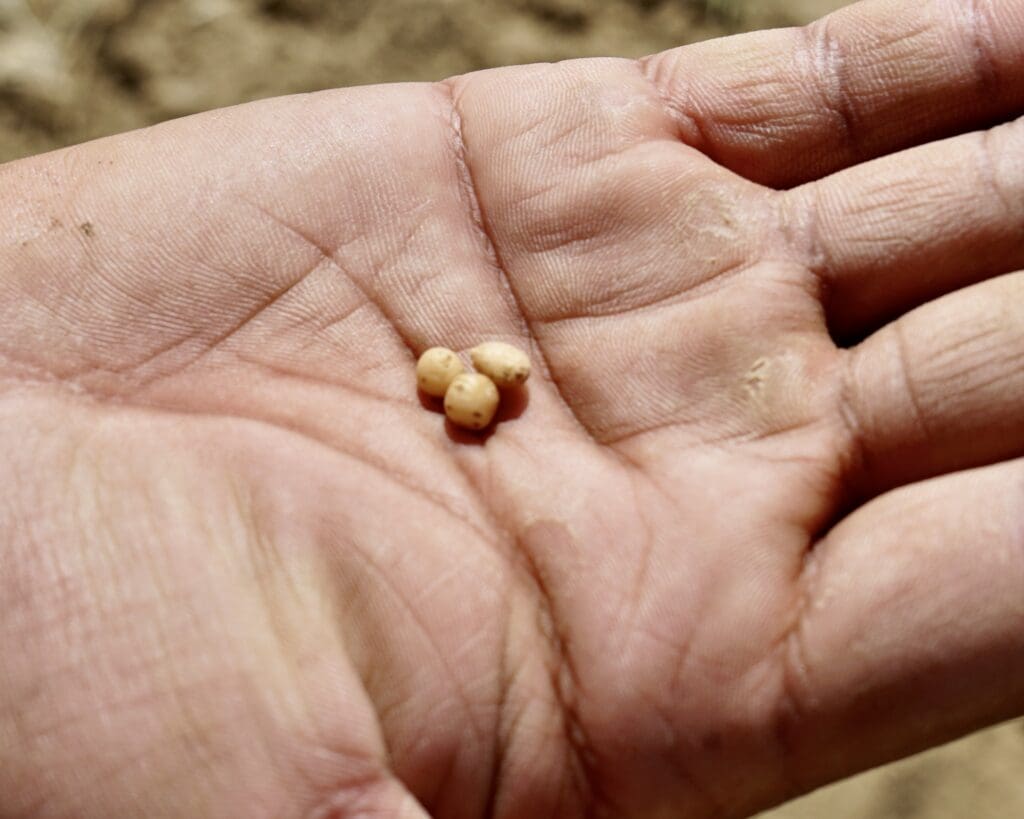
Today is National Potato Day. Across the country, that means only a few potatoes, but across the Americas, it means over 4,000 varieties. Within the Dził Yíjiin (Black Mesa) region, there is a specific potato that grows wild. It is known as Nímasii yázhí or small potato in the Diné (Navajo) language because it is so small they fit in the palm of your hand, like marbles. Nímasii yázhí is also commonly known as the Four Corners Potato (Solanum jamesii).
Growing up with the potatoes
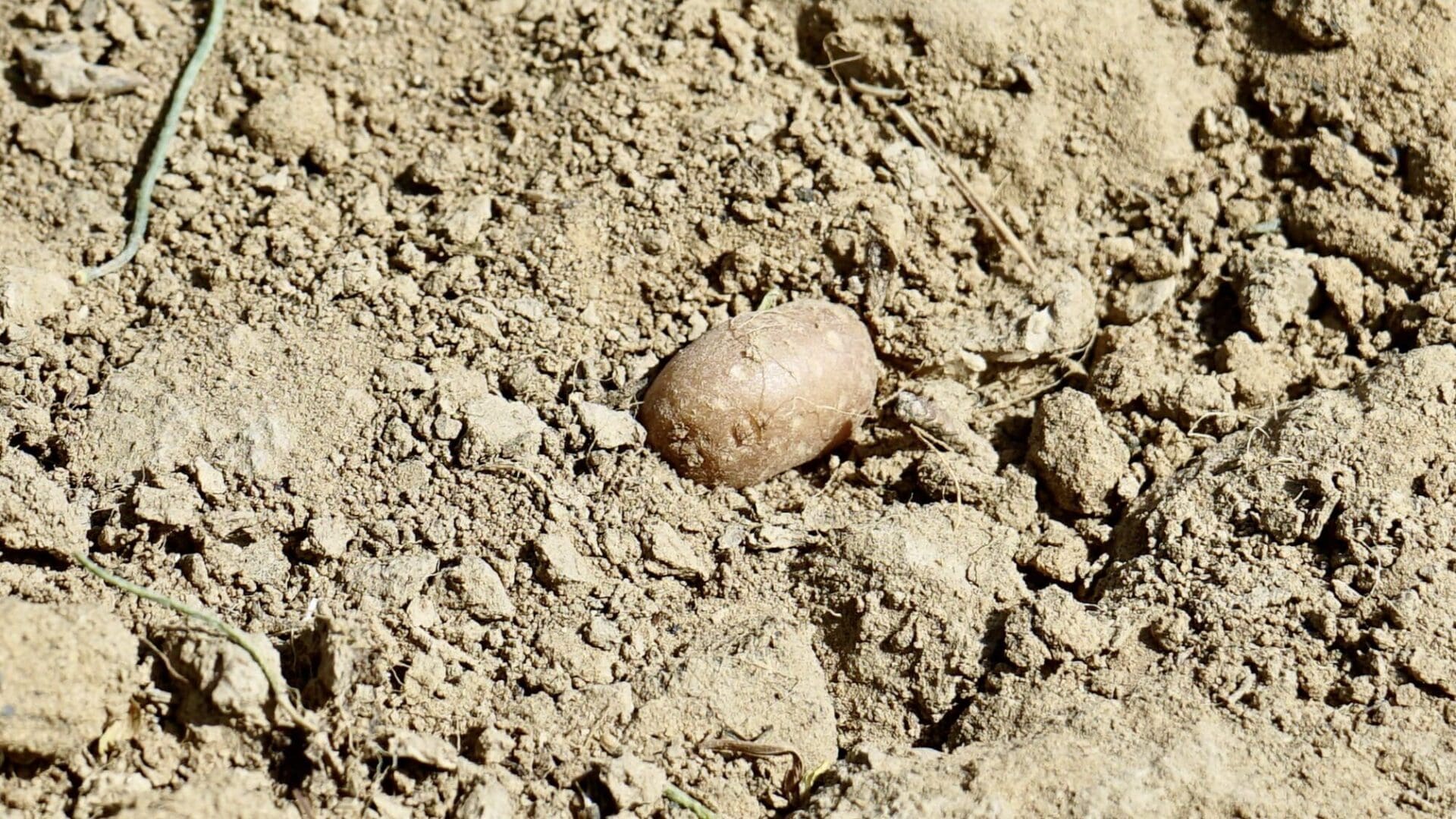
Tó Nizhóní Ání Food Sovereignty Coordinator Audrey Narindrankura shares memories of growing up with these little potatoes. For this story, Audrey refers to these potatoes as Nímasii. Audrey would find these little potatoes in her grandparents’ 52-acre cornfield. “We would just randomly find them in the cornfield … as a little kid, you know it was fun,” says Audrey. “It was like looking for treasure.”
Unlike domesticated potatoes, Nímasii yázhí are not eaten straight from the ground. They are prepared with a specific clay that neutralizes the toxins in them. Audrey remembers her grandmother preparing and eating them when she was a kid. She did not learn it then. She learned later, from ceremony and from other plant experts. Knowledge that almost skipped a generation.
Nímasii yázhí are an ancestral food that has always been part of Diné (Navajo) culture. They are used in certain ceremonies. When Audrey forages these small potatoes, a portion of every harvest goes to the person who prepares them for ceremony. “By giving them to a medicine person for preparation, we’re keeping the culture alive,” says Audrey. “We’re showing the Holy People that we’re continuing to use what they’ve blessed this land with.”
Listen: Audrey Narindrankura tells the story of Nímasii yázhí (2:06).
In a study published in January in PLOS ONE, researchers traced the movement of Nímasii yázhí, calling them the Four Corners Potato. This common name marks the potato by state lines; Indigenous folks who have always gathered them never needed a map. Nímasii yázhí grow wherever people have been.
Starch traces on grinding stones show it being processed as far back as about 11,000 years ago. At North Creek Shelter in southern Utah, the potatoes growing there today descend from tubers carried some 250 miles north from the Mogollon region. Across the Four Corners, the researchers argue, most of these populations are here because people brought them here.
The researchers also sat down with 15 Diné elders. Thirteen of them knew the potato. The women especially carried the knowledge in the present tense — how it is prepared, where it grows: Bears Ears, Black Mesa, Dennehotso. Two of them called it the “anywhere potato.” It grows in very specific places. And they spoke of the plant as a relative, by the name it has always had: Nímasii yázhí.
Which is where Audrey started. In a May interview with Tó Nizhóní Ání, she called them “the natural cultivar of this region.” “And they are very resilient, drought tolerant, disease resistant, and very delicious when prepared,” she says.
Asked whether she’d ever cultivate them herself: “It does fine, without my help.” She adds, “I don’t want to intervene with where it wants to grow.”
Asked what she wants people to know: “They’re really cute. Delicious. And I’m sure they are loaded with nutrients and everything that’s good for us.” The study puts a number on what she already knew — roughly three times the protein of a store-bought red potato.
Eleven thousand years of being carried, and it still does fine without our help. That is the potato we are celebrating today.
Source: Louderback LA, Wilson C, Wilks SL, Joyce K, Rickett S, et al. (2026) Ancient use and long-distance transport of the Four Corners Potato (Solanum jamesii) across the Colorado Plateau: Implications for early stages of domestication. PLOS ONE 21(1): e0335671. https://doi.org/10.1371/journal.pone.0335671
