Rally to Protect Black Mesa
WINDOW ROCK, AZ – On Tuesday, April 21, 2026, Black Mesa impacted community members were joined by supporters and other impacted community members for a march/rally during the Navajo Nation Council Spring Session. The Black Mesa region, aka Dził Yíjiin in the Diné (Navajo) language, is under threat from yet another energy project that proposes to use the region’s land and water to generate electricity, which will be exported off the reservation just like coal.
A developer behind the two proposals impacting Black Mesa wants to develop pumped-storage hydropower (PSH) on Black Mesa’s northern escarpment. Pumped storage pumps water uphill during low electricity prices and then releases it back downhill through generators when electricity prices are high, generating both electricity and revenue. This project is not to be confused with hydrogen, which is a fuel and is also being pushed elsewhere on the Navajo Nation.
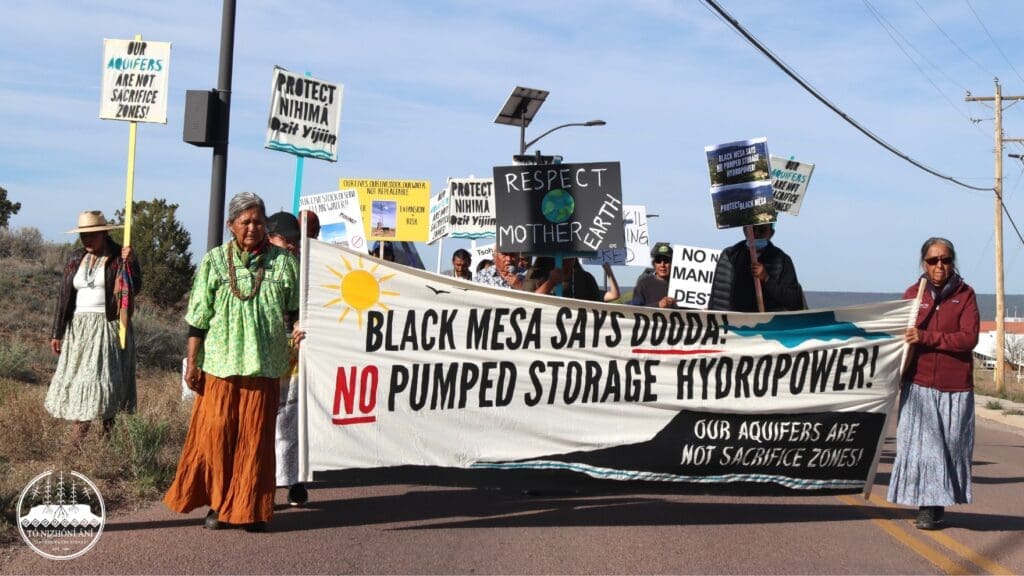
The day began with a march from the Wells Fargo parking lot to the Navajo Nation Council Chambers in Window Rock, AZ. Tó Nizhóní Ání community organizer Adrian Herder shared some words with attendees during the walk. “A lot of these projects on the Navajo Nation require large quantities of fresh water,” said Adrian. “That’s something that we’re running out of here in the southwest.”
Earlier this year, a coalition of concerned Black Mesa community members formed to oppose the PSH projects targeting Black Mesa. Members mobilized due to shared concerns about water use, land and wildlife impacts, ethical practices, and the credibility of these project proposals. The coalition found the need for education and worked to organize the Rally to Protect Black Mesa.
At the Navajo Nation Council Chambers, the rally began with council delegates providing some words of encouragement about the need for water protection on Black Mesa and throughout the Navajo Nation. “We want studies of our shallow aquifers and our deep aquifers because we know they have been impacted, said Black Mesa region Council Delegate Germaine Simonson. “And why that’s important is because we don’t want any more water usage from that region for industrial use.”
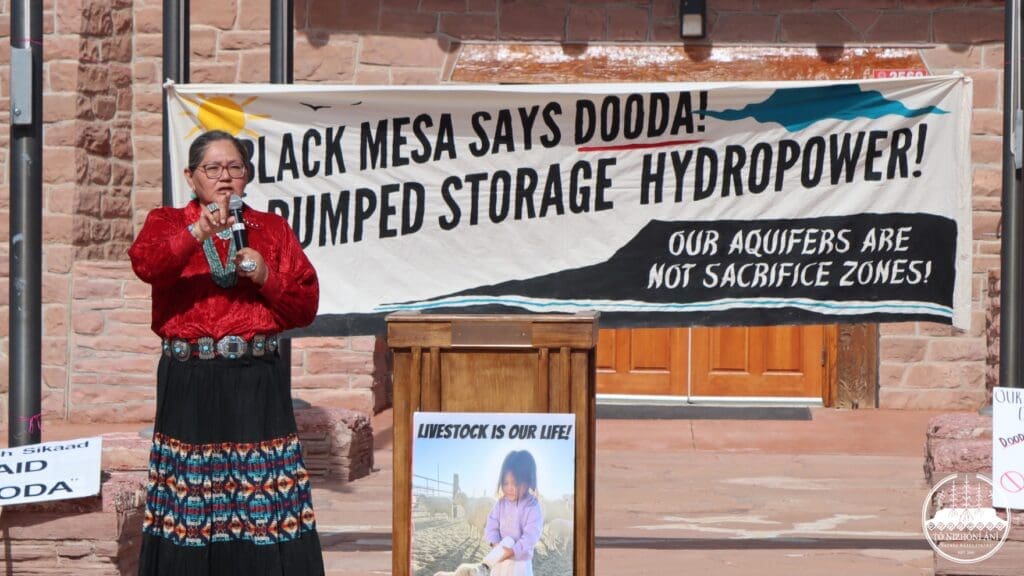
On the same note, one delegate shared similar concerns. “This is not about being for or against development. It’s about alignment, because these two realities do not align,” said Council Delegate Cherilyn Yazzie from Dilkon, AZ. “The shrinking water system and the projects that depend on large volumes of water.” The Speaker of the Navajo Nation, Crystalyne Curley, provided a brief update on the 2025 public hearing on coal.
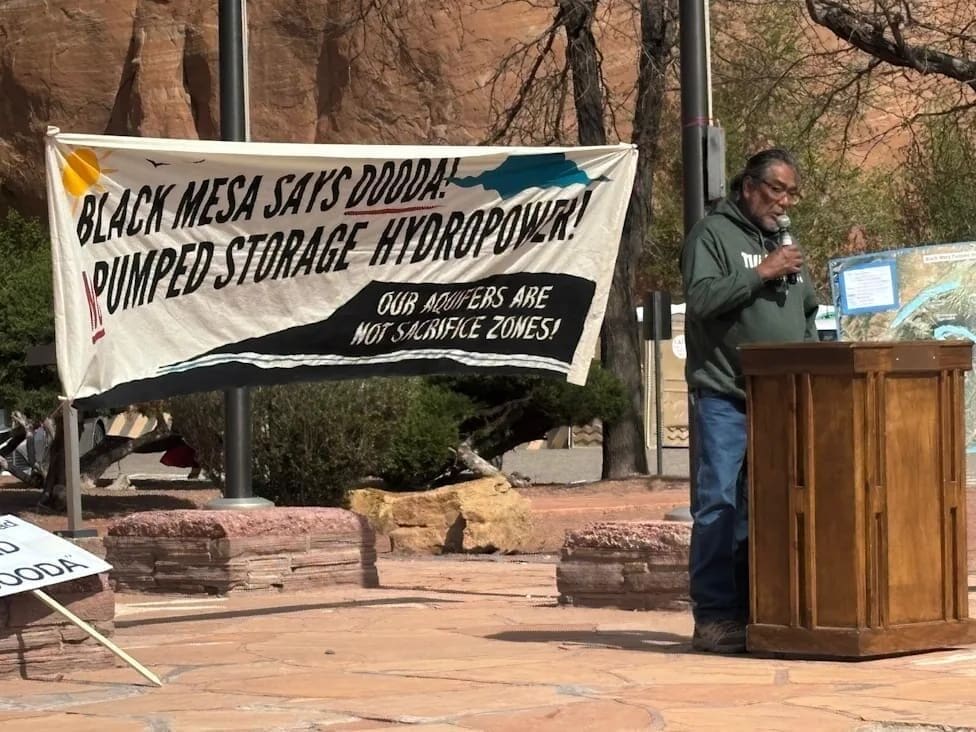
Coalition member Harrison Crank was one of the first to speak during the rally at Council. Harrison is a long-time resident of Black Mesa and is no stranger to seeing what decades of coal mining have done to the land, water, and people. “Hydropower plant… éí doo shił yá’ashooda,” said Harrison in the Navajo language. “They’re going to go inside the earth to get water again.” Harrison expressed concern about these proposals because it would use vast quantities of groundwater, just like coal mining.
Black Mesa is not the only region on the Navajo Nation being bombarded with pumped storage hydropower. A few years ago, a developer was pushing a similar project in the community of Bodaway/Gap, AZ. Impacted community member Delores Wilson-Aguirre, with Save the Confluence, joined the rally/march to stand in solidarity with Black Mesa.
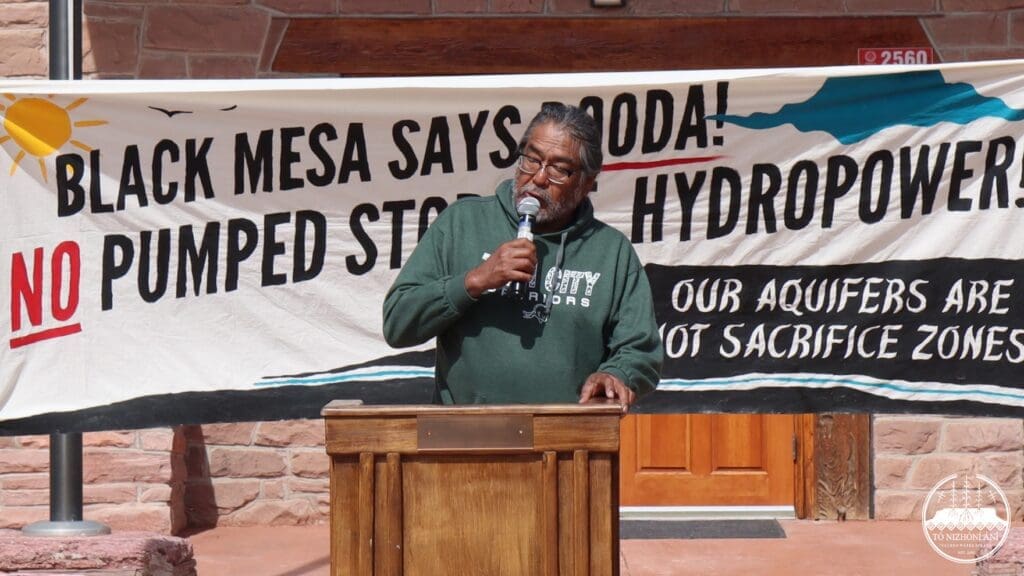
“It’s like our church when we go over there,” said Delores. “We make our offerings with corn pollen and say our prayers.” Save the Confluence is currently pursuing a Sacred Site Legislation on the Navajo Nation. This effort would help protect our most vulnerable and sacred places.
Before closing out this event, Council Delegate Shawna Ann Claw joined the rally after running late to the spring session because she had to put out a brush fire in her community. “With you being here today, you show to our whole Navajo Nation that you are taking a stand,” said Delegate Claw. “You’re taking a stand for clean air, for the quality of our water, and also for the preservation of our land.”
At the tail end of the rally, time was given to impacted community members of Burnham, NM, who are facing coal mine expansion into their grazing areas. For those new to the topic, the Navajo Transitional Energy Company (NTEC), an enterprise of the Navajo Nation, is planning to expand the Navajo Mine in what is being called the No Name Mine. “We’re taking a stand; this has to stop,” said Dailan Long, grazing permit holder of Burnham Chapter. “We’ve submitted public comments to the Office of Surface Mining.”
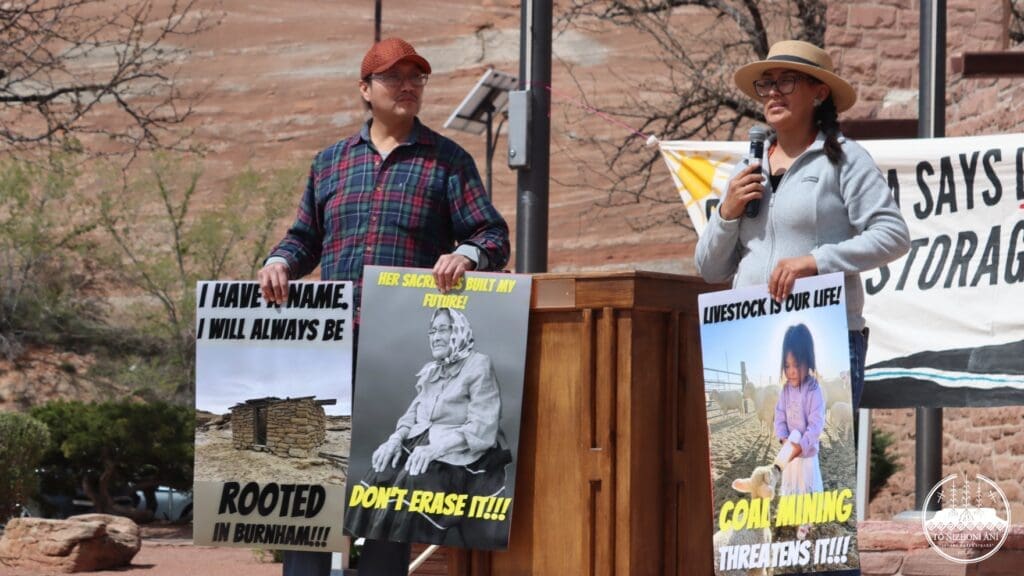
Dailan and a handful of registered voters of the Burnham Chapter made the trek to Window Rock to stand with Black Mesa. The unified effort to protect what remains of our precious groundwater was visible that day. A handful of banners that read Our Aquifers are not Sacrifice Zones lay on the steps of the Navajo Nation Council, which made it difficult for Navajo leadership to ignore.
To learn more about this issue and ways to stay connected, email Adrian@tonizhoniani.org.
Earned Media
Plans for hydropower projects, coal mine draw Navajo community members | Arizona Republic
