by Leanna Cox, Watershed Summer Intern
This watershed restoration session, Tó Nizhóní Ání (TNA) spent some time in Black Mesa/Kits’iilí, AZ at Warpath Valley, AZ, before making our way to Nazlini, AZ for a second stretch of fieldwork. We kicked things off with our July 13, 2026 Walk the Watershed event, where a few fresh faces joined us; they were able to see firsthand what our restoration work looks like on the ground. It was a wonderful opportunity to discuss how to start their own induced meandering projects by building handmade erosion control structures. We were able to go in depth to review everything we had put up over the entire summer and talk about why we put certain elements in specific places, and what the best methods are to raise a channel and revegetate/ stabilize an area.
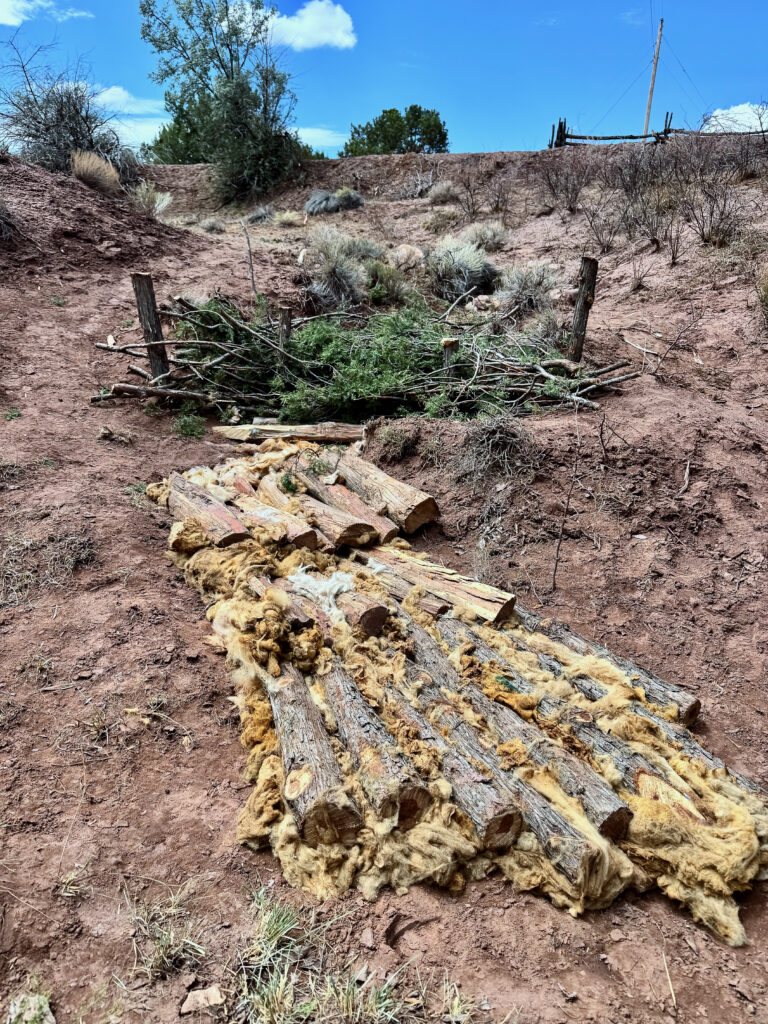
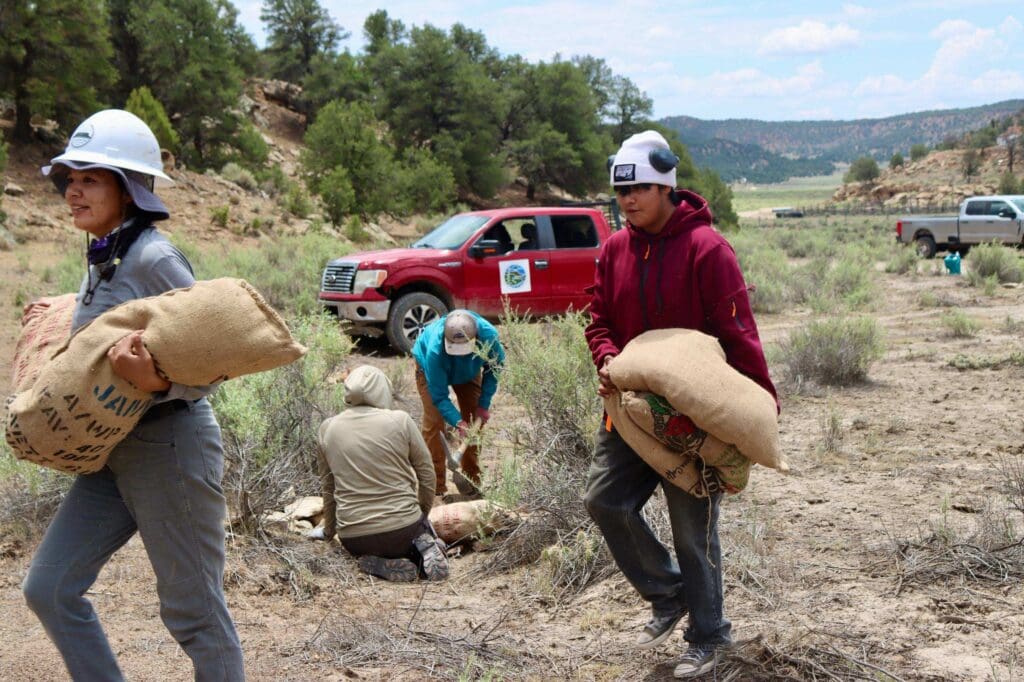
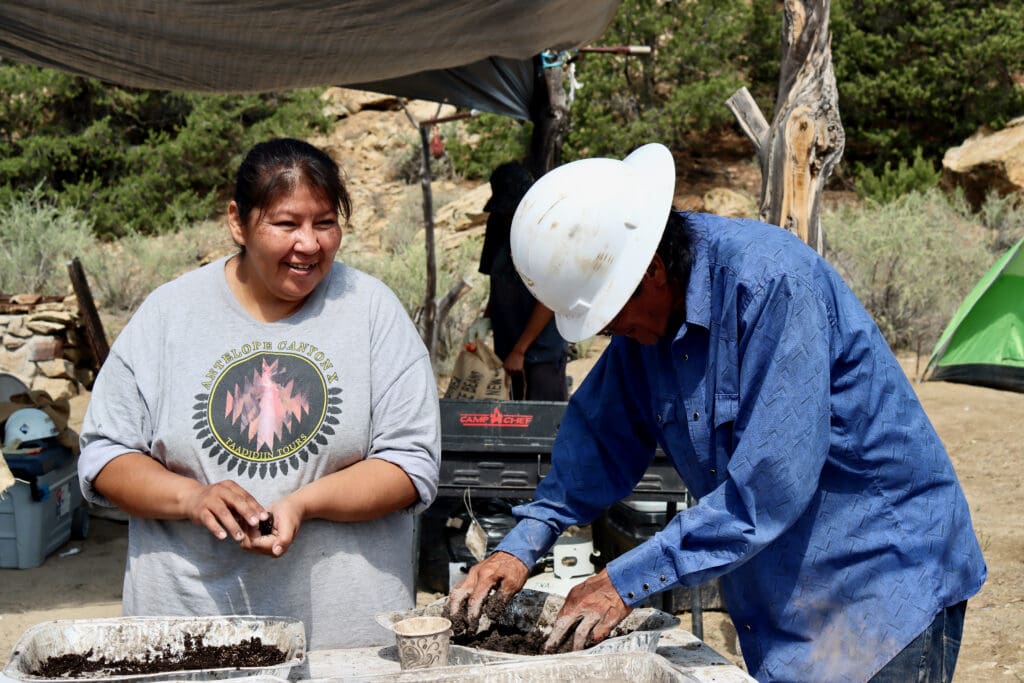
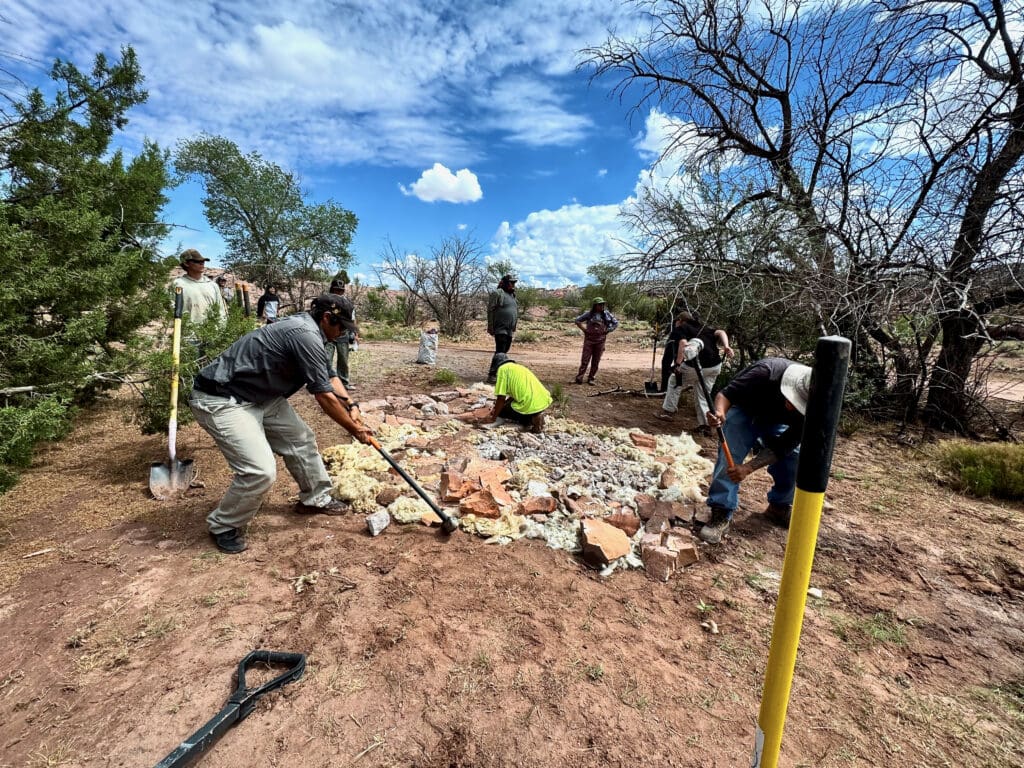
The following day was volunteer day, and it came together well. We had community members turn out along with folks from Navajo Fish and Wildlife, and with a full team we cranked out a solid batch of seed pellets and sewed some wool logs, most of which went into the ground that same evening. Having a group that was more than double our size and was willing to put the work in led to increased productivity, we managed to get every structure we had flagged and staged fully installed.
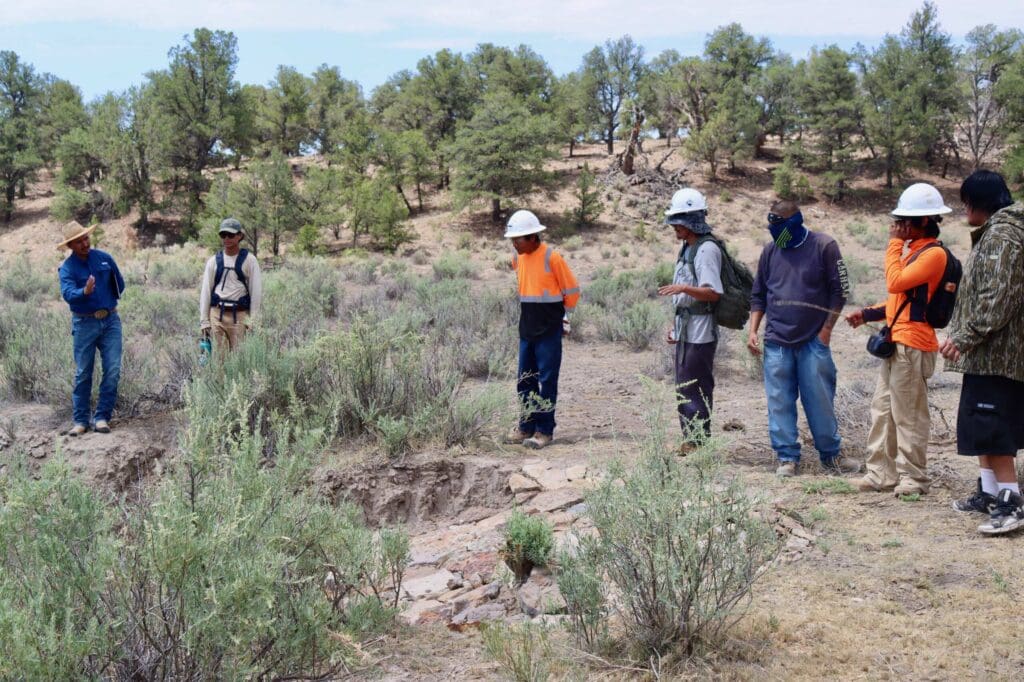
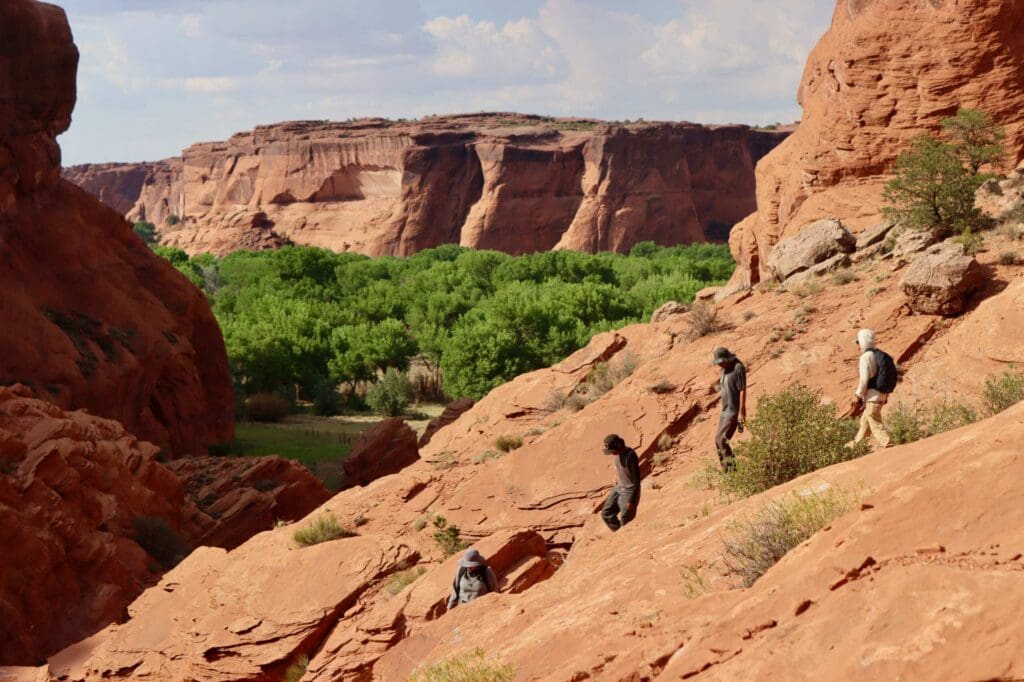
From there we headed to Nazlini to participate in the Navajo Nation Climate Change Program’s Land Restoration work party. Along the way we stopping for a short hike with the watershed crew at Canyon de Chelly National Monument.
On our first day in Nazlini, we met up with the Navajo Nation Cliamte Change Program team to look over the structures they’d staged and put up. We spent our time building new structures with them and trading notes on our building methods along the way. We discussed our new methods with wool infusion in rock structures. It was interesting to be working in a running, perennial stream system. This summer our crew has only worked in ephemeral washes, so it is cool to see what works and what does not work in a constant stream of water compared to an occasional flood.
The last day was a highlight: we built a Beaver Dam Analog (BDA) woven with wool and juniper branches, plus a few smaller BDAs and a wool-infused one-rock dams. We did a wool demo for the crew there and they were able to work with it in their builds for the first time.
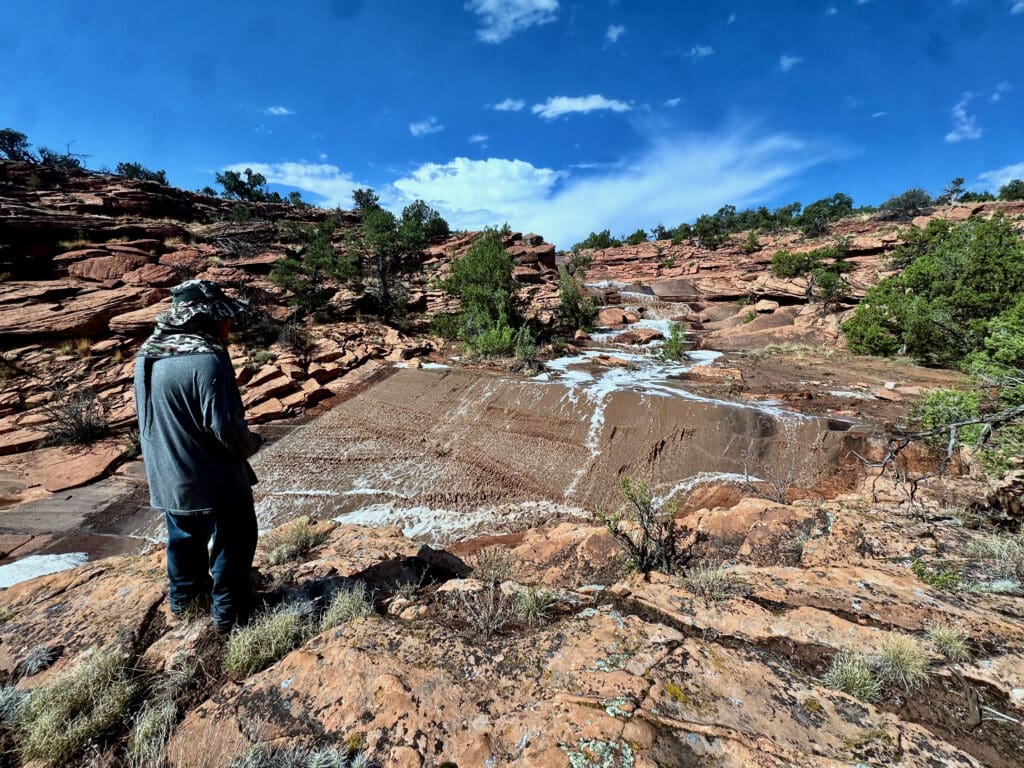
While we were camping out in Nazlini, there was heavy rainfall and flash flooding that occurred. It was a nice reminder that we were in a different climate, where our crew got to be exposed to different experiences and climates. And a deliberate cause to build Watershed Erosion control structures, so that we are slowing down intense waterflow, catching sediments, and capturing rainfall that would otherwise flow down the washes.
We are so fortunate that everyone who came out was able to make it for our Watershed Volunteer Day and get some hands-on experience with the work that we are doing here.
Thank you to the Navajo Nation Climate Change Program and the Nazlini community for hosting us.