by Leanna Cox, Watershed Summer Intern
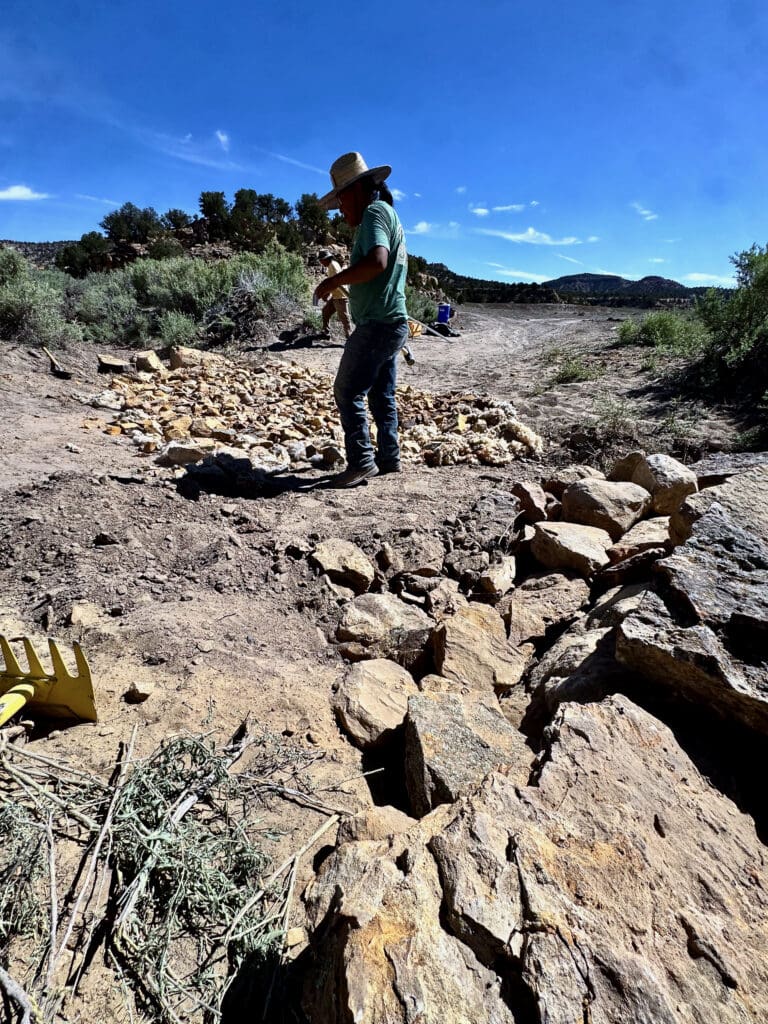
June 9-12, Tó Nizhóní Ání (TNA) crews spent the week working alongside engineers from Natural Channel Designs in Warpath Valley, Kits’iili (Black Mesa Chapter), building restoration structures and preparing the watershed for the summer monsoon season. One project stood out from the rest this session: a road crossing utilizing wool as geo-textile matting designed to help reinforce a section of road while using materials sourced directly from the community.
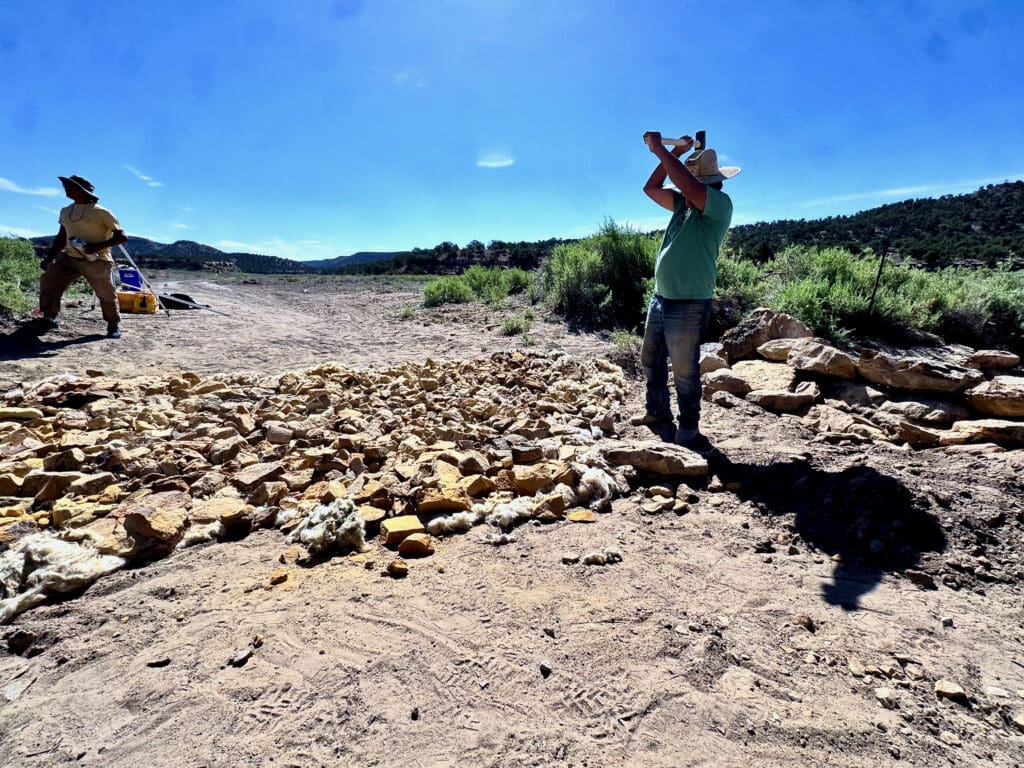
Road crossings can be one of the most challenging places to protect. During flooding events, water rushes through washes and cuts deeper channels into the roads that stand in the way of floodwaters. Over time, crossings become increasingly more difficult to access and more vulnerable to erosion.
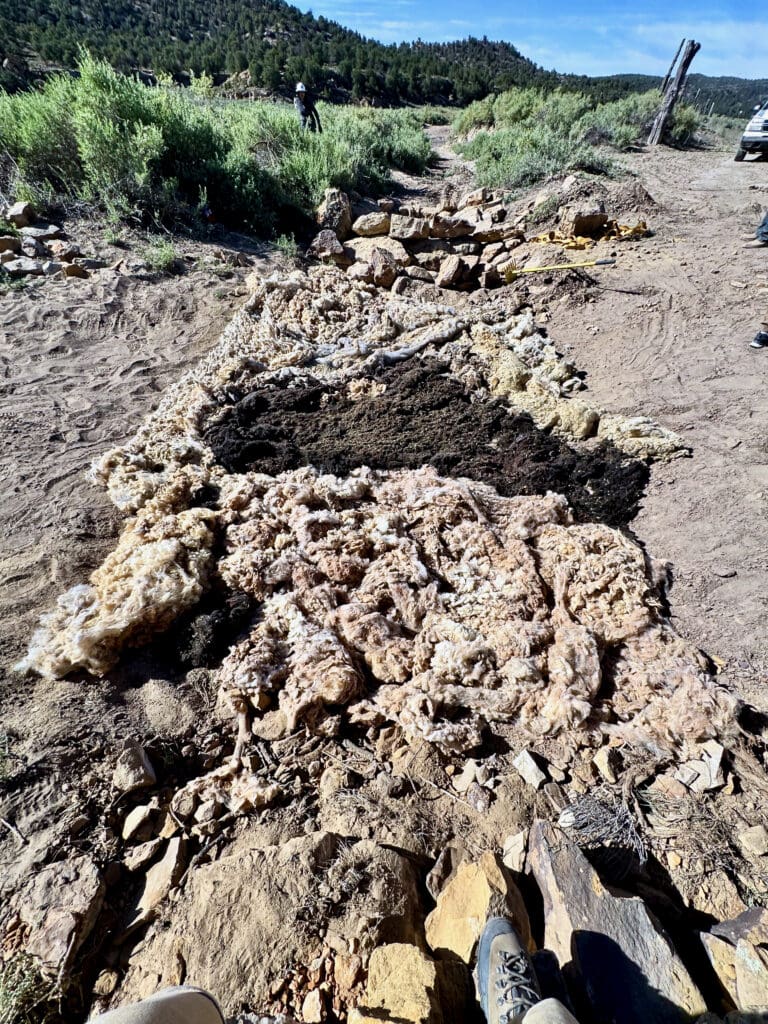
The crew and engineers worked together to design and build a road crossing using donated wool as a natural geo-textile to stabilized the structure by acting as a layer to soak up and slow water during flow periods. Many restoration projects doing the same, rely on synthetic geo-textile fabrics that are generally made from plastic. TNA’s Watershed Restoration Project has taken a different approach to designing their own geo-textiles. Local sheep owners have donated wool that can now be repurposed in watershed work in many ways, that would have otherwise gone to waste. The sheep’s wool has helped the crew build crossings, dams, bowls, and reinforce many of the different structures in the watershed.
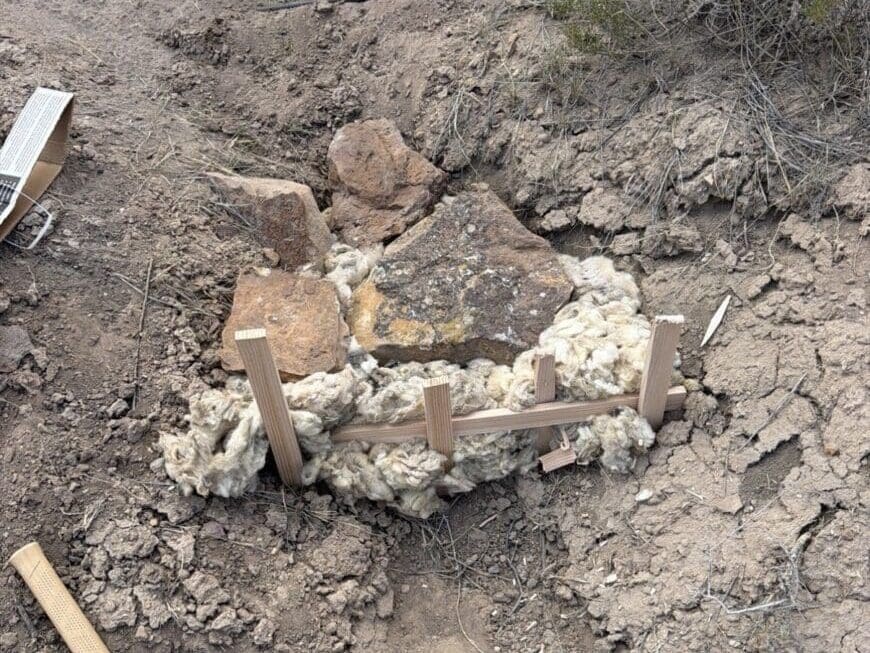
The wool is biodegradable and will never need to be dug up and removed. The wool will eventually break down and return to the soil rather than remaining and posing unnecessary ecological harm. Some wool infused features have been proven to stay in the ground and work effectively for 20+ years!
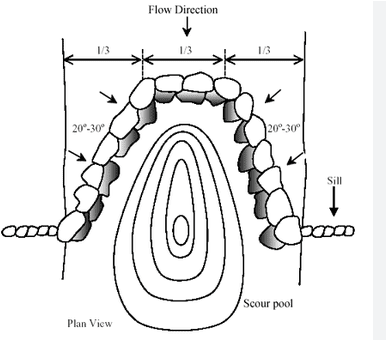
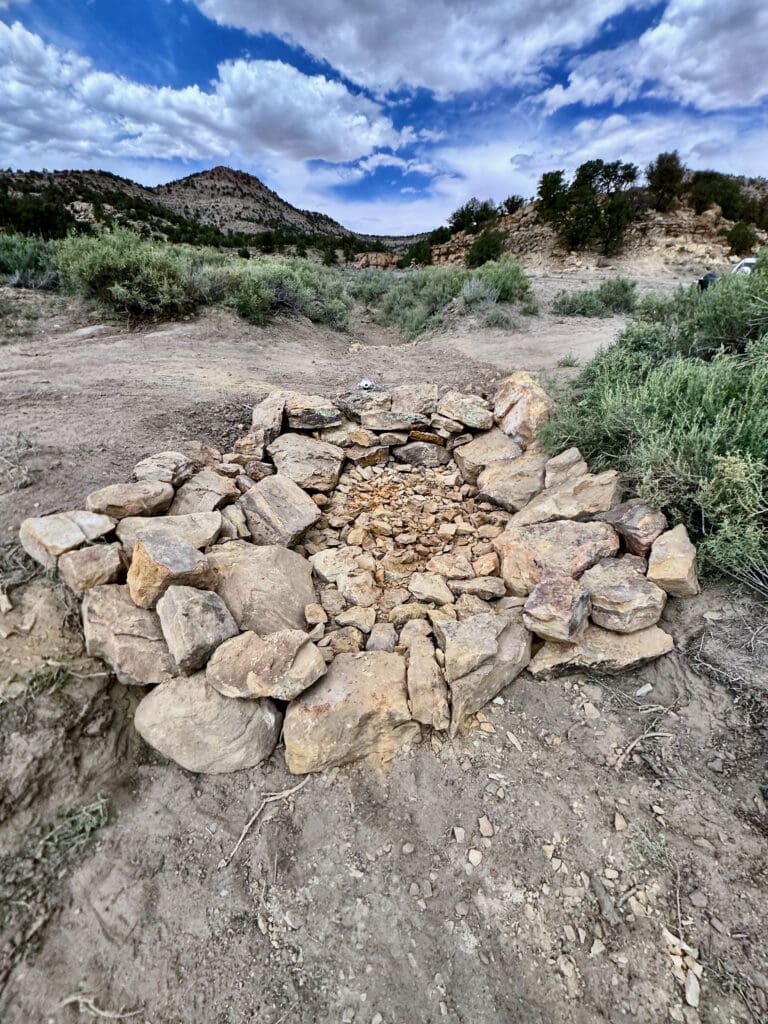
The crew from Channel Designs recommended incorporating a cross-vein weir into the downstream side of the crossing. The team was able to move massive, heavy boulders with the help of a tractor to make the weirs foundation extra fortified and stable. The utilization of the weir helps to create a road where water can flow over the surface in a flood event without cutting into the dirt too dramatically and erode it away. This structure, with the leveling and stabilization of the road, and several One Rock Dams placed upstream is sure to show promising resilience in the event of a flood.
As monsoon season approaches, the crossing stands ready for its first test. Whether the rains arrive tomorrow or later in the season, the work completed in Warpath Valley reflects TNA’s commitment to restoring Kits’iili’s watersheds.