Wool in Watershed Restoration Pilot Project Install
What started as an idea in August 2025, while passing through one of the lesser-wooded communities on the Navajo Nation, morphed into a mini-pilot project. The Navajo Nation is in no short supply of wool and mohair; often, communities that don’t use wool for weaving discard the wool. Here at Tó Nizhóní Ání (TNA), our watershed restoration crew experimented with wool and watershed restoration to find ways to repurpose unwanted/rough wool.
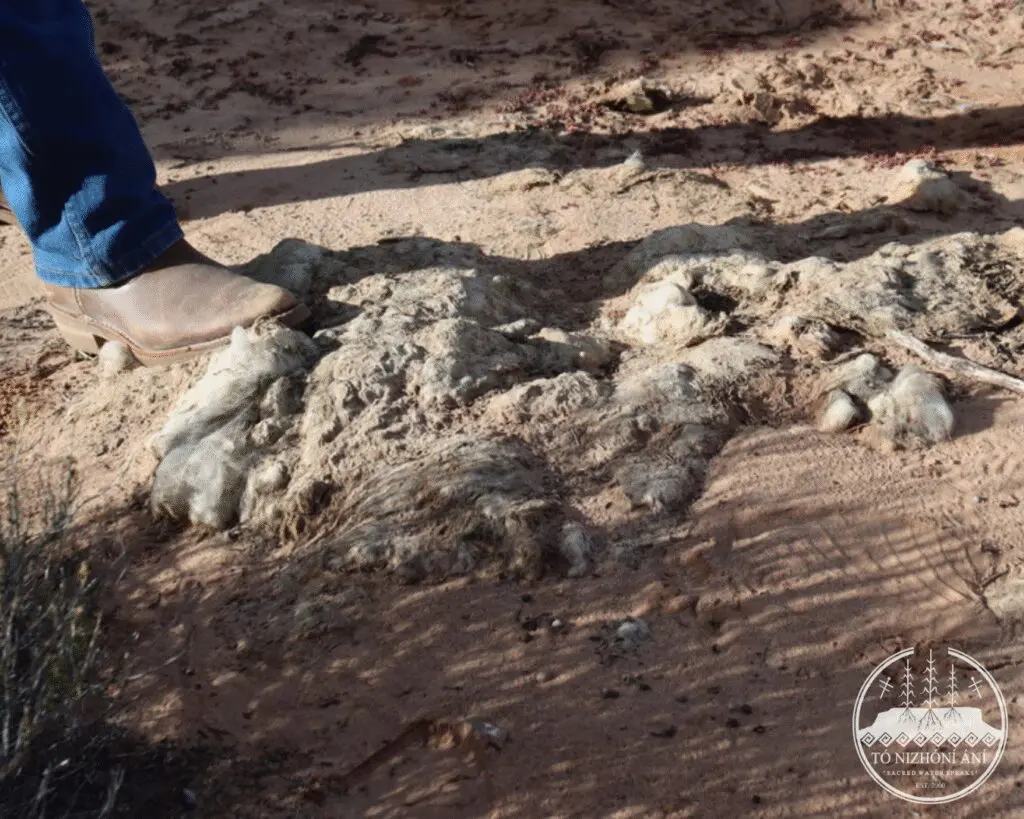
In early November, the TNA watershed crew and local community members gathered to brainstorm and create wool dam units to install in the watershed. The TNA crew members first walked into a local watershed where a wool dam structure was installed 10-some years ago by the local family. Upstream of the old dam, the wash was sandy and filled in. The soil was retained, allowing more vegetation to grow.
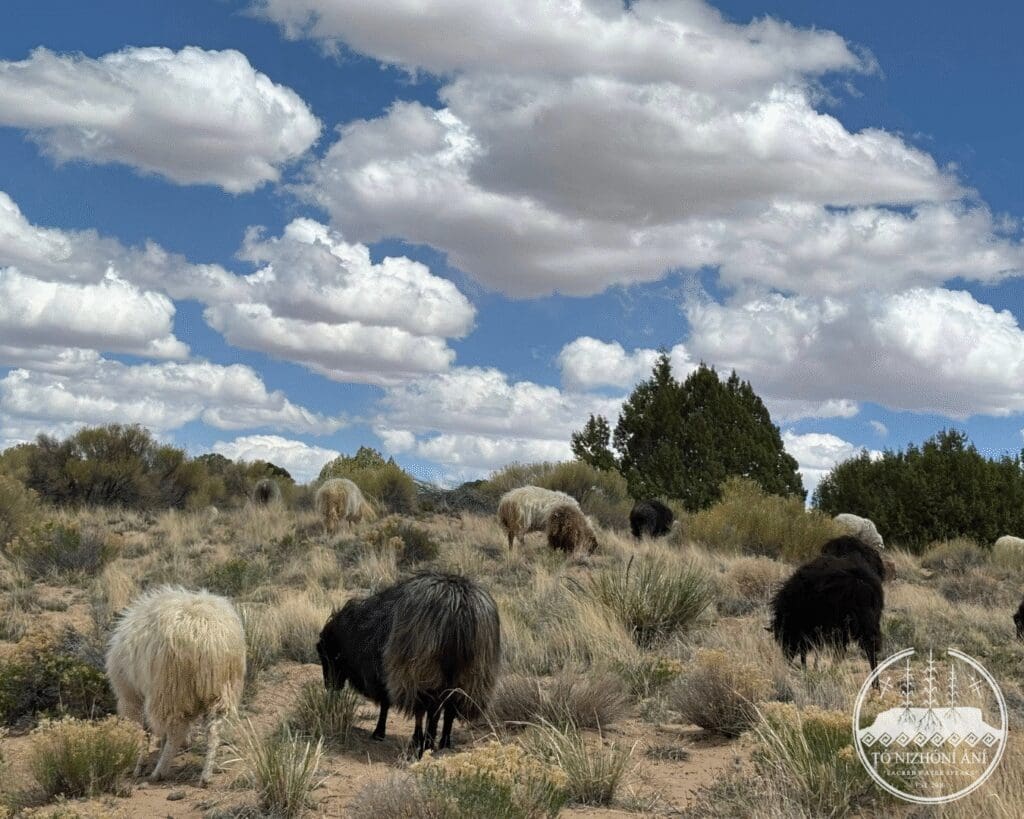
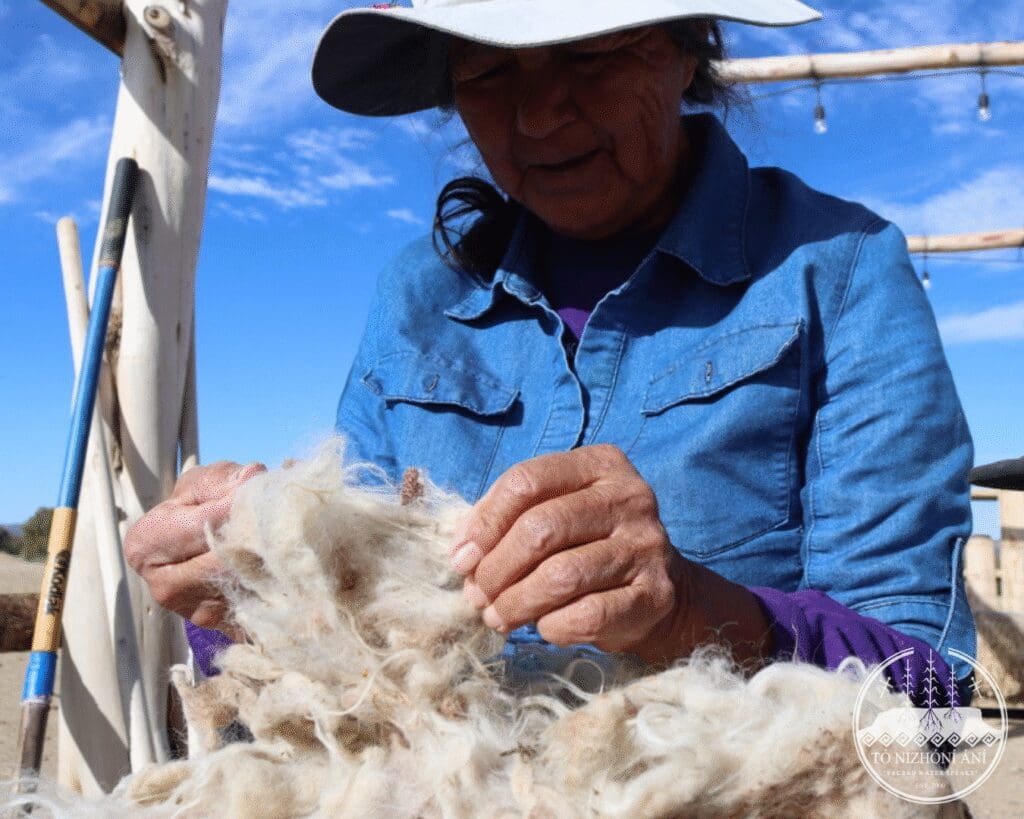
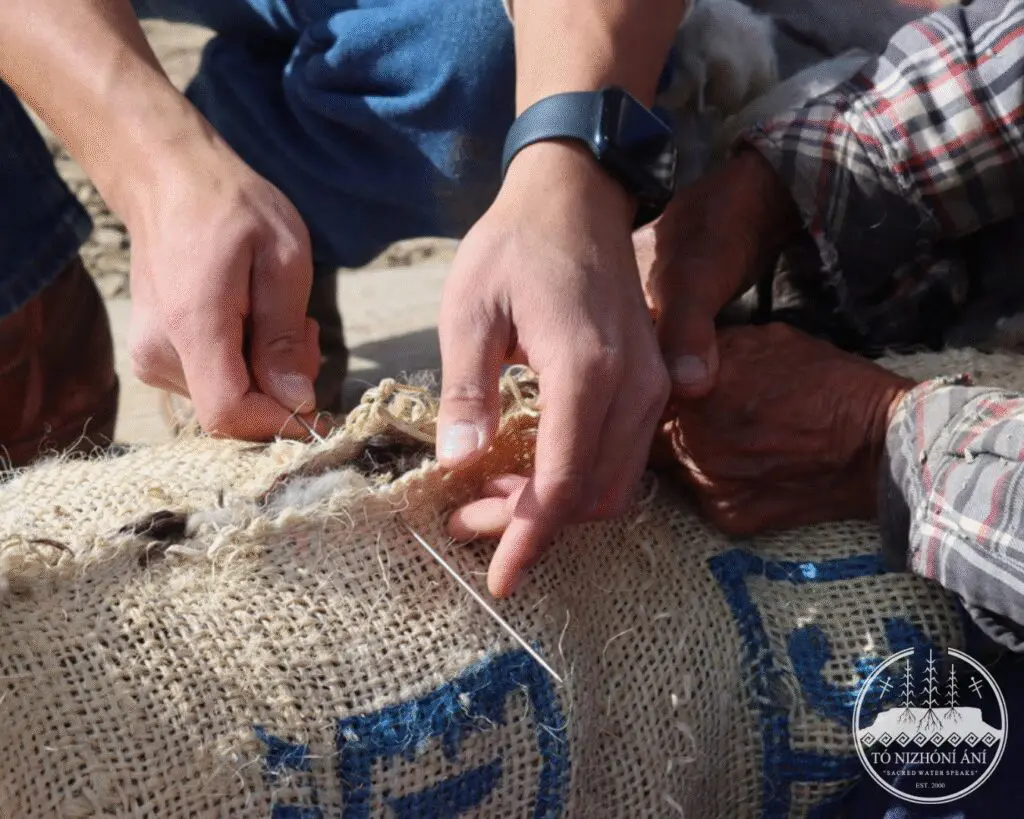
Different types of wool dam construction were discussed among the crew. What started as a question about how much material we had access to became an understanding of its material properties, leading to wonderful designs in wool. The result of the work session was the creation of logs wrapped with wool; gunny sacks sewn into logs, then stuffed with logs, and wool felted together, then wrapped. The wool for the mini pilot project was supplied by local Navajo Churro sheep producers in the Hardrock community. The Navajo-Churro breed is considered a critically endangered rare breed. These sheep with their long staple of protective topcoat and soft undercoat are well-suited for extremes of climate. Learn more about the Navajo-Churro breed by visiting www.navajo-churrosheep.com.
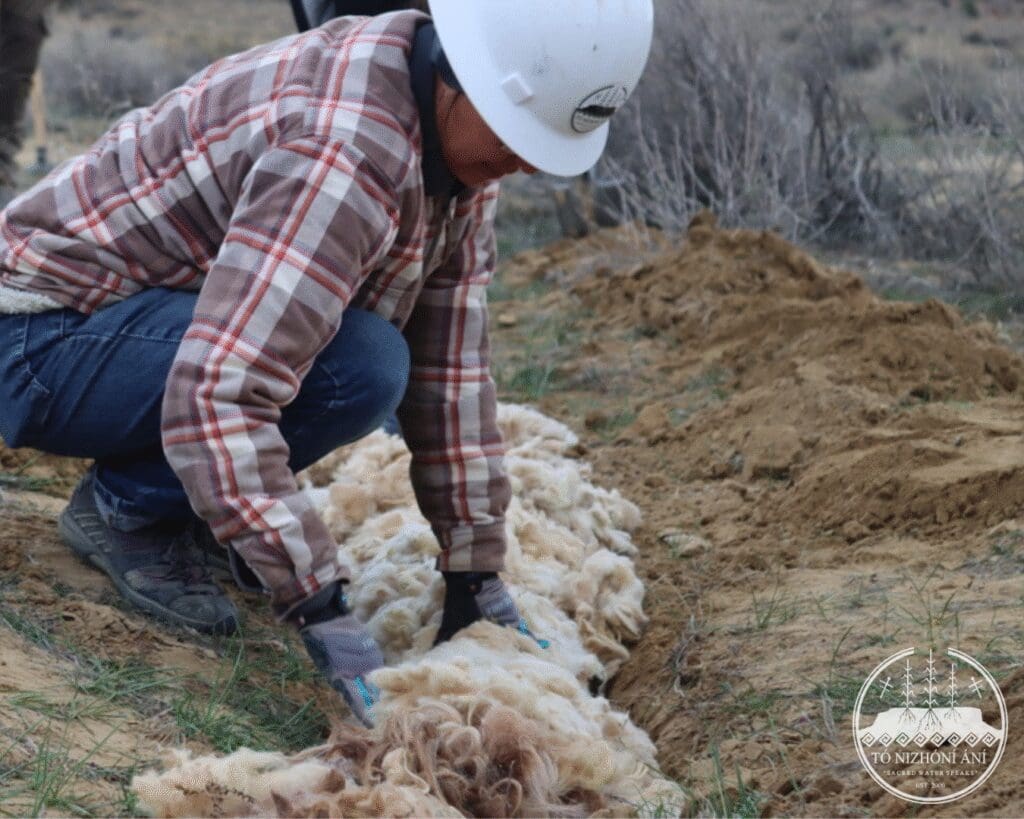
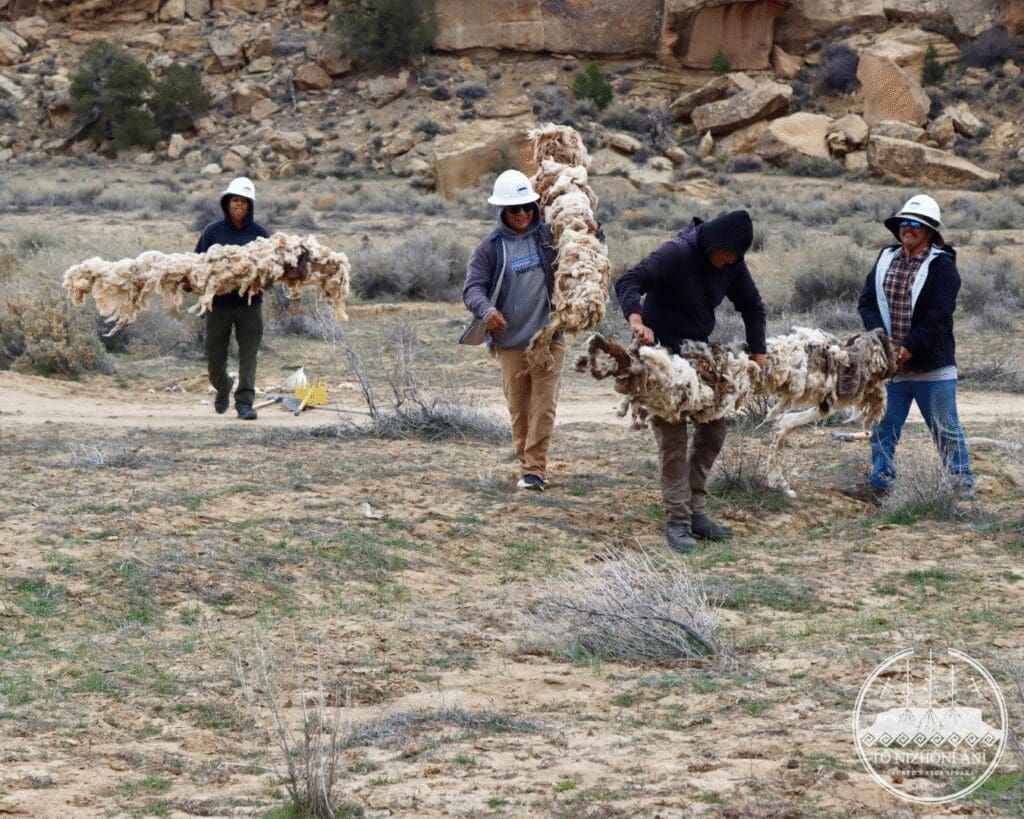
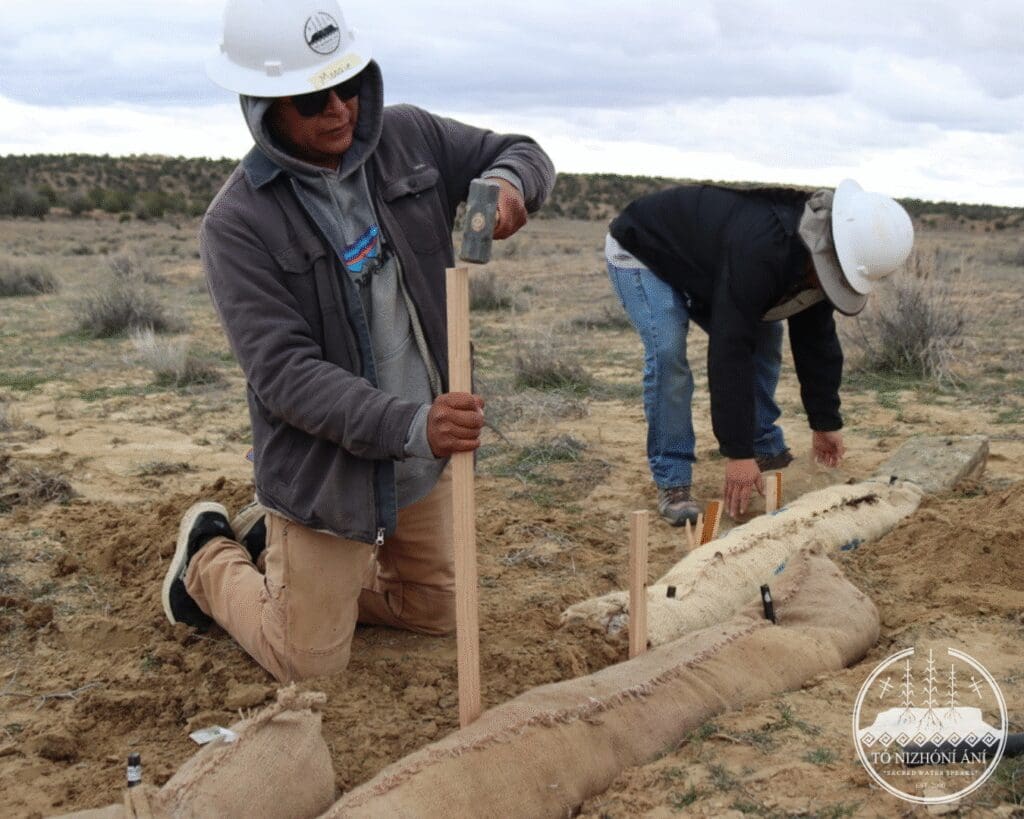
In mid to late November, the TNA Watershed crew returned to the wool and watershed pilot project, convening for the next two days to install the wool dam units at the Tsiyi’ Tó Watershed Pilot Project site. Using wool in watershed restoration is not a new idea. Diné sheep herders and ranchers have long used their surplus of wool and mohair to rebuild soil and restore rangelands for decades. Although they may not have documented these efforts, we aim to document this project and share our findings. The inspiration for this wool and watershed pilot project came from the countless stories of surplus, unwanted wool/mohair from the wool buys held throughout the Navajo Nation in the summer of 2025. The wool our team worked with was either impure/poor quality, disorganized, or had too many tá’niits’éhii (cocklebur) seeds within it to process. Using surplus material in conjunction with burlap sacks provides a low-cost material that degrades directly into the landscape. Our crew prepared, stuffed, sewn in, and installed wool logs as an initial experiment to spread moisture within a floodplain.
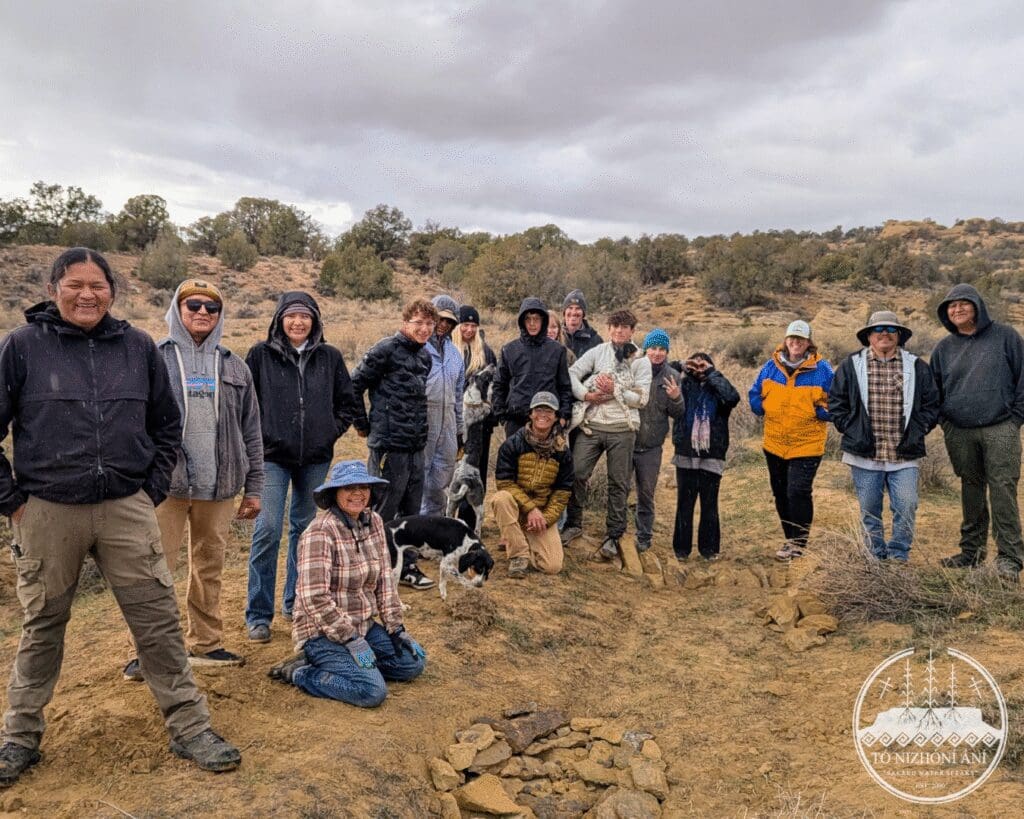
On the cool morning of November 17th, the crew installed some 30 rock structures and 2 wool dams with the help of students from Verde Valley School who were on a Climate Change Road Trip across the southwest. Many hands collecting rock material made progress on the work in the watershed above existing log dams. The afternoon led the crew across Tsiyi’ Tó Wash to a meadow where plug-and-spread structures were damaged by a flash flood in October. Seasoned crew members took the lead and modified the blown-out plugs to lay the logs parallel to the stream. Building straight into the wash with the logs was our best use of the wood when a strong flow entered the incised stream. Wool was installed in the gaps between the logs, with the hope that more sediment would catch. We expect future precipitation events to fill the incision, assisted by our log installations.
In these two days, the crew of 15+ created 70+ erosion control structures across 19 acres of meadow. We are delighted to see so much progress and an enhanced workflow, given the experience we have gained over the years of restoration work. Thank you to Verde Valley School for helping to install these structures!
In the future, our restoration crew hopes to implement more wool dam structures at our project sites as another tool to restore moisture and native plants to overgrazed, sparse soils. We also look to scale up our wool use where necessary to the point where we can display a workshop on the successful use of wool dams to encourage native plant growth and rewet a landscape. For more information about this project, email Andrew@tonizhoniani.org.