By Leanna Cox, Watershed Summer Intern
May 11-15 Gather Session, Haajibáhí (Warpath Valley), Kits’iili Chapter
On Monday, May 11, 2026, the Tó Nizhóní Ání (TNA) Watershed Restoration Crew continued their work in the Warpath Valley area with a new crew member.
Working with professionals and community members, the crew started off the week by receiving their official CPR certifications and acquiring medical training. Crew Members trained with confidence to be prepared to manage an emergency medical situation if any were to happen.
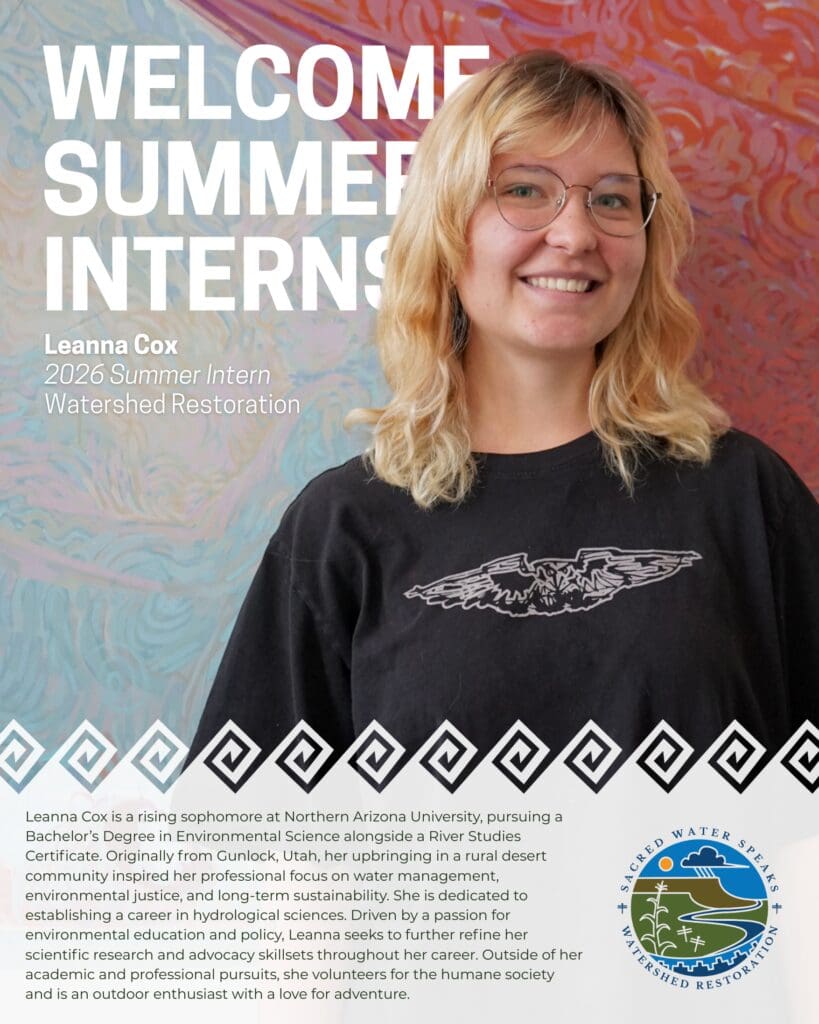
As a current intern at Tó Nizhóní Ání, I’ve been able to begin to do my part to help the community in Black Mesa expand their watershed restoration work and have had the opportunity to see how hand-made and naturally inspired structures can play a huge role in combating a changing climate and facing environmental disparities that result from years of exploitation, primarily resulting from coal mining.
In an era of doomism surrounding the subjects of justice, erosion damage, and a lack of sustainable natural resources that hold communities like Black Mesa together, it can seem like there’s nothing you can do, but watershed restoration is an accessible form of erosion control, most can build a rock structure that will last for years, and over time, can change a landscape. When you have large amounts of people coming together to do this kind of work, quality structures like the ones the watershed restoration crew have created can show an incredible difference by acting as naturally inspired erosion control systems.
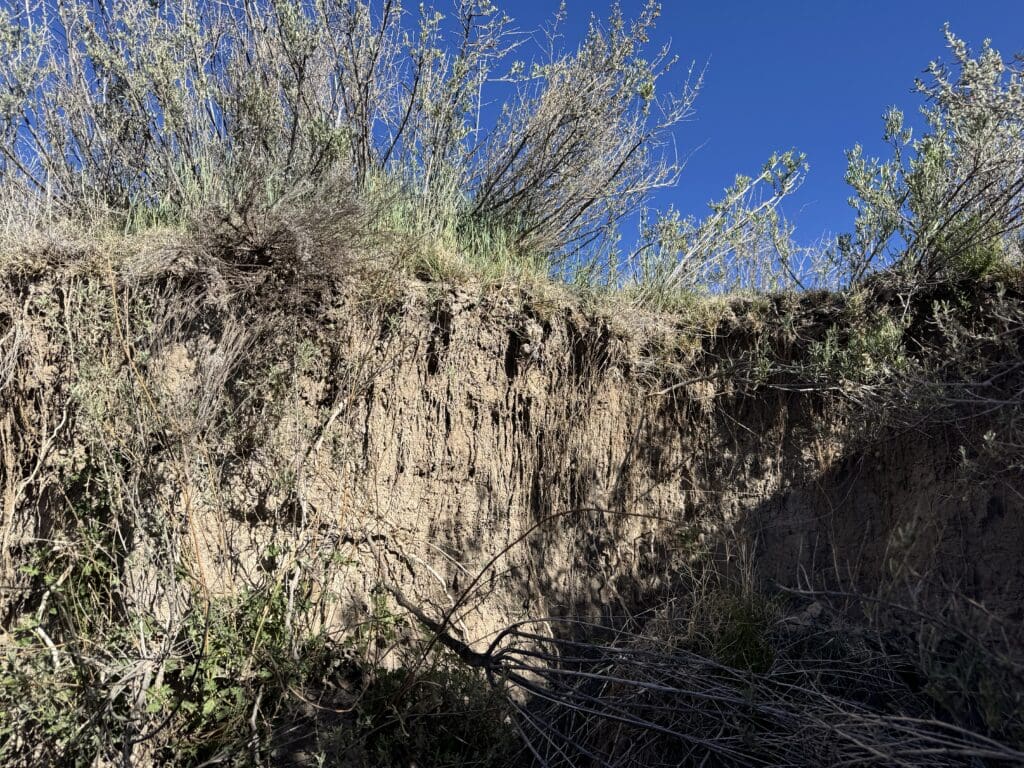
The washes in the area surrounding the “Homestead Wash” rank highly on the Bank Erosion Hazard Index; the streambanks are highly susceptible to erosion. In the event of flooding, they are sure to wash out and erode further, causing harm to the health of the ecosystem as well as the destruction of available infrastructure like the roads in Warpath Valley.
(*The Bank Erosion Hazard Index (BEHI) is a procedure to assess bank erosion potential by scoring metrics like root depth, bank angle, and surface protection, indicating erosion hazard categories.)
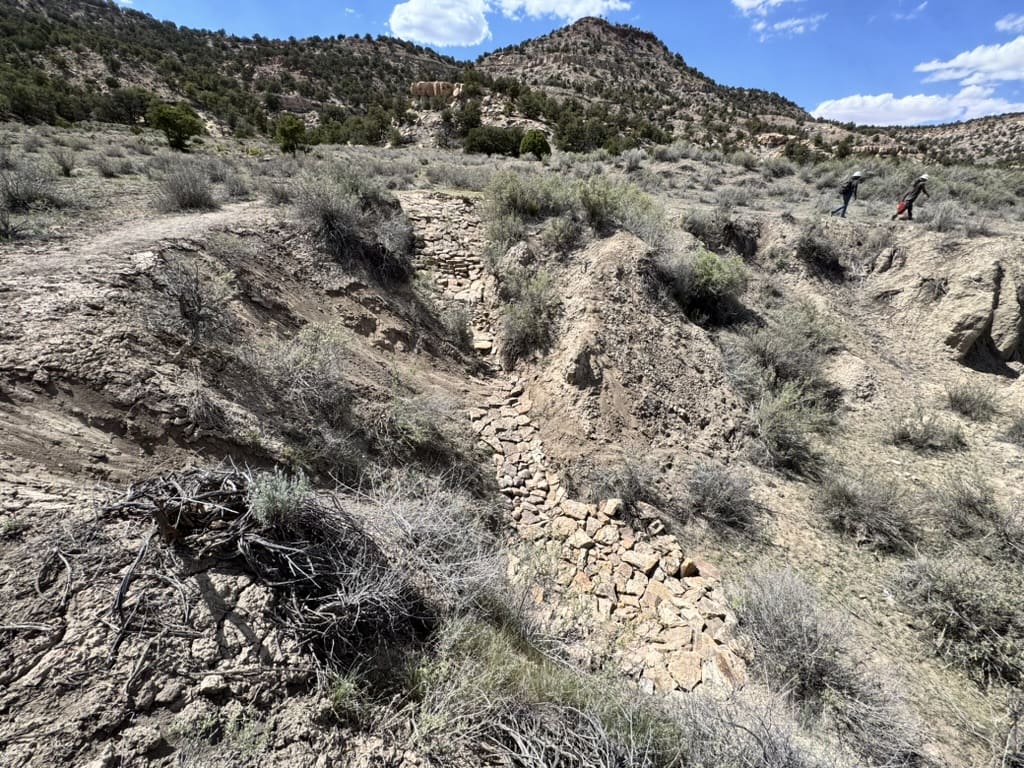
The 7-person crew began their work with limited resources, one of the main goals for the days they spent in the field was to build a multitude of structures that would effectively prevent the destruction of an eroded, dried out pond. Several small structures were built to act as feeders into the watershed. One-rock dams, media lunas, and rock-rundowns alike were all constructed to manage and guide floodwaters.
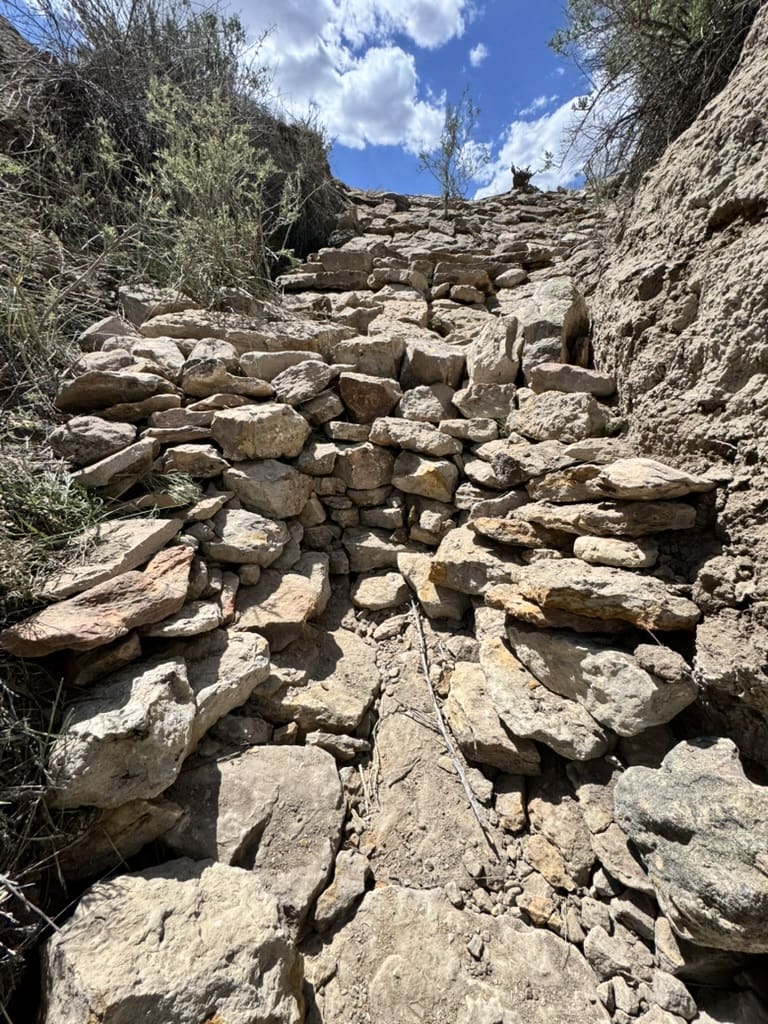
The team spent several days working on their biggest restoration structure, a combination of a large Navajo bowl and a rock rundown into the pond.
The construction of the Bowl-Rundown combo was an ambitious task to take on. The place where the teams work was most necessary was set on an island, inaccessible by vehicles. Because the area had no available rocks to use as materials in close proximity, collecting rocks was the most time-consuming task. The structure built required the gathering and strategic placement of hundreds of rocks, big and small. To collect the rocks from the surface of the surrounding area, crew members gathered inside of the canyons, breaking the larger pieces down with available tools like mallets and pickaxes, the rocks were carried out of the steep canyon by hand and to the worksite, where construction of the Bowl-Rundown occurred.
If you are interested in engaging with Tó Nizhóní Ání’s watershed work, we have volunteer opportunities. Please email Andrew@tonizhoniani.org for more information.