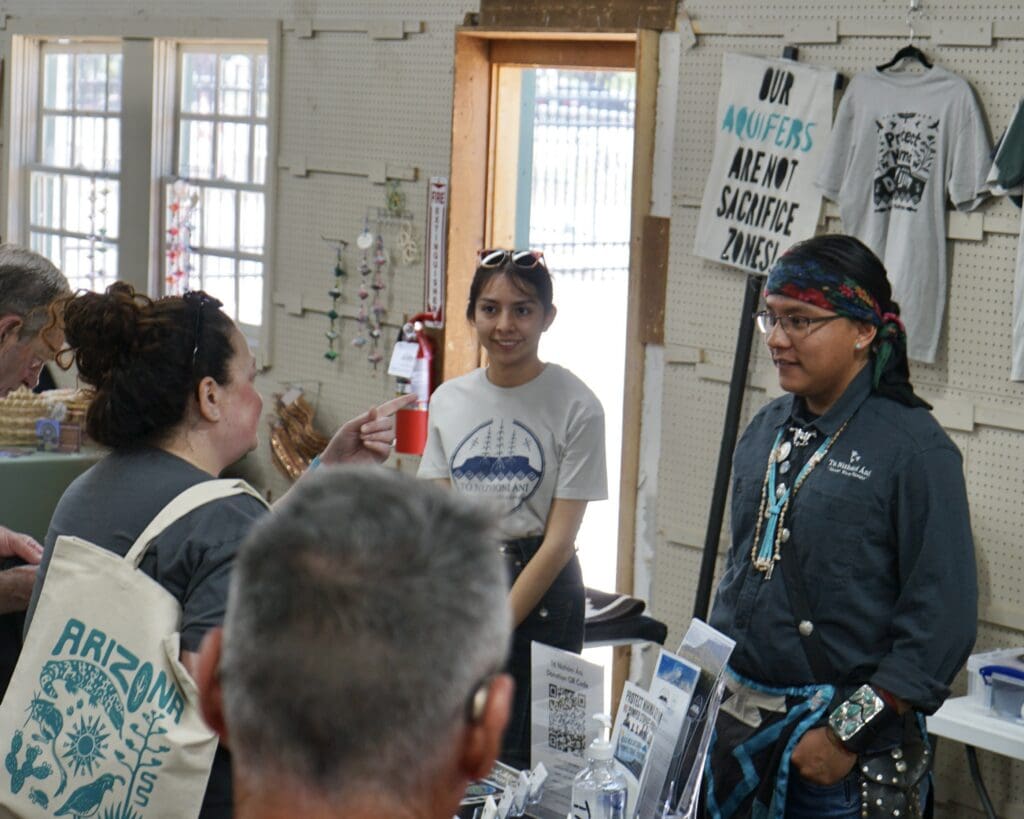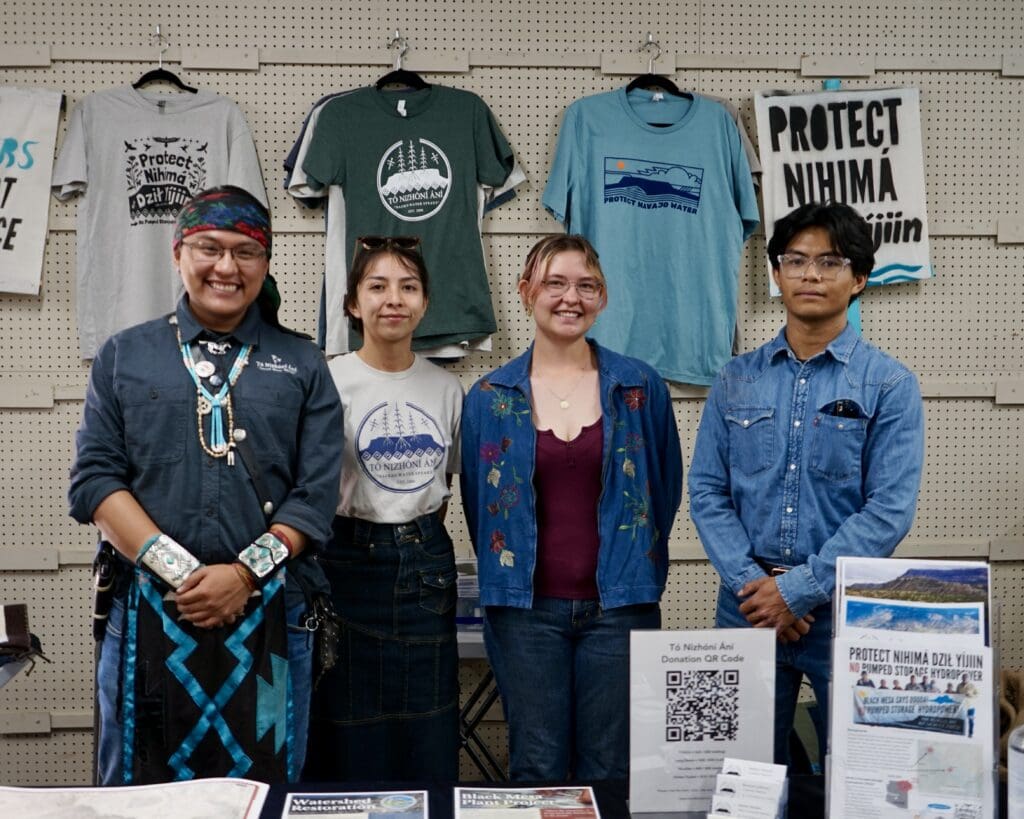
FLAGSTAFF, Ariz. – On June 6th and 7th, members of Tó Nizhóní Ání spent the two days tabling at the 2026 Flagstaff Wool & Fiber Festival. Tó Nizhóní Ání shared space with elders from Black Mesa, who marketed their wool and weavings to festival attendees while the organization shared information about current efforts on Black Mesa.
This fiber festival event was a unique experience not only for the TNA team, but for festival attendees alike — many learned about Black Mesa for the first time, and some arrived with incomplete ideas about the issues facing the Navajo Nation. TNA team members engaged with fellow fiber artists and visitors from as far away as Oregon and the Midwest, sharing the story of coal/water mining on Black Mesa and the work of nurturing a restorative economy in this post-coal, post-extraction era.
Over the weekend, supporters donated to the organization and chose a handwoven Navajo rug — made by weavers from the Black Mesa region — to take home. For smaller donations, organization t-shirts were also available. Every donation to the organization supports youth and community programming on Black Mesa. Tabling opportunities such as the Flagstaff Fiber Festival allow Tó Nizhóní Ání to channel resources back to Black Mesa, where every dollar makes a real difference for the community-led initiatives building a more resilient, equitable, and vibrant Black Mesa.
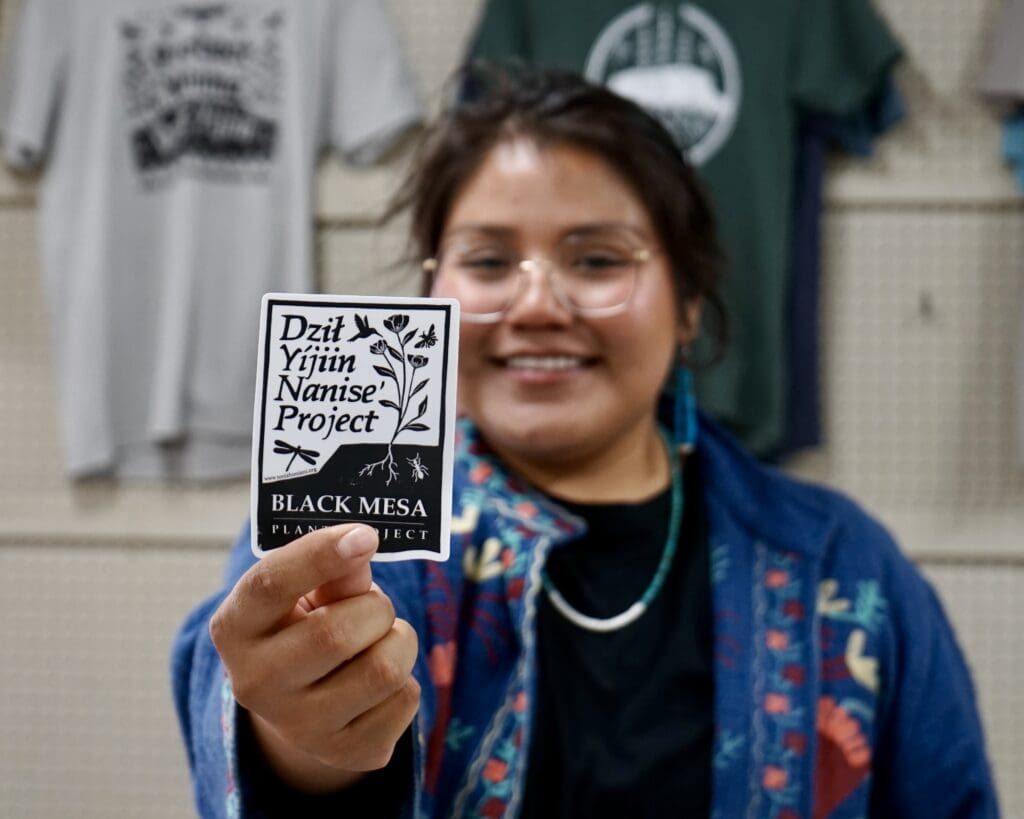
Every conversation had — whether it was watershed restoration, pumped storage hydropower, or the Dzil Yijiin Nanise’ (Black Mesa Plant) Project — brought Black Mesa to the forefront. Far too often, the region is overlooked or known only for its coal deposits. Each campaign presented an opportunity to engage people in ecological restoration, Traditional Ecological Knowledge, and responsible water use as we collectively build a sustainable future.
The Flagstaff Wool Festival was a prime opportunity of the Black Mesa Plant Project interns to share what they’ve been working on thus far. They took this opportunity to network with likeminded artists, weavers, ranchers, etc. who share the same interest of holding on to tradition. “It was wonderful to see more Indigenous vendors participating and representing themselves,” said Raeanna Johnson, lead intern.
Summer intern Artrisha Charley helped to table on Sunday, where she spoke about the history of the project and what the project had lined up for 2026. “At first, I was nervous about talking to people and explaining the work we do,” said Artrisha. “But after the first couple of conversations, I realized I enjoyed it. Being able to share something I’m so proud to be a part of.”
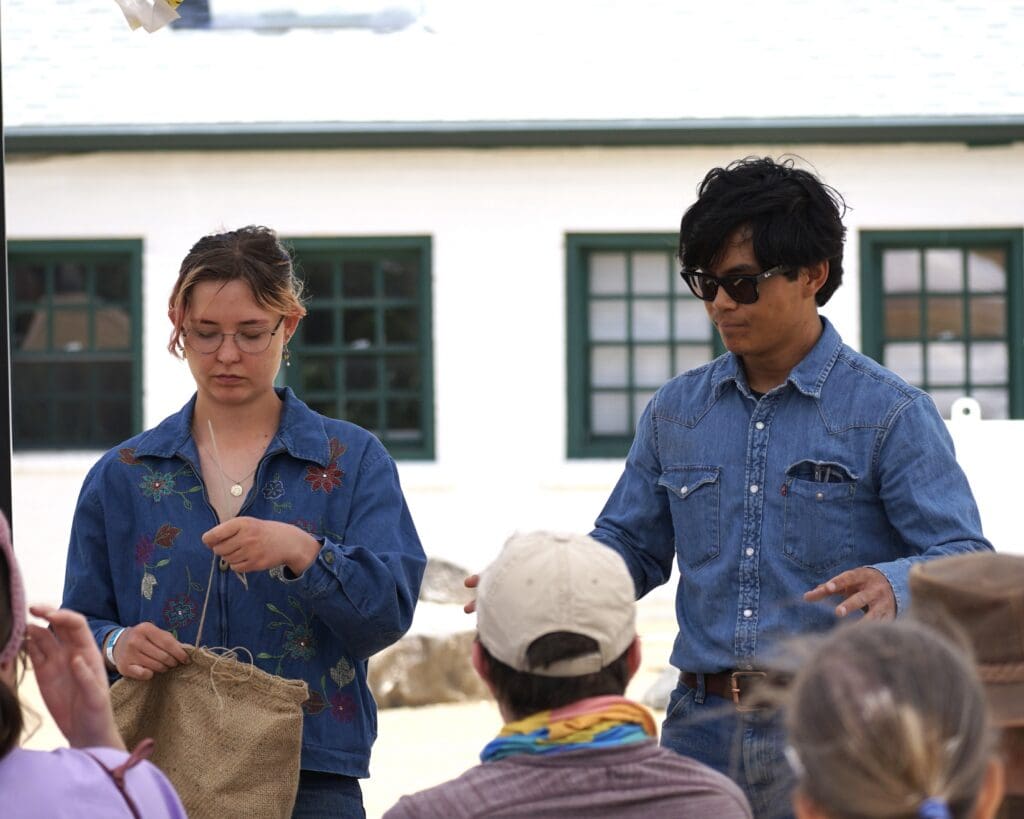
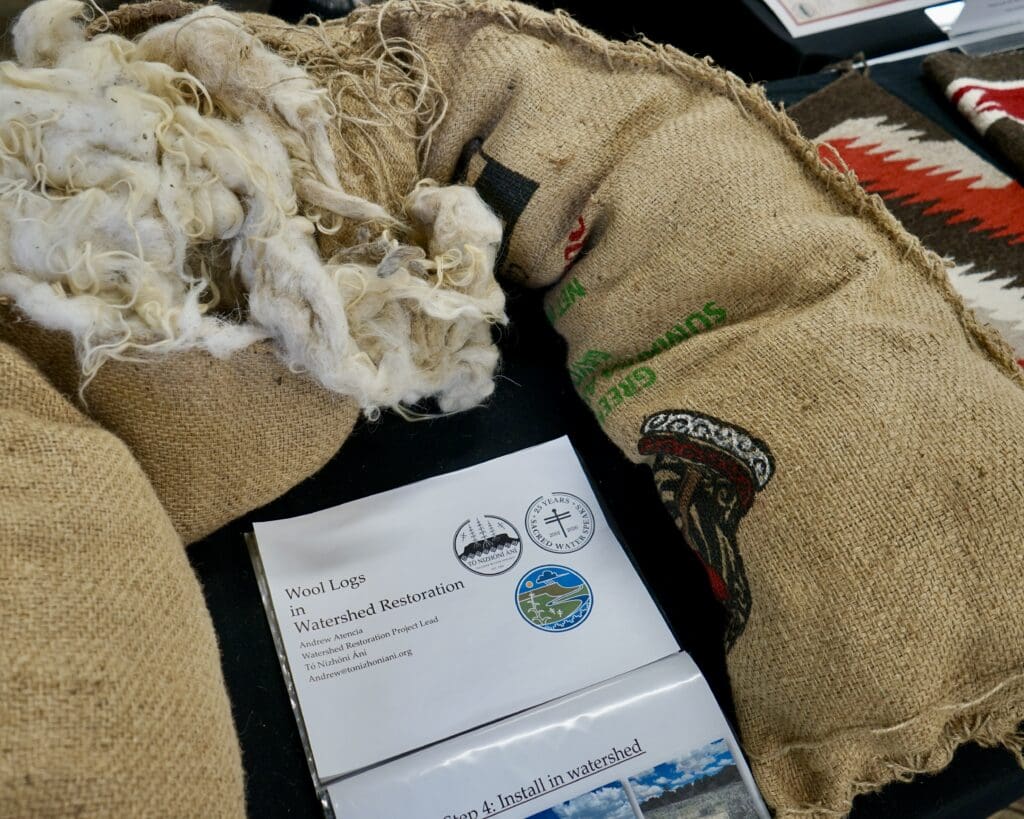
One of the weekend’s highlights was the wool log demonstration, led by Tó Nizhóní Ání watershed restoration lead Andrew Atencia and the watershed summer intern, Leanna Cox. Together, they presented the watershed restoration efforts and created a wool log for attendees. The burlap sacks were stitched together and stuffed with wool to show the material’s water-retaining properties and how the Navajo Nation can make use of undesirable wool.
Afterward, attendees stayed to ask questions and talk through the wool log. For Andrew, that exchange was part of the point — the festival let TNA highlight watershed restoration “using existing, surplus wool in remote Black Mesa communities,” and he left enthusiastic for the audience’s “insightful questions.” The weekend’s wool log demonstration reassured the TNA team that this pilot project is proving to be a vital tool for watershed restoration. Festival attendees marveled at the idea of using waste wool to restore landscapes while providing slow nitrogen release to the soil. Although this project is still in its infancy, TNA aims to report back on key findings.
TNA’s Watershed Restoration and Dzil Yijiin Nanise’ Project campaigns were warmly received, and the demonstrations were often celebrated by attendees. Tó Nizhóní Ání thanks the Flagstaff Wool & Fiber Festival for allowing the organization to table at this event. Sheep and wool have sustained the Diné/Navajo people for decades, with the right amount of support; it can and will sustain the Diné people for more decades to come.
For more information about this event visit www.flagwool.com.