LeaderShift scholars put wool in the ground on Black Mesa
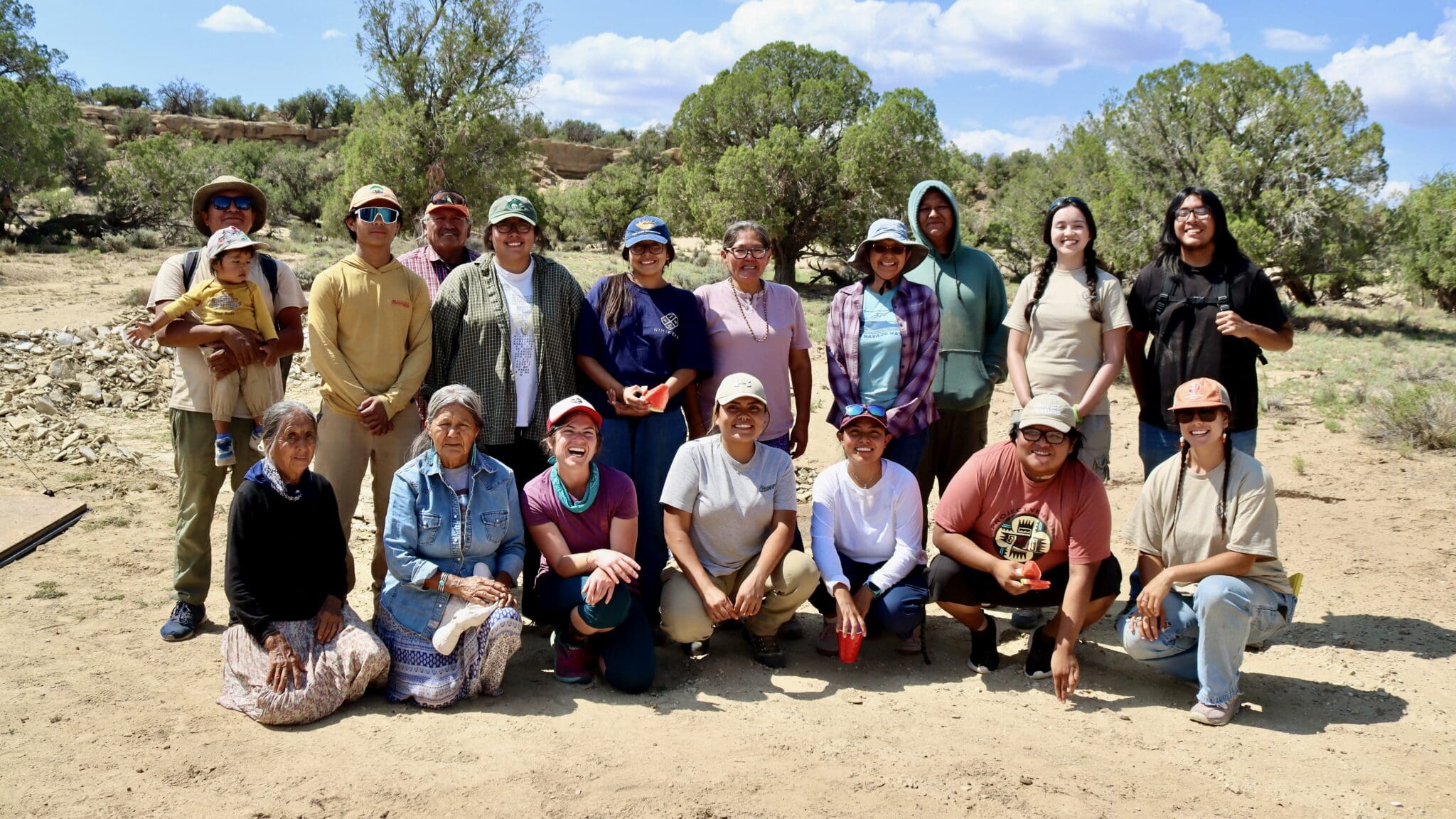
HARD ROCK, Ariz. — On Tuesday, August 11, 2026, the Tó Nizhóní Ání restorative economy crew members were joined by young scholars traversing across the Colorado Plateau. The Grand Canyon Trust organizes a yearly place-based environmental justice training for college-age students called LeaderShift. This year, LeaderShift stopped in the community of Hard Rock to lend a hand to Tó Nizhóní Ání (TNA).
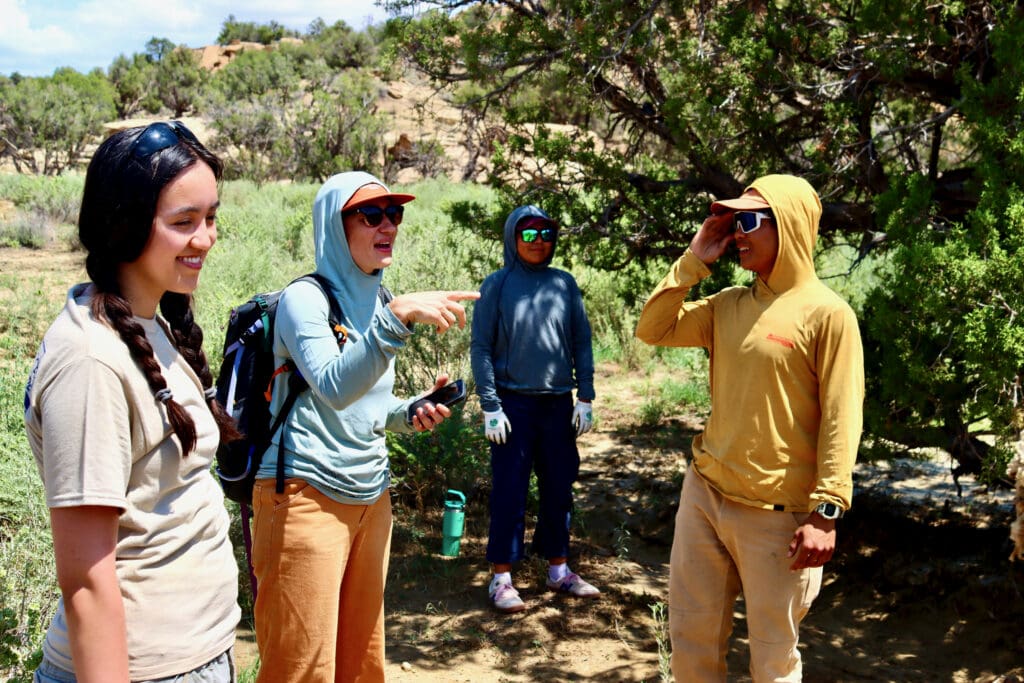
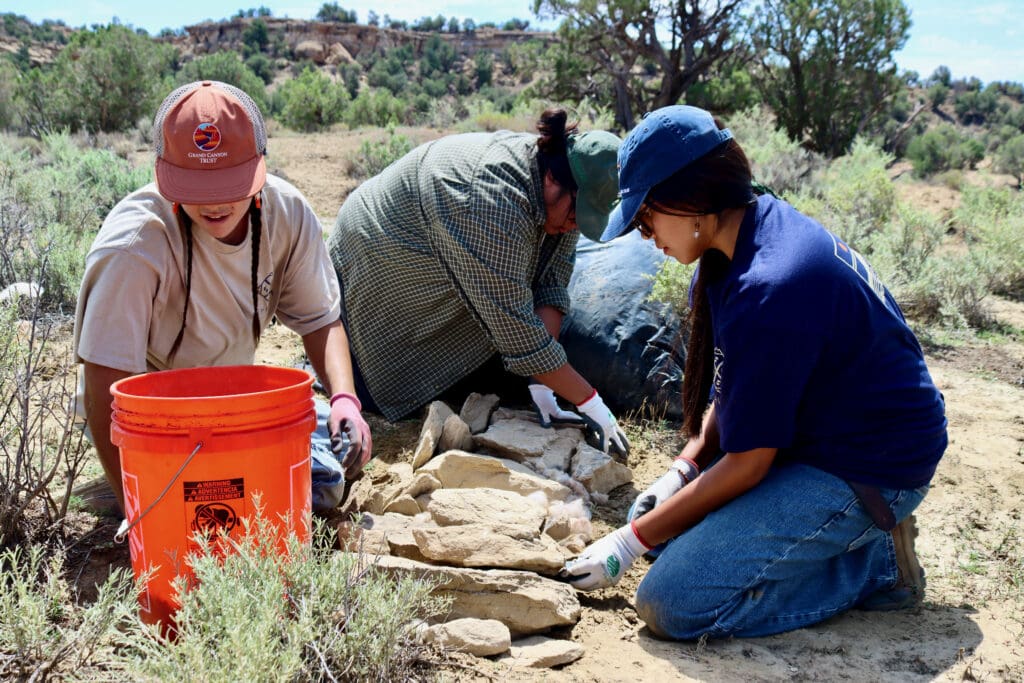
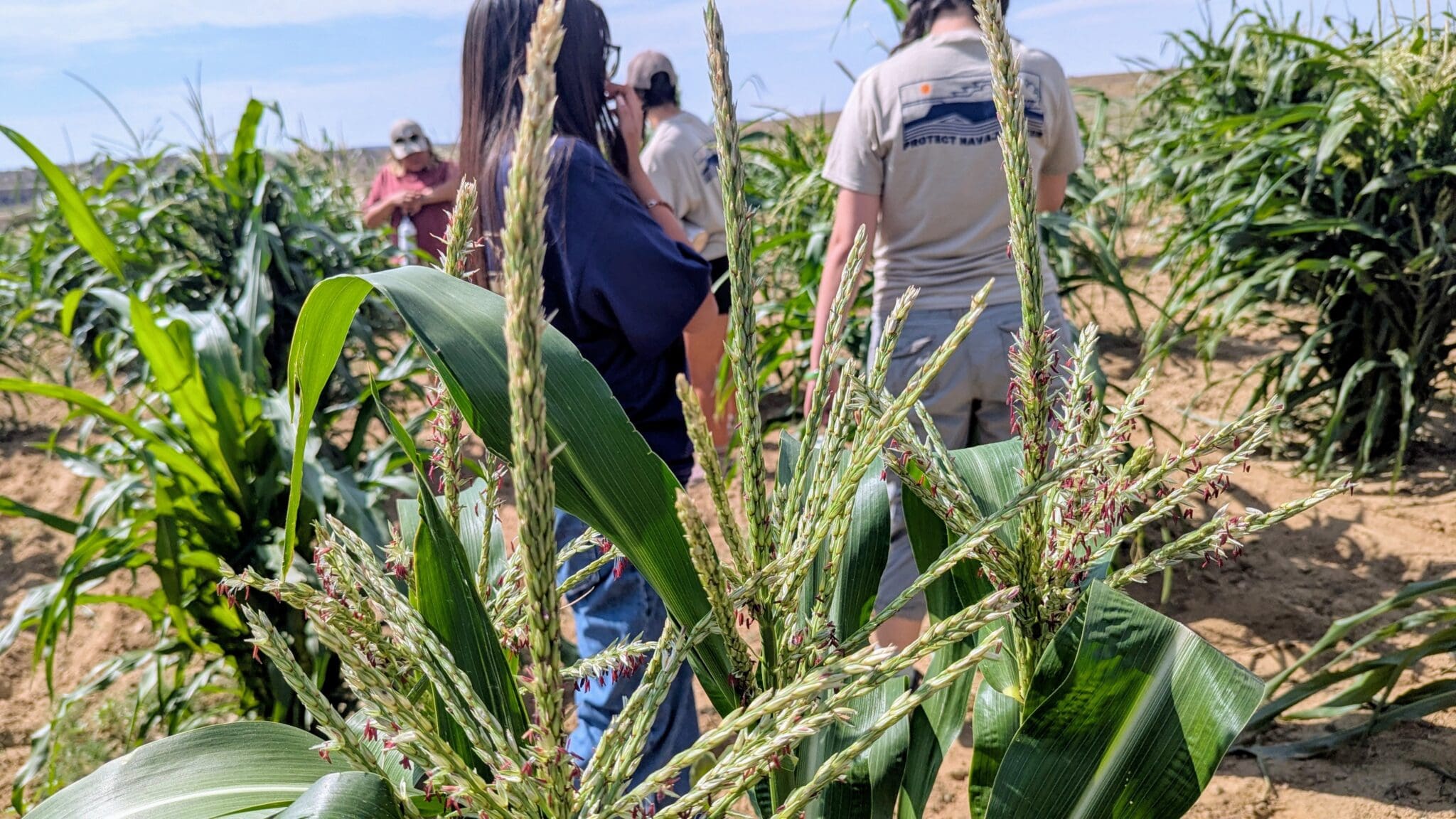
Seven LeaderShift scholars met the TNA crew members at Cottonwood Farms, where the Food Sovereignty crew planted earlier this year. Walking through the cornfield, scholars learned about the TNA food sovereignty efforts, how erosion affects Diné lifeways, and the watershed work to combat it. With the scholars eager to get their hands dirty, crew members introduced the wool logs and demonstrated how they were made for installation in the watershed.
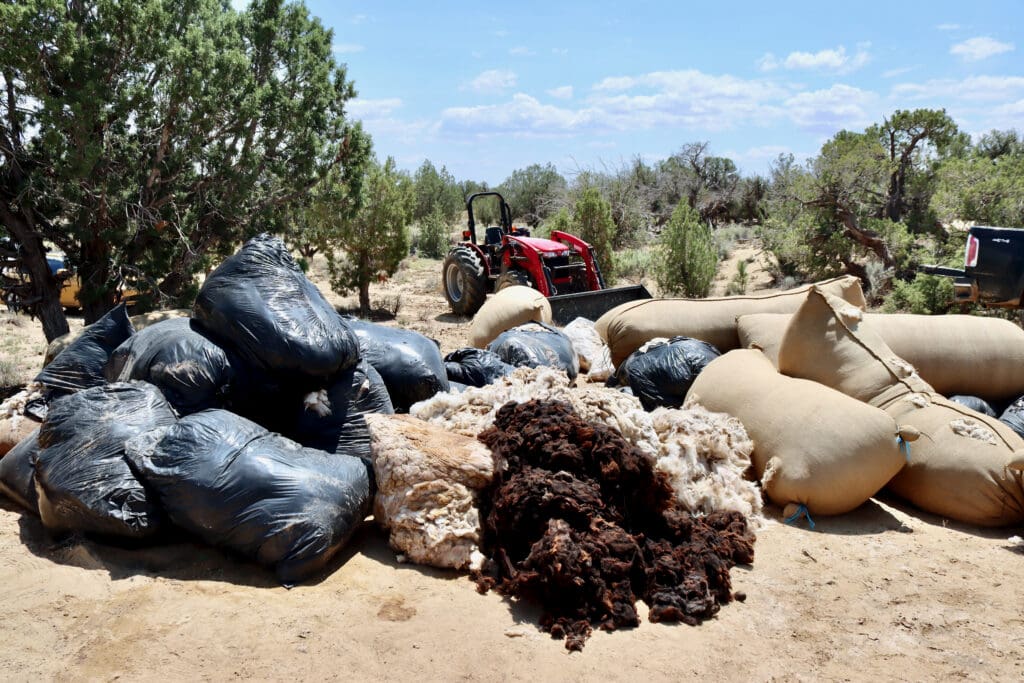
The wool used for the wool logs came from local sheep producers in Hard Rock. Using raw wool in watershed work is nothing new across the Navajo Nation. For years, sheep producers have disposed of undesirable wool in washes to help control erosion. They noticed how wool captures soil and stays wet after storms.
Many of the scholars introduced themselves in Navajo or Hopi before learning about the area’s complex history: coal mining, relocation, and the Navajo-Hopi Partitioned lands, and how the community came together to confront these issues.
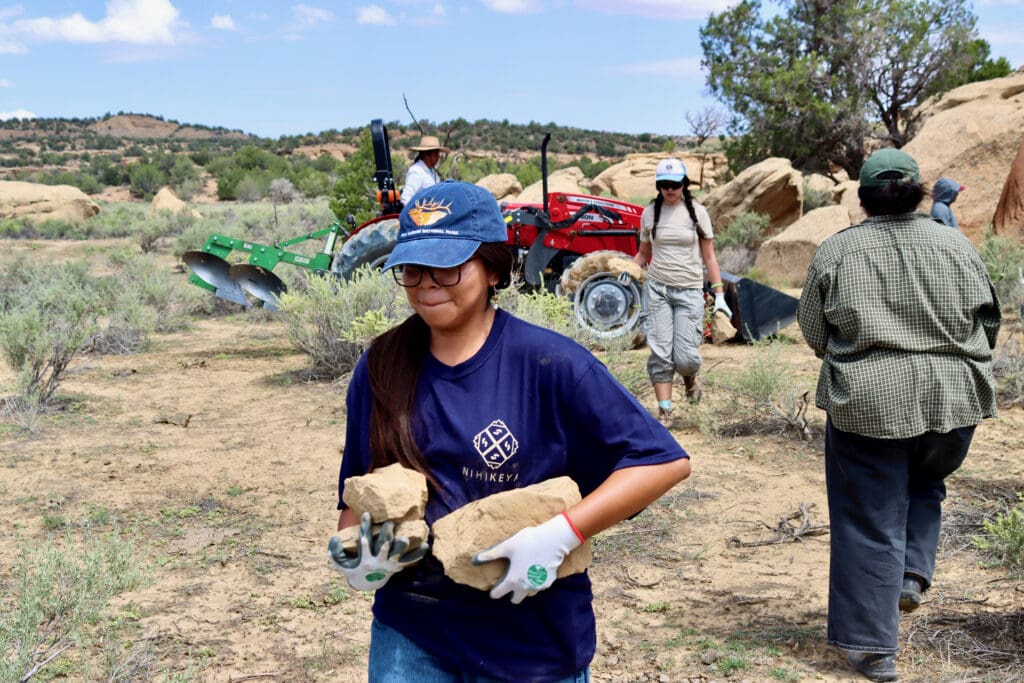
From Cottonwood Farms, scholars headed to the headwaters of the Tsiyi’ Tó Watershed, where they joined additional TNA crew members who had just returned from the Háájíbáhá (Warpath Valley) Watershed.
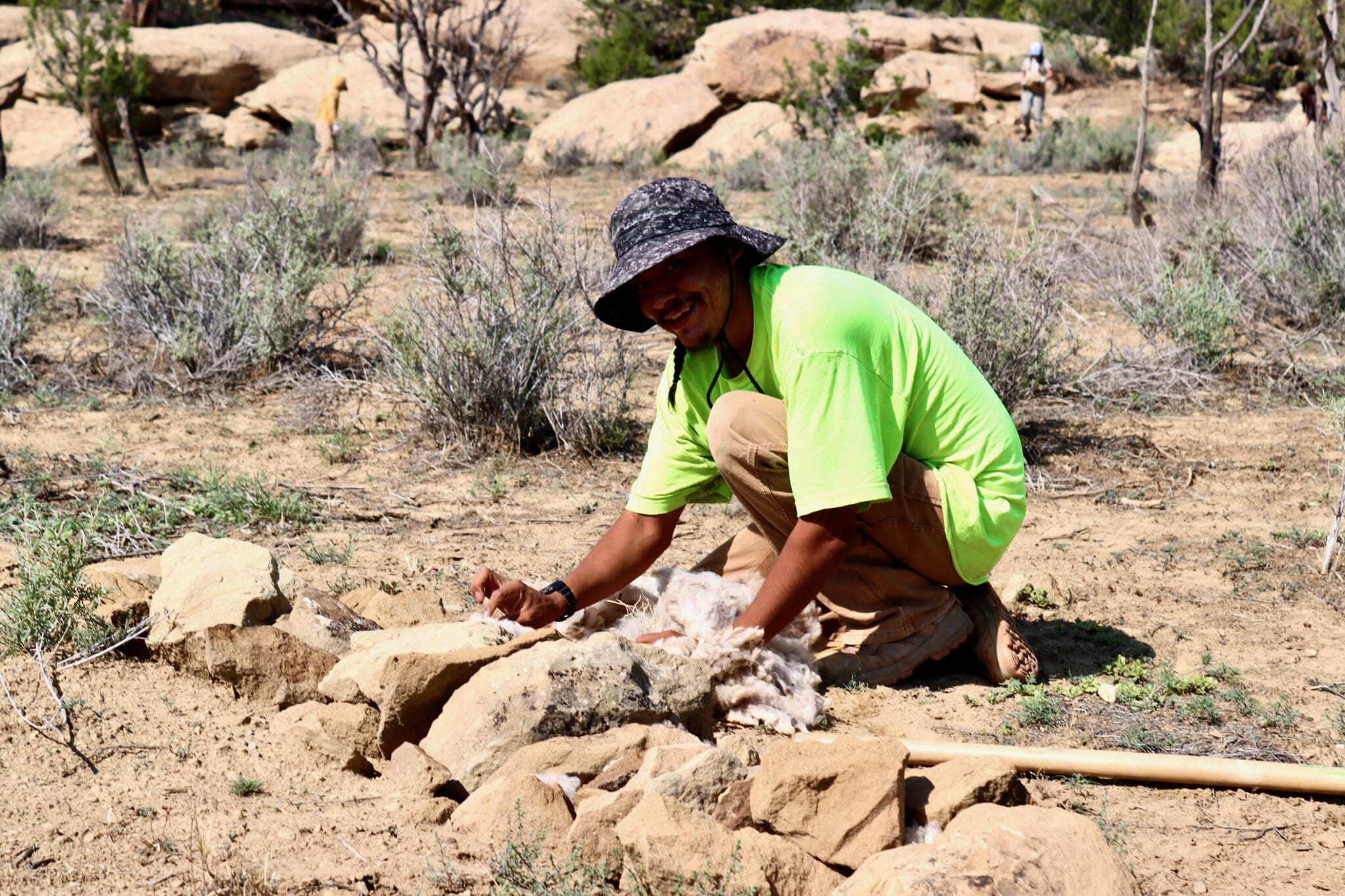
Wool is a local material, largely abundant and a byproduct of a herding economy that sustained sheepherders and rug weavers on Black Mesa through the trading post era, before the coal mines, and is still here after them. It is already in the corral, on the rangeland and in the washes, and scholars worked with the surplus TNA has been gathering. Putting wool in the ground puts the herders’ surplus to work for the communities and the farmers downstream.
Using raw wool to capture soil and slow water down is not standard practice. Wool logs aren’t in the manuals yet; they’re something TNA is testing in the field.
Brandee Keyonnie, a 2025–2026 LeaderShift scholar, was new to the idea. “I was not knowledgeable about how sheepherders were using wool to slow down water flow and everything,” she said. Keyonnie said this is what the Grand Canyon Trust LeaderShift program looks at: “how to do a Just Transition on Indigenous lands,” moving from extraction to a restorative and sustainable future. “Learning from the community helps shape all the future stuff that we’re going to do.” Working with TNA and learning what the crews are doing with wool and watershed restoration, she said, is a lesson in “practicing reciprocity with the land and how to take things that we already are using and put that back to the earth with not creating more materials than is needed.”
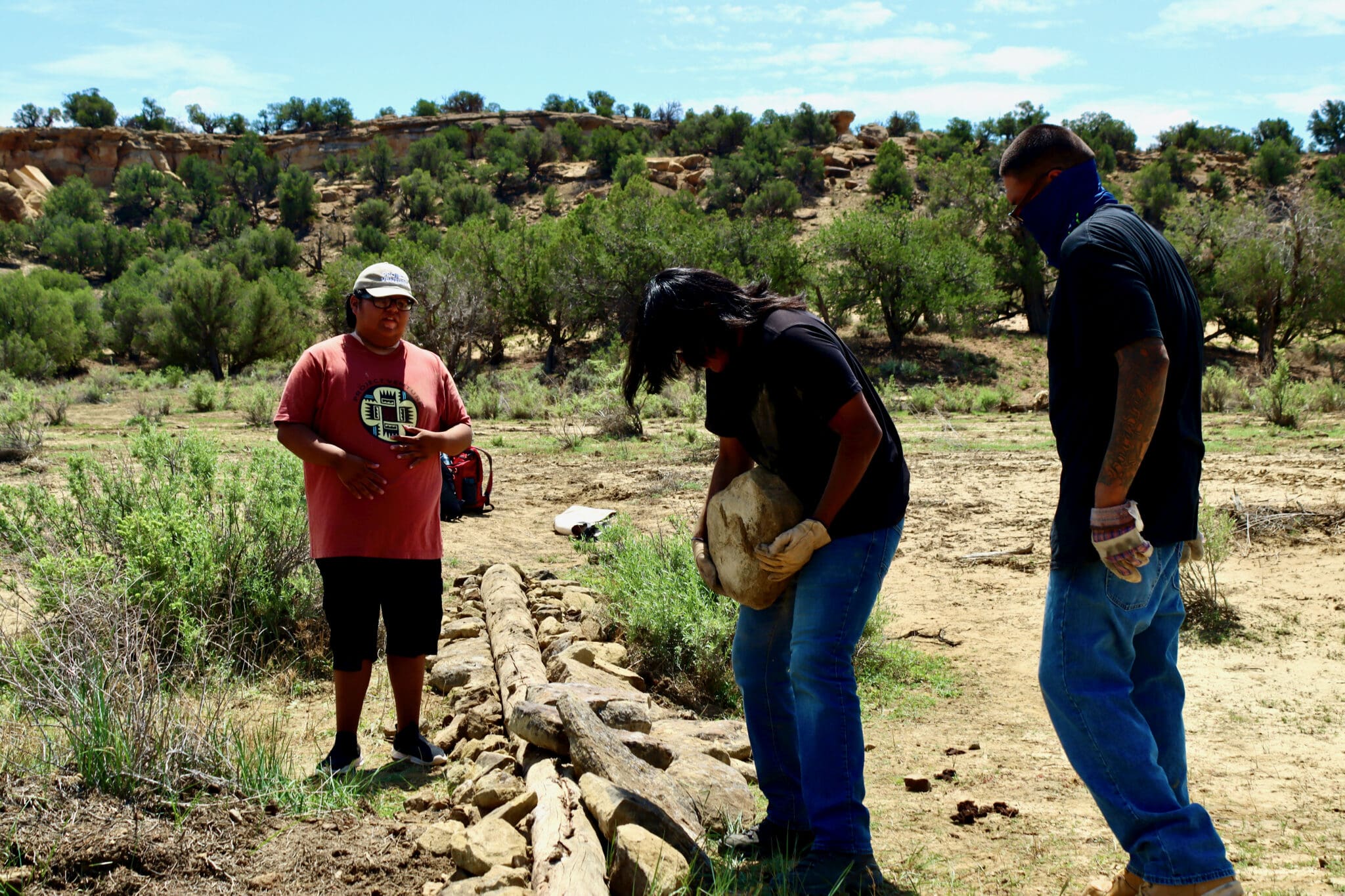
Scholars also learned that the work doesn’t end when a structure is built. “Watershed restoration is not a one-and-done deal,” said Andrew Atencia, TNA’s watershed project lead. “Construction of structures is the beginning of years’ worth of monitoring and modification. We are constantly checking the integrity of each structure installed, especially during monsoon season.”
The site where scholars were working also had one-rock dams and log mats that a flash flood had torn out. Atencia called it high flow velocity. “It was great for the group to see where structures have worked or failed,” he said. “Our work during their time here is as important as creating new structures. The water teaches us lessons with the results it gives, which is important for us to listen to.”
Over lunch, the scholars sat down with Navajo Nation Council Delegate Germaine Simonson, who represents Hard Rock,Forest Lake, Piñon, Black Mesa and Whippoorwill — the district the scholars had spent the past few days working in. Simonson spoke about her years in tribal government, and about where she thinks change comes from.
“There is not a single president, and there are not 24 council delegates, that have the ability to create change for climate change,” she told them. “So really, what kind of change are we looking for? Is there stuff that you have power and control over, that you can create that change?” And she pointed to watershed restoration as one answer.
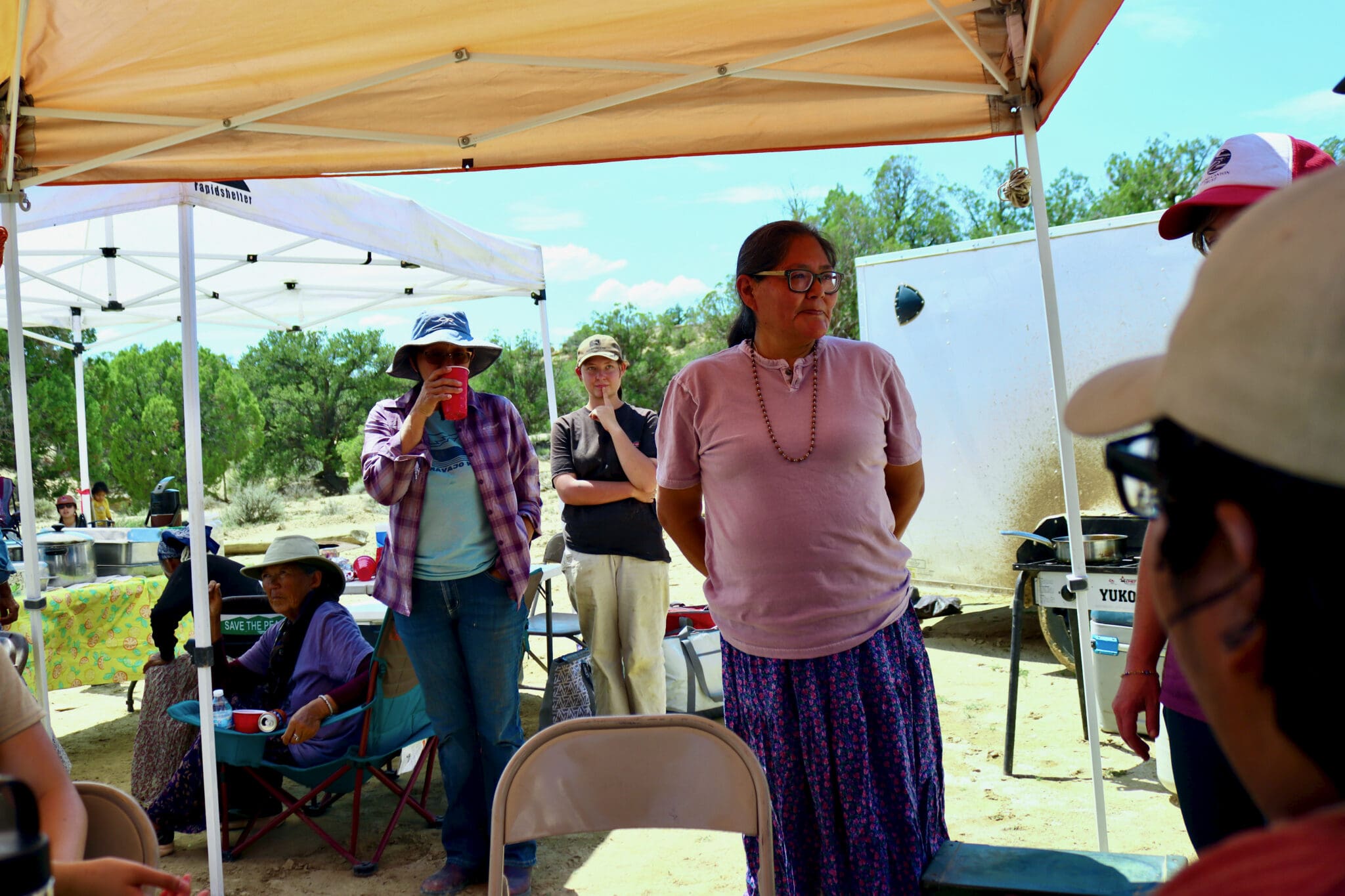
The Grand Canyon Trust first worked with TNA on trail projects. Audrey Kruze, the Trust’s community engagement director, said the day was a chance “to see a different part of the landscape and to really be part of the watershed restoration — that’s something that the Grand Canyon Trust also does all over the Colorado Plateau.” Working in the Tsiyi’ Tó with TNA, she said, was an honor.
LeaderShift, Kruze said, is about “understanding what a Just Transition looks like for the Colorado Plateau, but specifically for this area [Black Mesa].” Speaking to the scholars, she pointed to the people leading the work. “Getting to see examples, especially of other young leaders like yourself, like Andrew, like Audrey Narindrankura of TNA’s Food Sovereignty crew out here inspiring us and leading young leaders,” she said, “means a lot as sort of like role modeling and example setting.” She thanked the crew members for “boots on the ground, wool in our fingertips, work today.”
LeaderShift scholars built and maintained structures whose effect will be measured downstream long after they left the field. Water that is slowed keeps the wash from cutting deeper through Cottonwood Farms and keeps the soil from being carried down the Oraibi Wash and into the Little Colorado River. Wool is something we can hold in our hands, and it is what will hold the land.
Join our email list to stay up to date with TNA’s efforts. For more information, or to bring watershed restoration lessons to your classroom, contact watershed project lead Andrew Atencia at Andrew@tonizhoniani.org.