
Tó Nizhóní Ání attends 2026 Regenerate conference
Santa Fe, N.M. — In late October, the Tó Nizhóní Ání (TNA) Food Sovereignty Crew and Restoration Program Manager Andrew Atencia participated in the 2026 Regenerate Conference in Santa Fe, New Mexico. The conference is put on by the Quivira Coalition, Holistic Management International, and the American Grassfed Association. Through workshops, roundtable talks, and presentations, the crew learned from ranchers and farmers in the Southwest. The crew sat with restoration professionals, rangeland ranchers, and community members who are facing the same things Navajo communities are: drought, dry soils, falling water tables, and land losing its plants and wildlife. TNA staff met with funders to discuss support for future restoration work.
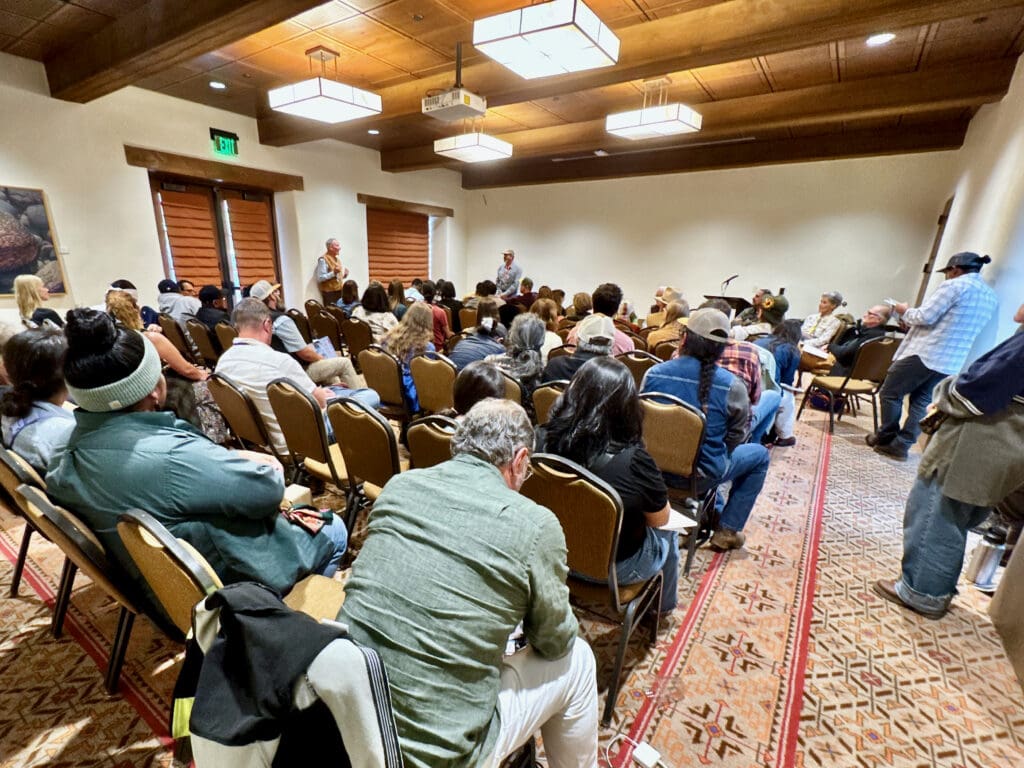
Photo: Andrew Atencia / Tó Nizhóní Ání
The conference presentations ranged from rangeland conservation in California to grass identification and agroecology. Not all of it was about the Southwest, but every presentation gave the crew another way to look at land restoration through agriculture.
Two presentations stood out: Burning with Intent by Don Hankins and Regenerating Connection: Trails, Communities, and the Future of Stewardship by Teresa Martinez. Other presentations were aimed at private ranches running large herds of cattle on grassland.
TNA’s Food Sovereignty Coordinator Audrey Narindrankura went to the sessions on carbon, weed identification, and cover crops. Asked what she’d try at home, she said: “Bring carbon into the field. Try out different types of carbon and grow different cover crops to keep the soil covered until the season starts up again.” She’s most interested in using biochar for the fields. The crew didn’t sit in the same sessions. Each of them came back with something different.
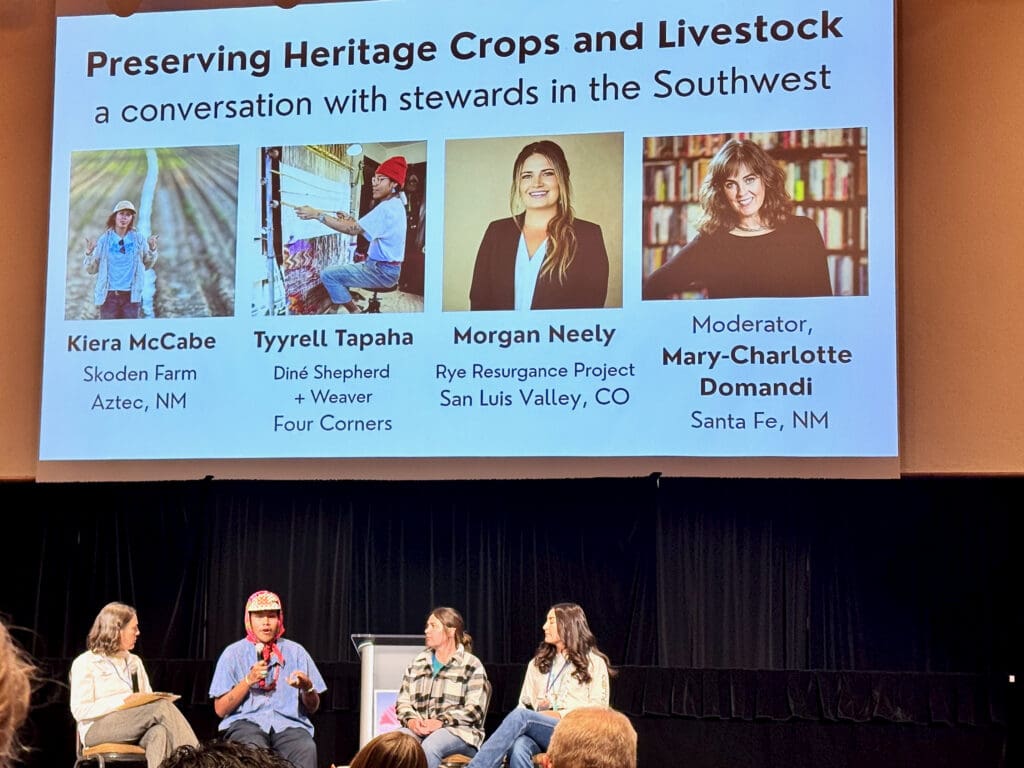
Photo: Andrew Atencia / Tó Nizhóní Ání
The conference also spotlighted Indigenous land stewards like Tyrrell Tapaha and Keira McCabe. We’re glad the Regenerate Conference put their voices and presentations in front of the whole conference.
Most of the conference was about restoring private land, but a lot of it still applies to tribal land. Aaron Simonson, Food Sovereignty Crew Lead, noticed it on the drive home. “Everything is geared towards ranchers with their own land,” he said. “We’re living on trust land. With trust land, they’ll say, how much can you control? How do you control it? That was the main issue.” On the Navajo Partitioned Lands (NPL) of Black Mesa, canceled grazing and farming permits make restoration, farming, and ranching hard to even start. TNA’s Restorative Economy program works through these barriers with local community members: planting native seeds, building erosion control, and growing traditional foods.
Tó Nizhóní Ání Restorative Economy program thanks the Quivira Coalition for covering our travel, and for putting on this year’s Regenerate Conference.
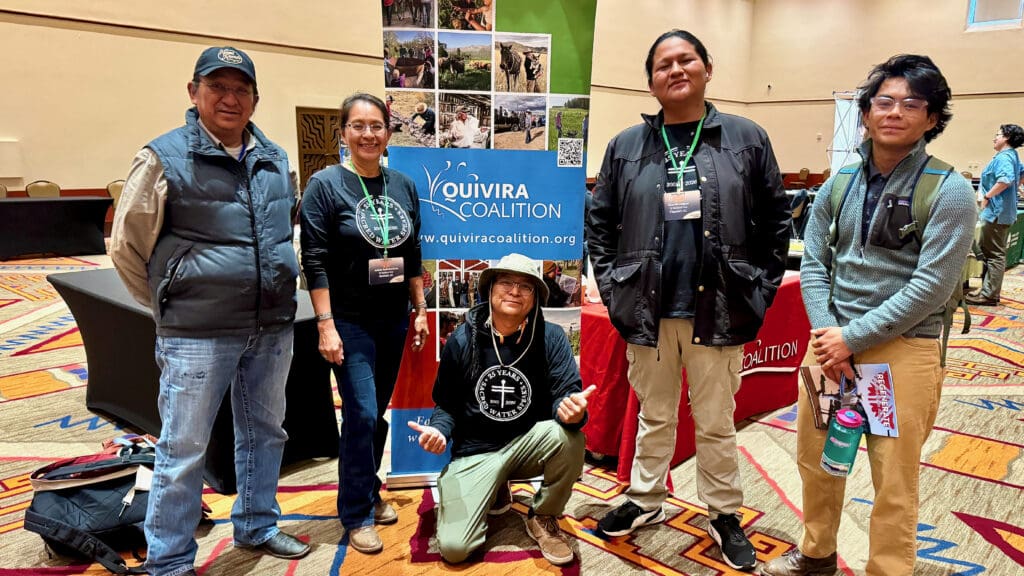
Photo: Andrew Atencia / Tó Nizhóní Ání
