Rock, Wool and Rain: A Volunteer Day at Tsiyi’ Tó
Hardrock, Ariz. — On October 13, 2026, San Juan Citizens Alliance (SJCA) drove from Durango, Colorado, to Hardrock, Arizona, to spend a day with Tó Nizhóní Ání’s (TNA) watershed crew at the Tsiyi’ Tó (Wood Springs) watershed. The roads were muddy and hard to travel, so Restoration Program Manager Andrew Atencia met SJCA members on the paved road and brought them to the watershed.
San Juan Citizens Alliance is a Durango group that works to protect land, water, and communities along the San Juan River. The San Juan River and Black Mesa are part of the Colorado River system. What the soils of Black Mesa hold, or lose, flows downstream.
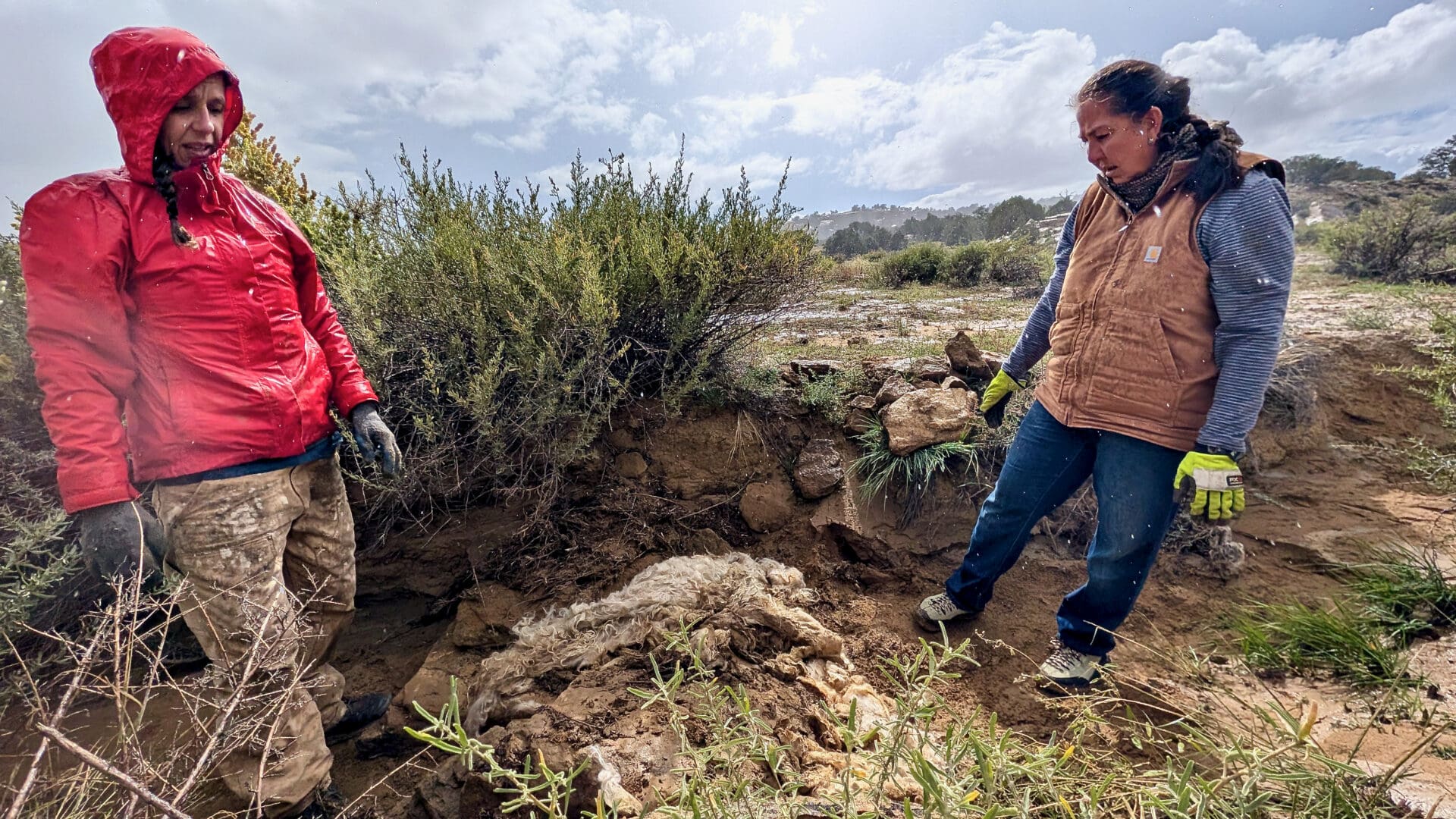
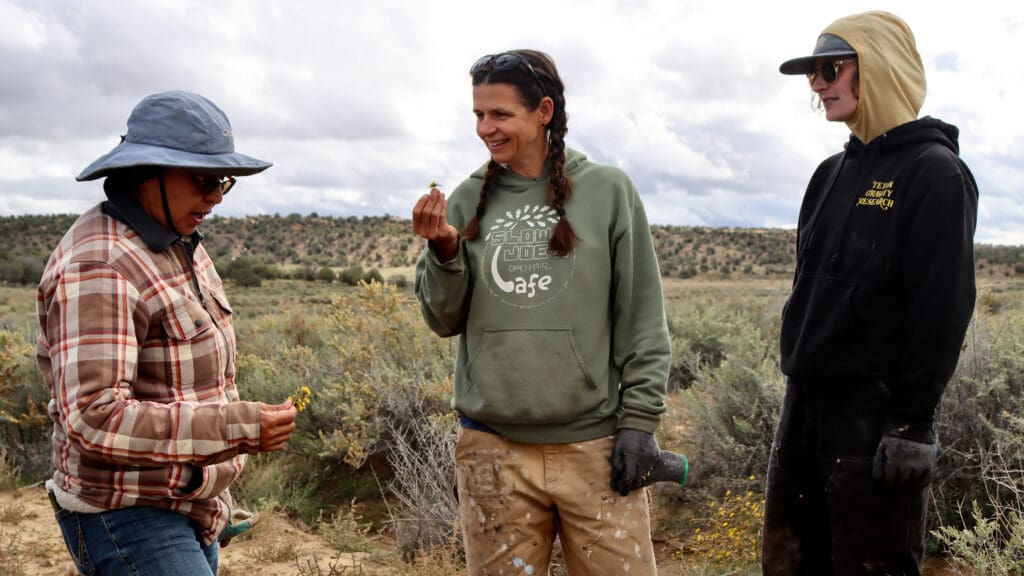
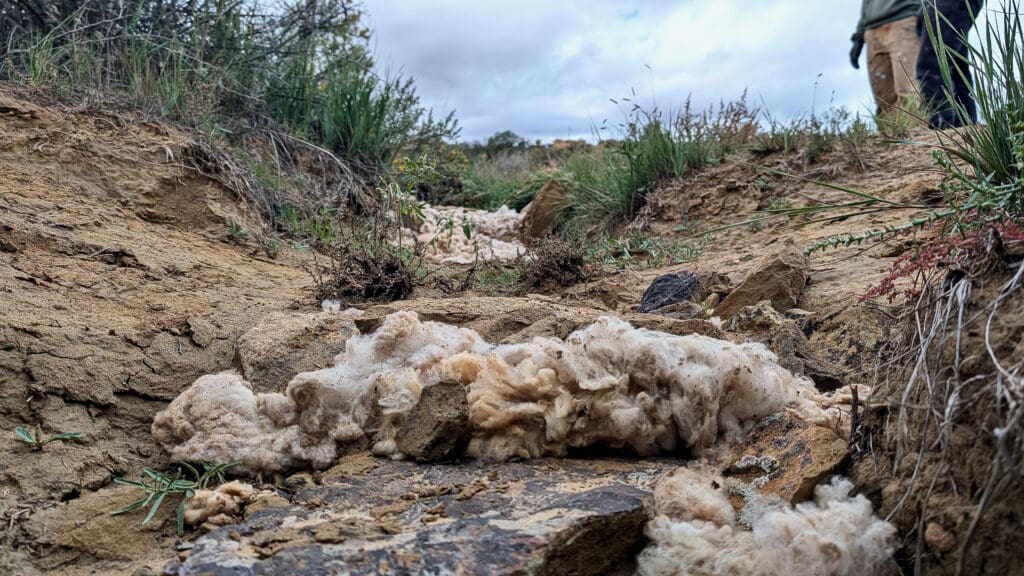
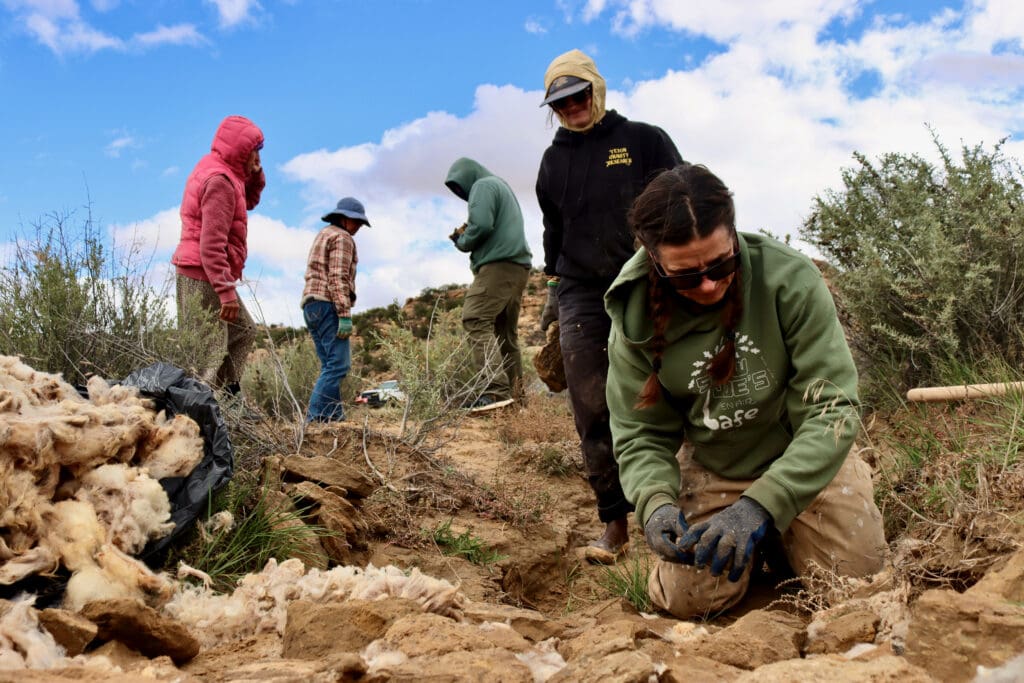
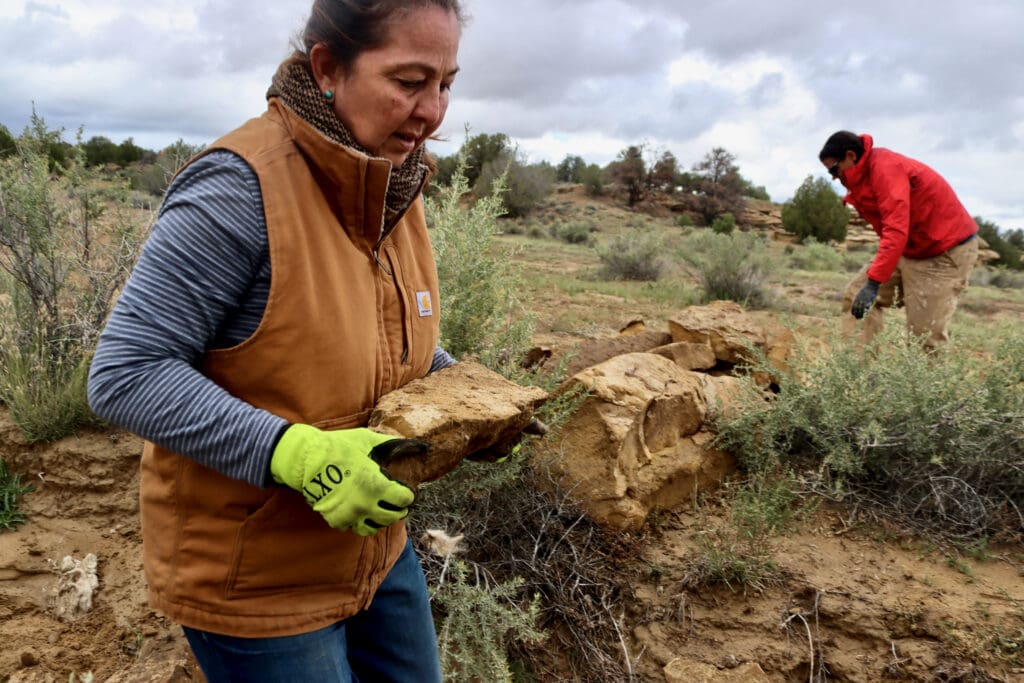
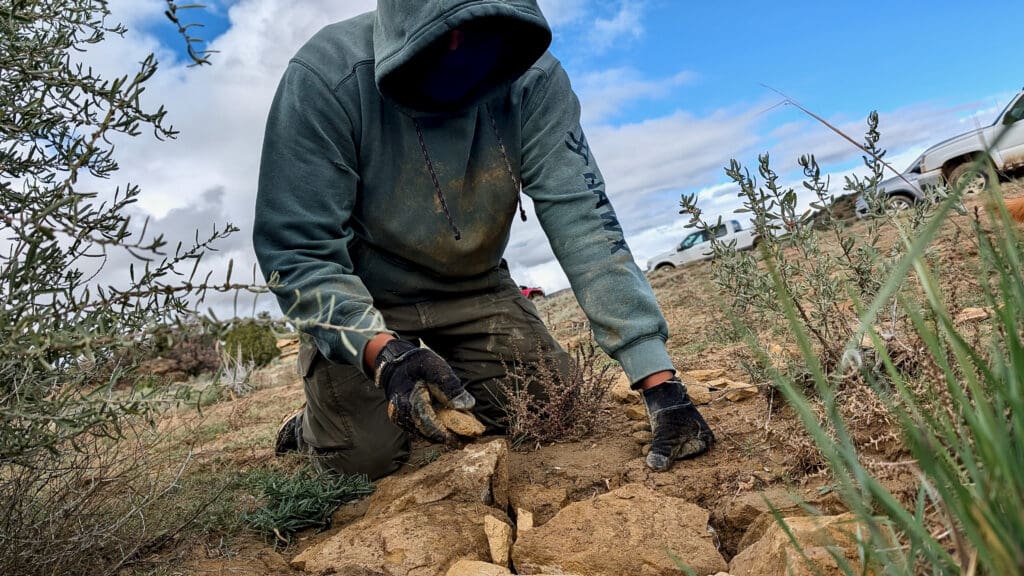
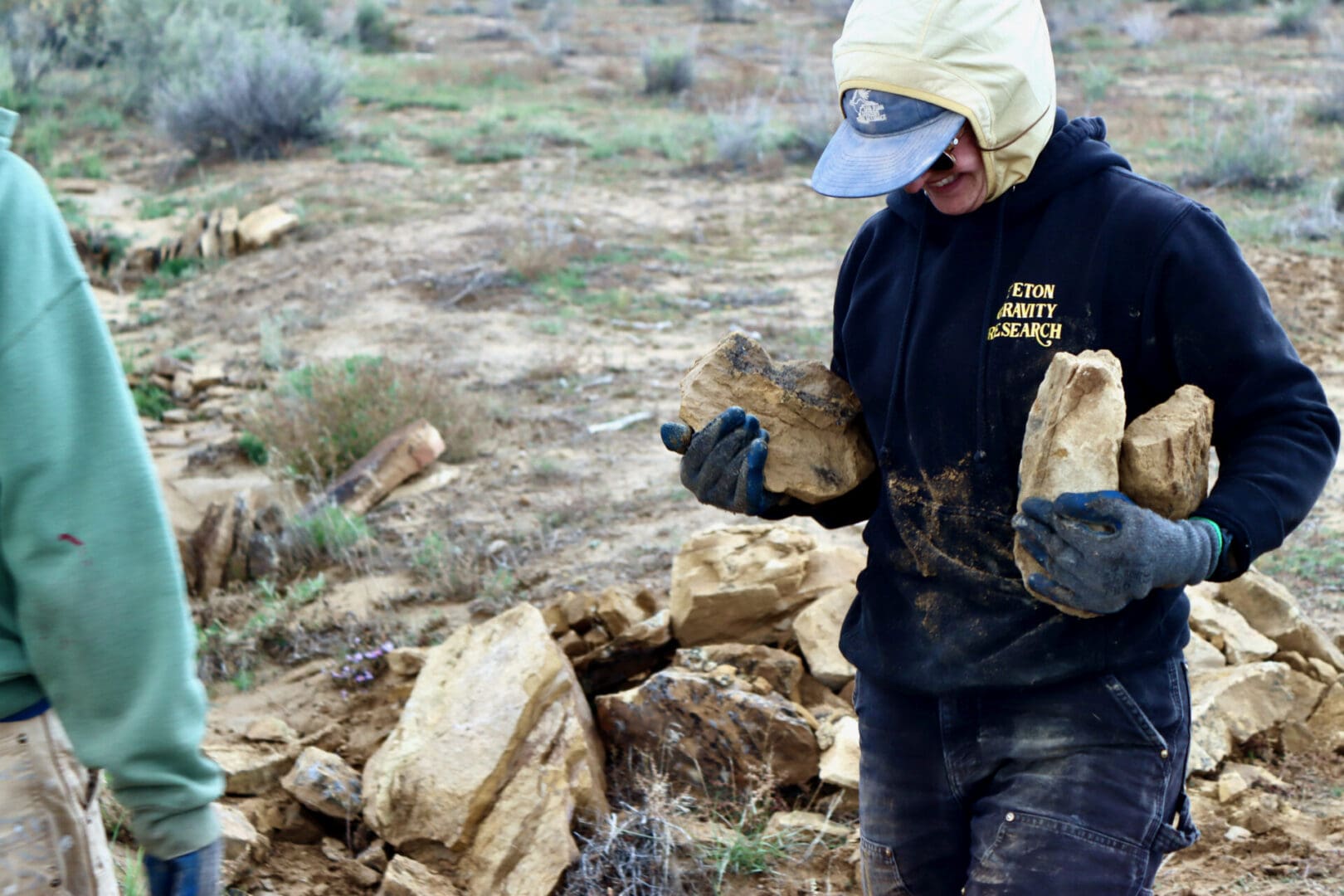
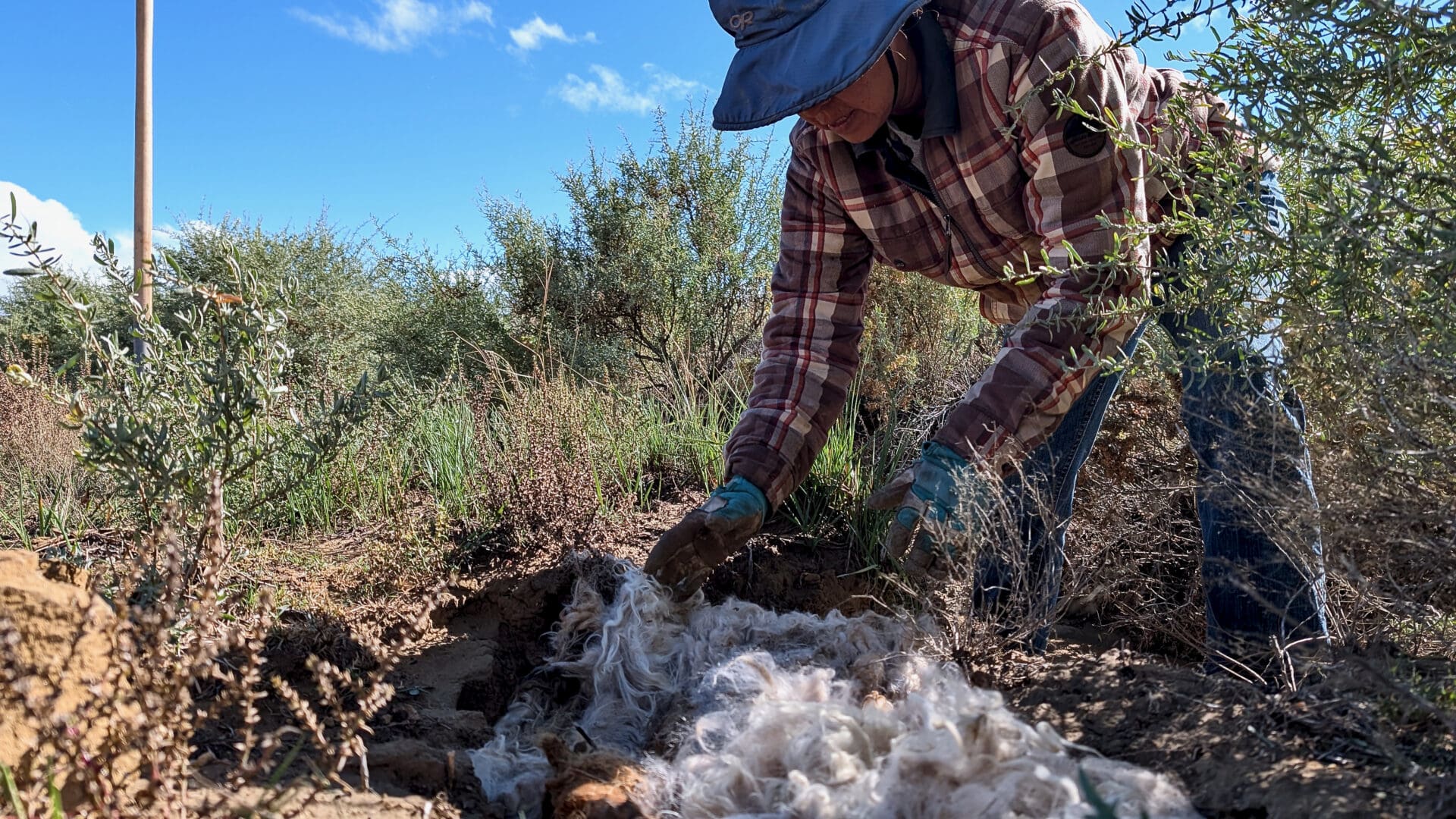
Recently, SJCA welcomed their new Executive Director Ryan Huggins to the team. Ryan and SJCA’s Climate and Energy Associate Ana Siegel worked alongside the TNA crew, moving rock, packing wool into the structures, and scattering native seed pellets. TNA Executive Director Nicole Horseherder was also doing work in the field. Andrew explained what the wool does: wool between the rocks holds moisture, captures soil, and slowly breaks down within the rocks. The structures they built are now part of TNA’s ongoing test of wool as a watershed tool.
“So much of our work at San Juan Citizens Alliance happens behind a computer screen — reviewing EISs [Environmental Impact Statements], drafting comment letters, organizing community members — it can feel pretty removed from the specific lands and the waters behind it. Spending a day on the Black Mesa landscape with the amazing Tó Nizhóní Ání team was a grounding experience for me.”
— Ana Siegel, SJCA Climate and Energy Associate
It rained on and off all day, pooling into the dirt roads and muddying the slopes. Where the plants held the soil, the water soaked in. Where the ground was bare, it flowed down roads, ran off and took soil down the washes with it. The crew and SJCA were stacking structures for exactly that rain. The runoff watered in the seed pellets Ana and Ryan had scattered that day.
The October rains were remnants of Hurricanes Rachel and Simon. To many farmers they were “the rains” that finally brought moisture to finish the melons and squash. But these storms are bigger and hit harder than anything most people here have seen. They land on ground already cut by erosion, with only the plants that survived the drought left to hold it.
Storms like these are why the structures are built: to hold soil and water in place. NOAA is calling for a wet El Niño winter.
“They’re saying there’s going to be a wet winter. I look forward to that. If the forecast is right, we should have a good harvest next year.”
— Audrey Narindrankura, TNA Food Sovereignty Coordinator
In the week after SJCA’s visit, another storm hit Black Mesa and the Navajo Nation. The road going through Hard Rock, Navajo Route 8027, was washed out. Downstream on the San Juan River, families were evacuated. We do not write this for pity. We write about watershed restoration because this is the work: building something now that holds when the storms come.
If you or your school would like to volunteer and learn watershed restoration with our crew, reach out to Andrew Atencia, andrew@tonizhoniani.org.