Seven years after Navajo Generating Station
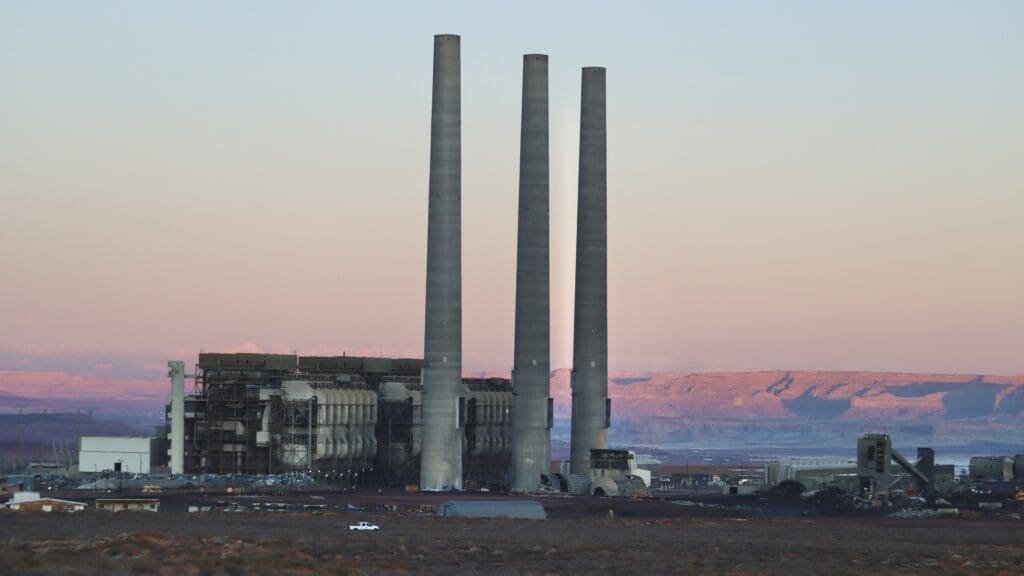
At 12:09 p.m. on Nov. 18, 2019, Navajo Generating Station (NGS), one of the largest coal-fired power plants in the West, went offline for good.
For nearly 50 years, its three 775-foot stacks stood on the eastern horizon of Page and LeChee, in northeastern Arizona. The plant burned coal from Peabody’s Kayenta Mine on Black Mesa some 70 miles away and pulled about 9 billion gallons of water a year from Lake Powell. At the time of closure, at least 400 people worked at the plant; more than 90% of them were Navajo.
In early 2017, the plant’s owners voted to close it, citing economic reasons. Alternative energy was cheaper on the open market, and coal costs kept rising. Later, in 2018, the owners attempted to transfer or sell the plant to Avenue Capital, a hedge fund company, and Middle River Power. The companies backed off after a group of Diné youth and elders staged a protest in New York outside the Avenue Capital office.
Next, a Navajo enterprise, the Navajo Transitional Energy Company (NTEC), tried to acquire the plant. The Navajo Nation Council also rejected the effort. That week, activists called for an end to the delay in transition. “Each attempt to transfer the plant is an attempt to continue coal, and this delays efforts to transition post-coal,” said Nicole Horseherder of Tó Nizhóní Ání.
2026 marks seven years since NGS closed. Recently, the Arizona Corporation Commission (ACC) dismissed a request for transition assistance for coal-impacted communities in the rate case of Tucson Electric Power (TEP), one of the plant’s owners. Tó Nizhóní Ání and San Juan Citizens Alliance have made that request in TEP’s rate cases since 2019.
What has become evident is that this effort will not produce the desired results if the Navajo Nation doesn’t advocate for itself. The Navajo Nation needs to make coal community transition a priority.
Sources: AP; High Country News; SRP; POWER; Navajo Times; Indigenous Action
