Watershed partners assess 2026 Warpath Valley restoration efforts
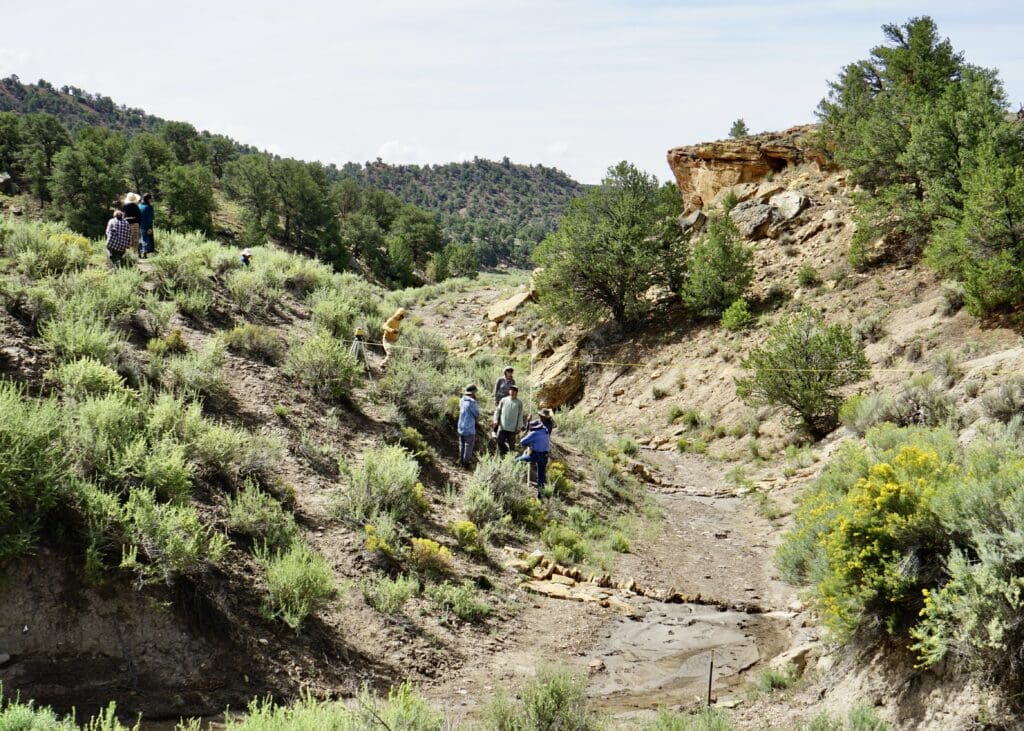
BLACK MESA, Ariz. – On Friday, August 14, 2026, Tó Nizhóní Ání (TNA) watershed partners Natural Channel Design Engineering (NCDE) visited the Háájíbáhá (Warpath Valley) watershed for the last time in 2026. The partners spent the day walking the watershed with TNA watershed crew members to assess key structures built this year while examining soil retention.
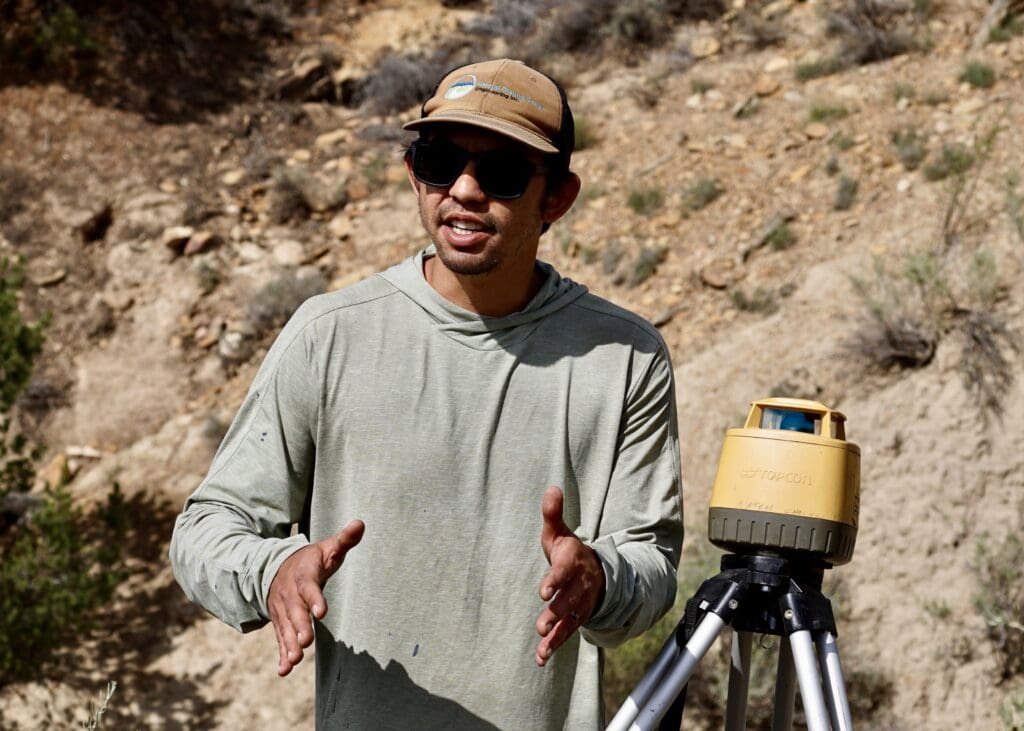
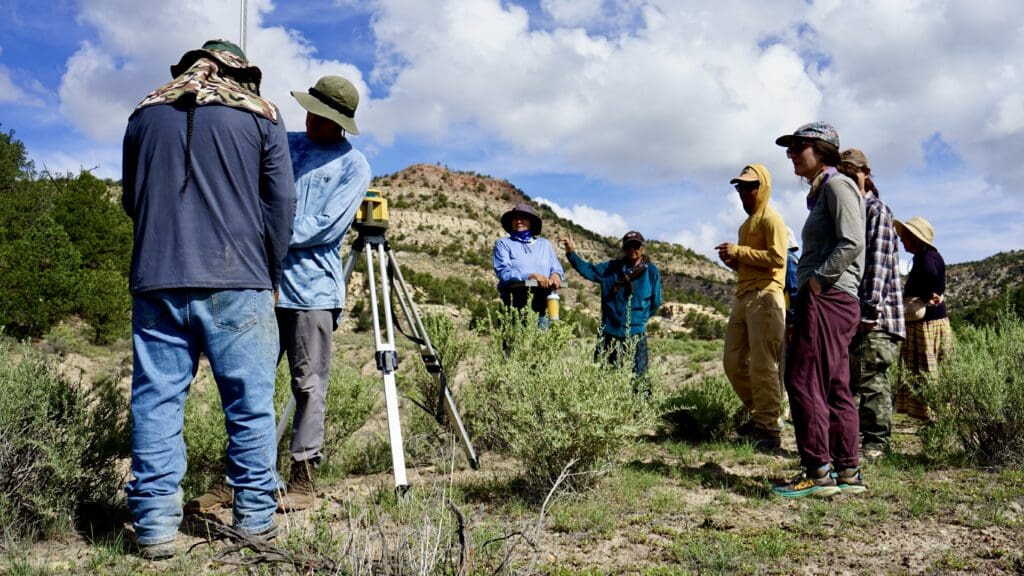
The day began early at the Homestead Watershed, the valley adjacent to the host family’s home, where the TNA watershed lead, Andrew Atencia, led the group to the first major fork in the valley. TNA watershed technicians Delaney Yoe and Calbert Small assisted NCDE with the cross-section measurement at the fork. Earlier in the year, Andrew and the watershed team conducted the initial measurement of the wash and concluded that 55.68 cubic feet of sediment was retained from the One Rock Dam, equivalent to a truckload of dirt in a short-bed Ford F-150.
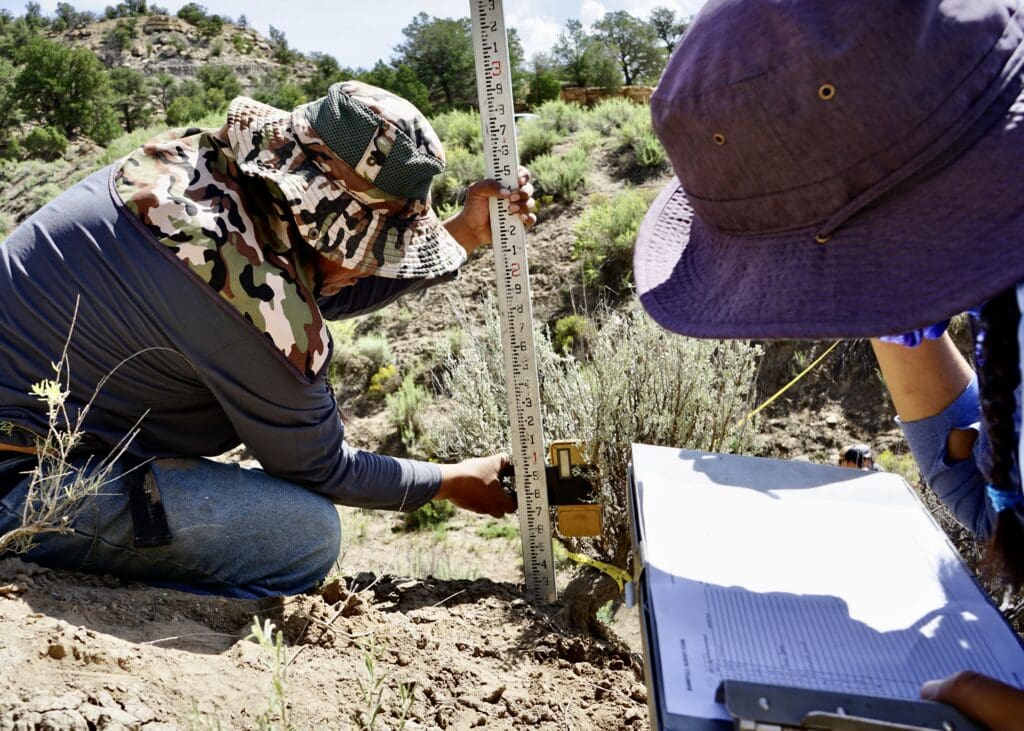
“Repeated monitoring cross-sections can show changes in channel form and morphology. For example, repeated cross-sections can show aggradation or degradation over time or shifts in the thalweg. By training the TNA watershed crew to complete these measurements with their own tools, and interpret the results, we are taking the crew’s skill sets beyond implementation towards long-term monitoring.”
– Sam Ebright, Natural Channel Design Engineering
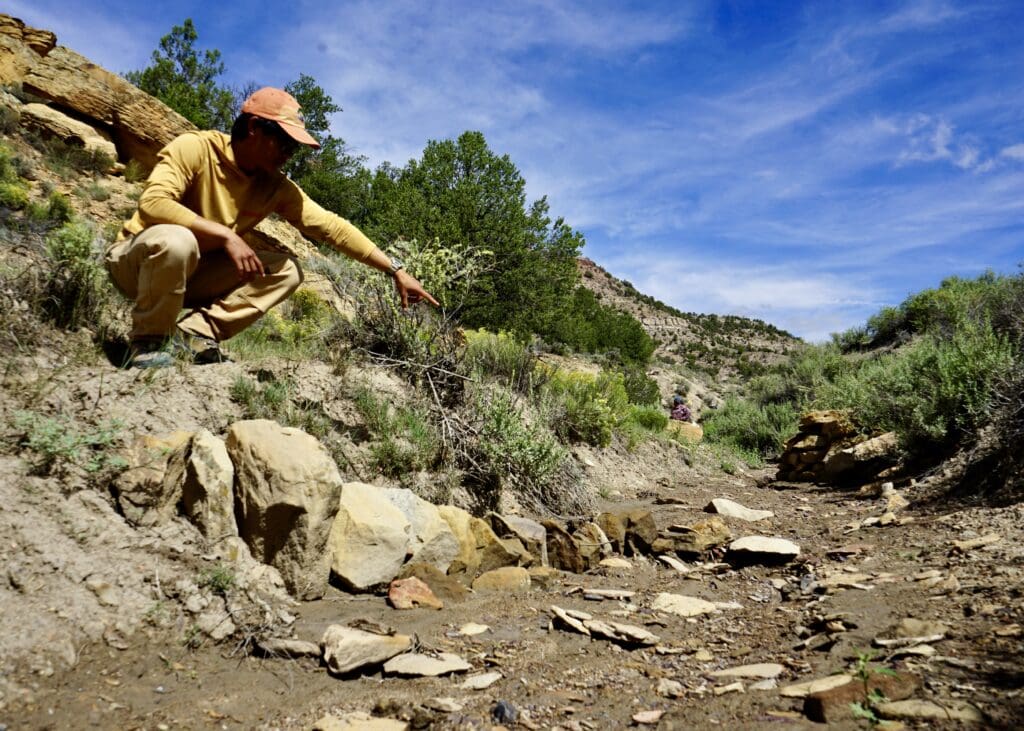
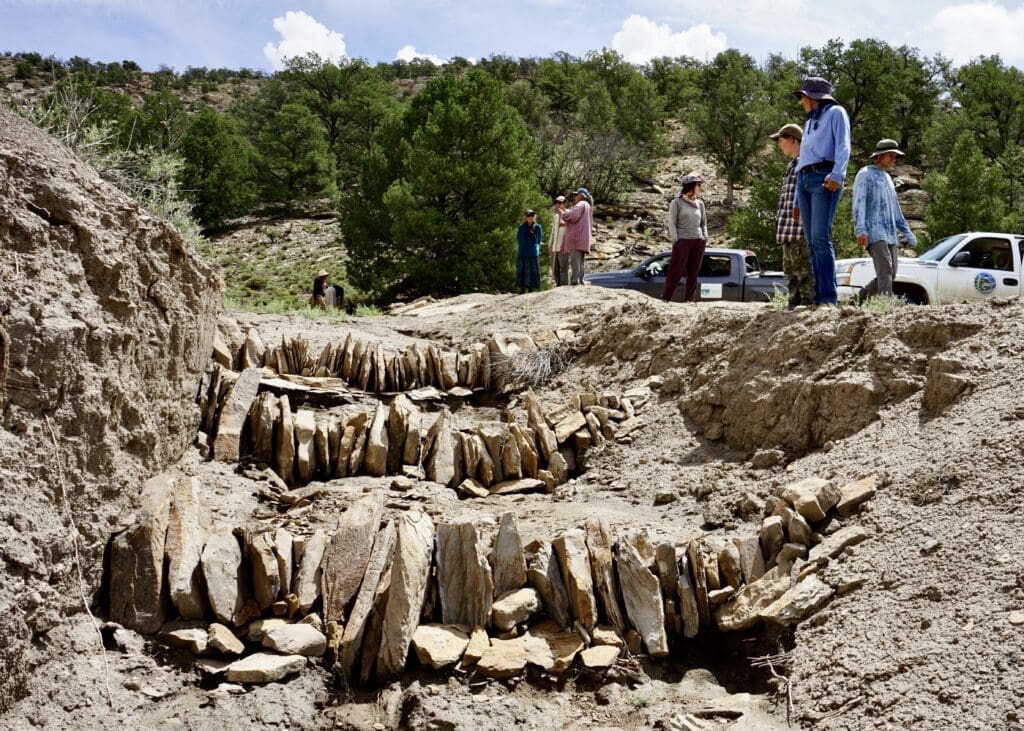
In the same wash downstream were boulder baffle structures that held up during the last rainstorm. Boulder baffles are rock structures that encourage induced meandering (when water flows in a curvy, bendy path) to help create additional pools of water, slow flow velocity, and encourage more plant growth with increased sediment deposits. The TNA watershed crew members saw the fruits of their labor, as a small bank formed as a result of this structure.
The tour continued to the tail end of the Homestead Watershed, where a large earthen dam once held hundreds of gallons of water from the winter and summer moisture. Today, the earthen dam is mostly full of sediment and holds very little water. To prevent future erosion and cutting of the earthen dam during flooding, watershed crew members built two spillways to guide water past the dam back into the main wash.
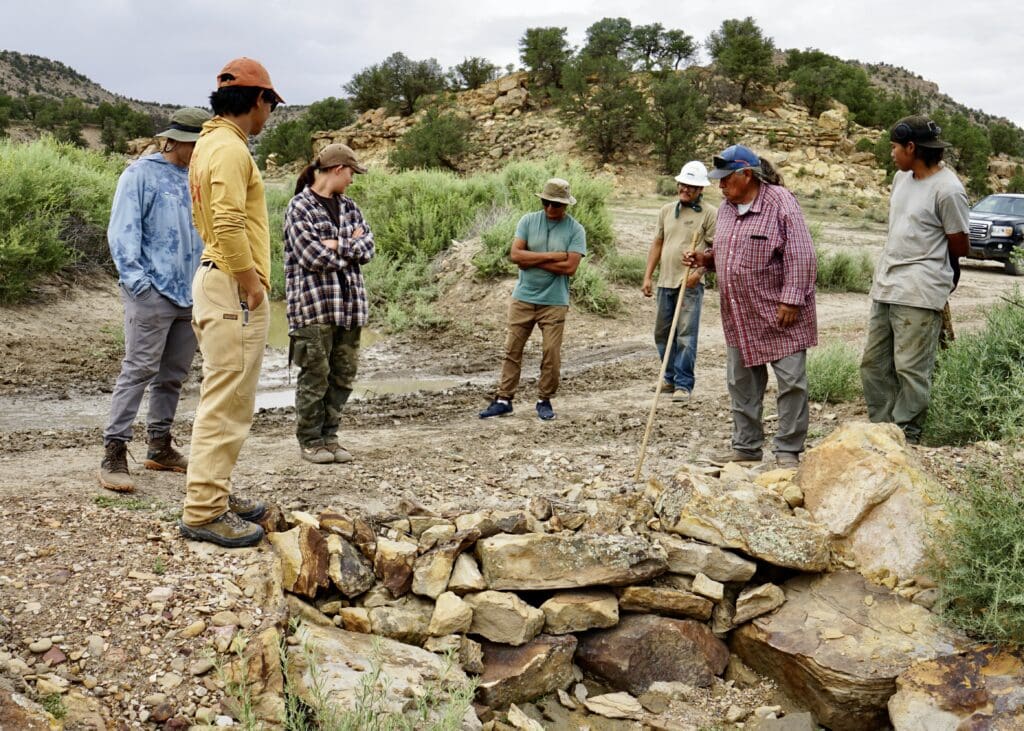
As a crash-course TNA summer intern, Leanna Cox helped build one of the smaller spillways adjacent to the earthen dam in the first few weeks of her internship. Guided by her supervisor and mentor, Andrew, Leanna’s structure held up through the rainstorms that swept through Warpath Valley.
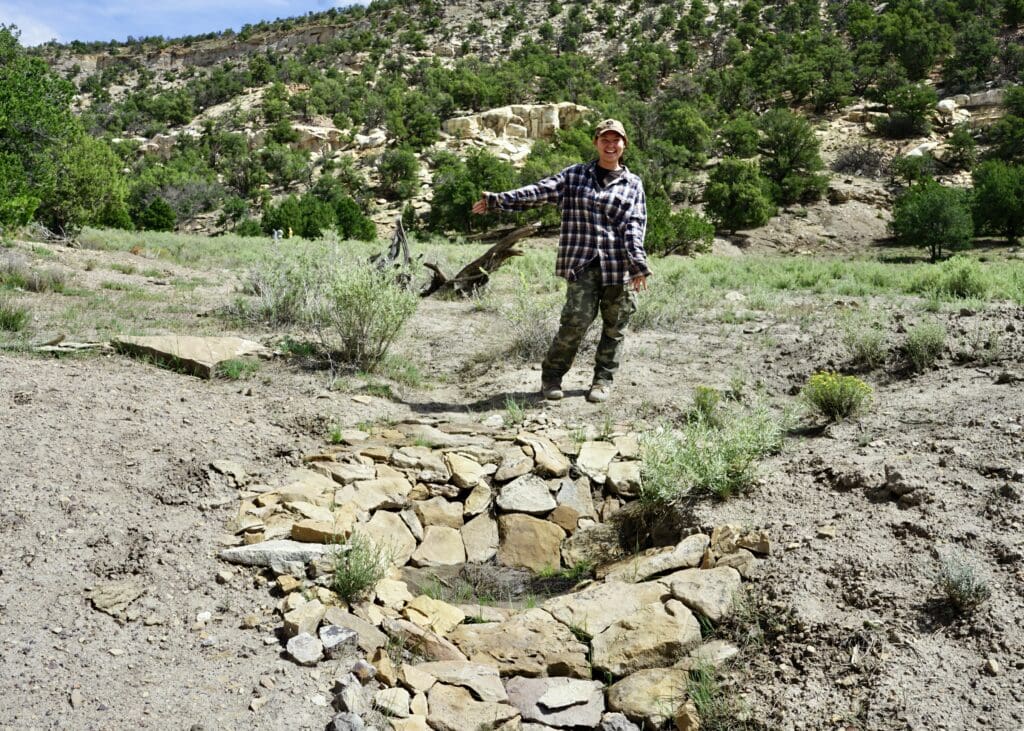
“This bowl was one of the first structures I made during my internship. When I built it, I wasn’t sure it would hold up. I was still getting the hang of erosion control structures and learning as I went. A couple of months later, it started trapping sediment.”
-Leanna Cox, Watershed Summer Intern, Tó Nizhóní Ání
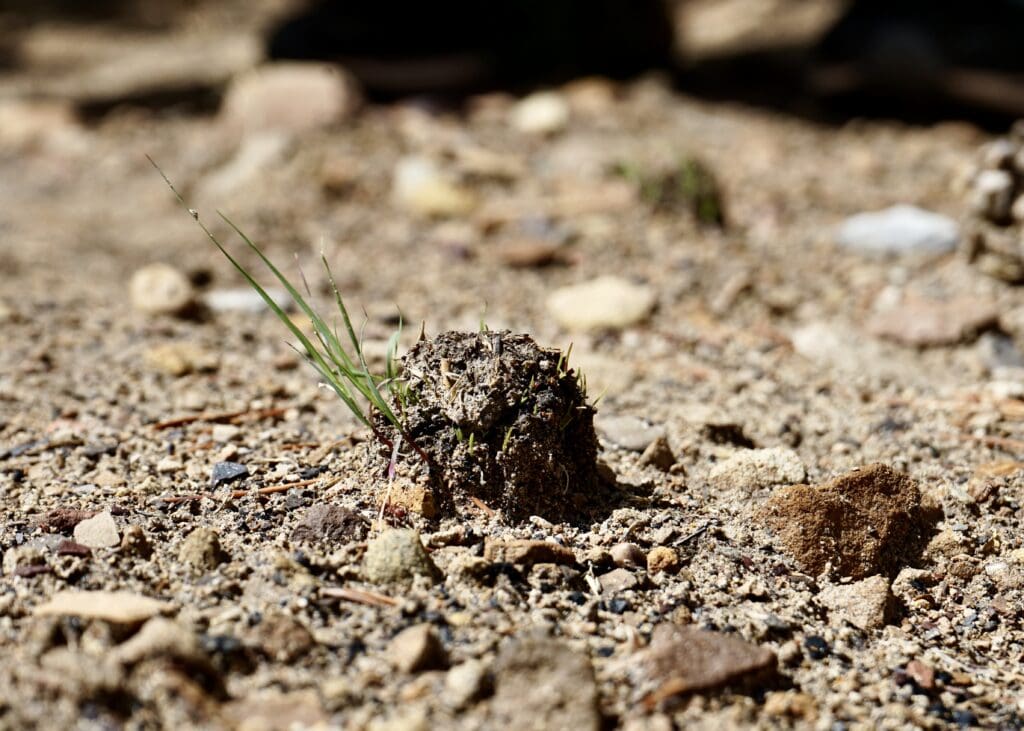
Past the earthen dam, Andrew showed the watershed partners the large media lunas constructed. The media lunas aim to improve soil retention in flat areas while reducing sediment buildup in the earthen dams downstream. Before lunch, TNA watershed technician and host family member Delaney showed watershed tour participants prominent yucca plants growing near an erosion control structure with sprouted seed pellets.
After lunch, the tour continued to the upper reaches of Warpath Valley, where the group made two stops: 1) at the original Warpath Valley Wash and 2) Tódík’ǫ́zhí (Salt Water) Wash. The structures built at these two locations were a mix of old and new structures. TNA watershed crew members assessed their creations alongside NCDE experts to deepen their understanding of building structures in various landscapes and channels. Despite being at the headwaters of Warpath Valley, these two areas received less rainfall than their lower counterparts. The Tódík’ǫ́zhí (Salt Water) Wash is also home to the largest beaver dam analog (BDA) structure built in Warpath Valley.
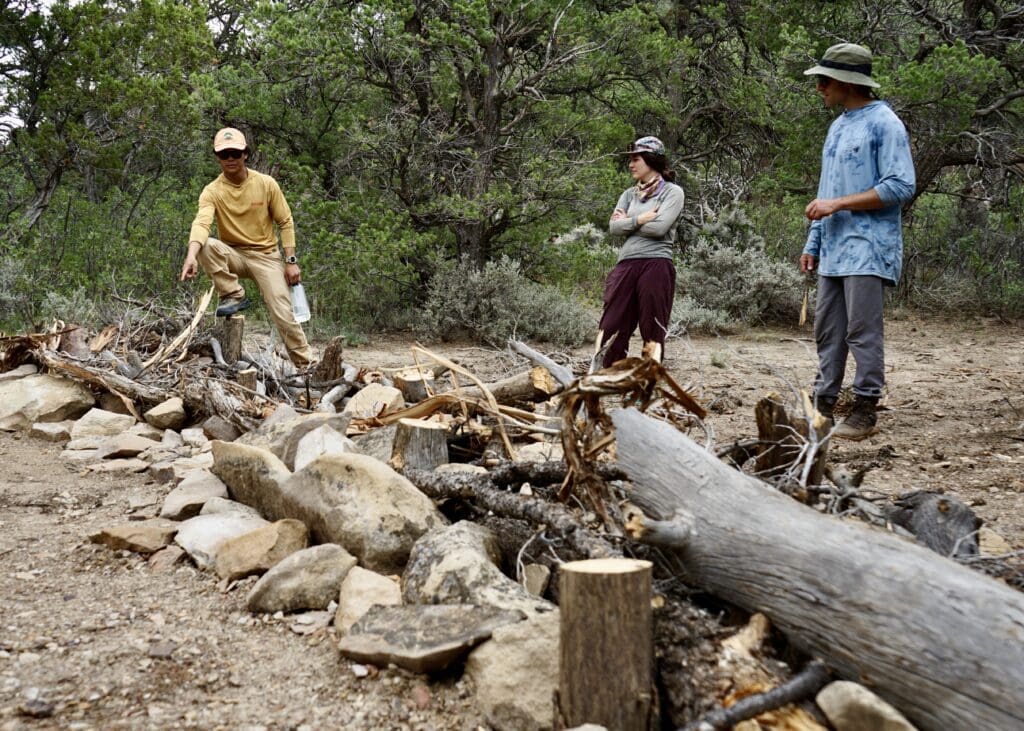
“The original Warpath Valley and Salt Water Wash are both sand-dominated upland washes, hosting environmentally sensitive habitat for species like Mountain Lion and Owls. Knowing this, we created structures that allowed for the greatest ecological impact while being mindful of the land we are choosing material from. We built the BDA structures with available local material, despite the lack of beaver habitat in the Salt Water Wash. Straight log posts support the structure from the inside while rocks strengthen the structure from the inside. I’m invested in how the BDAs withstand the test of flashy flows – they’re built with flash flows in mind.”
-Andrew Atencia, Watershed Restoration Project Lead, Tó Nizhóní Ání
At the conclusion of the watershed tour, Andrew and team brought NCDE back to the Homestead Watershed to examine the road crossing built in early June. Recent July rainstorms produced measurable results, including backfilling of sediment in the road-crossing structure. This resulted in inches of soil buildup, which raised the road crossing.
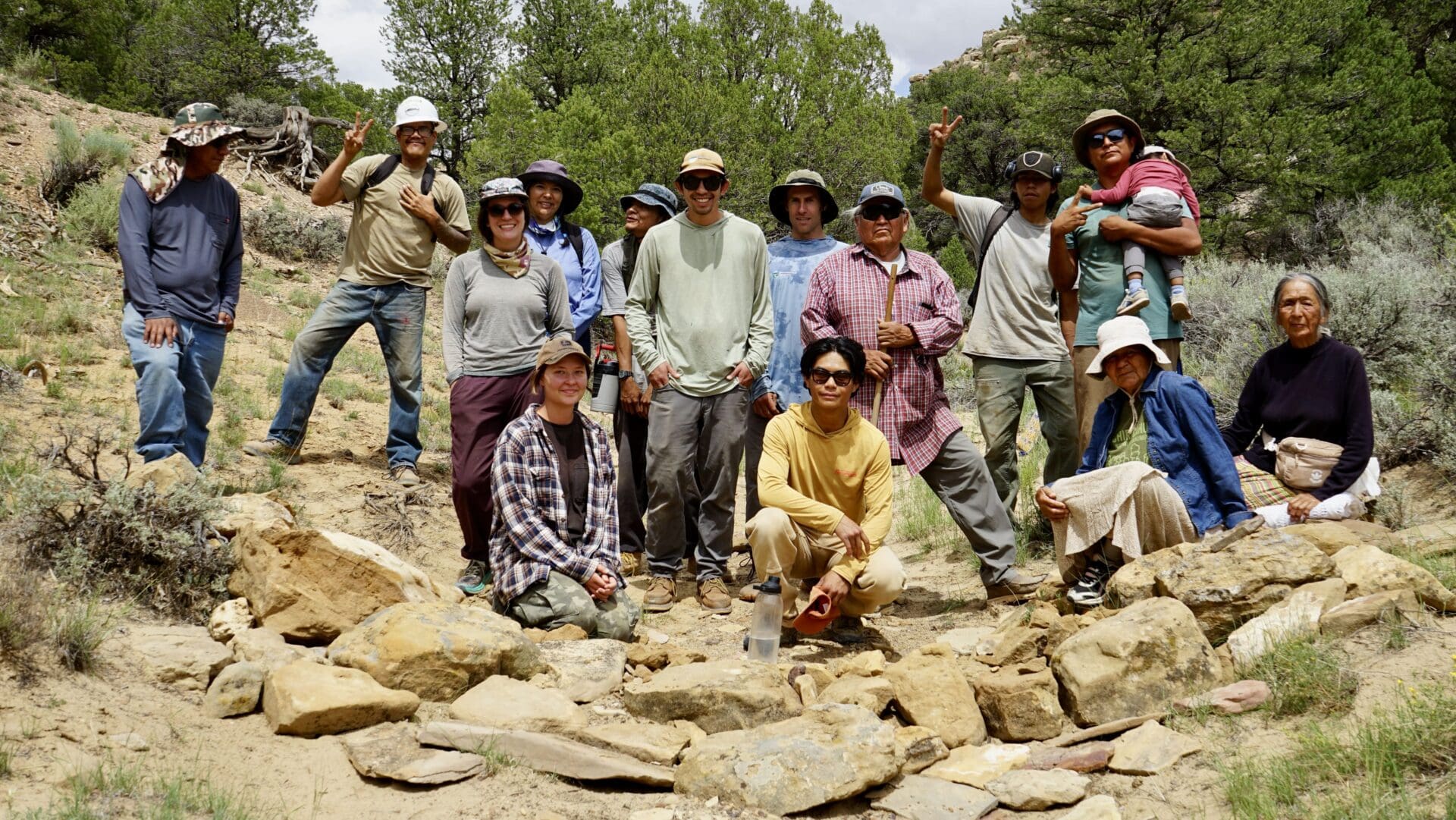
As the watershed restoration building efforts come to a close at the Háájíbáhá (Warpath Valley) Watershed, Tó Nizhóní Ání would like to thank all of the crew members who worked tirelessly to restore this watershed and Natural Channel Design Engineering for the continued partnership and expertise. Most importantly, Tó Nizhóní Ání thanks the host family, Abel Benally, Delaney Yoe, and Judie Yazzie, for entrusting the watershed program to restore the Háájíbáhá (Warpath Valley). To learn more about the organization and past projects, visit www.tonizhoniani.org/watershed.