
Leanna Cox, Watershed Summer Intern, Tó Nizhóní Ání
Warpath Valley, Kits’iili
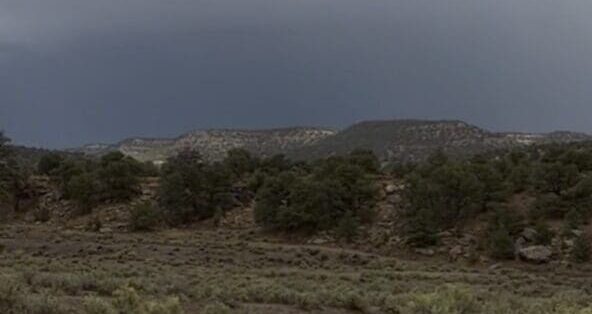
After three days of building in the heat, TNA crews working to restore Kits’illi’s watershed finally got to see the rain they’d been hoping for all summer. A monsoonal thunderstorm rolled in Thursday evening. The storm began as a light drizzle. It didn’t take long before heavy rain, hail, and lightning showed up in the valley.
The forecast predicted rain this session, but just a passing sprinkle was expected, nothing major. Most storms out here graze the area and never really land. But, by the next morning, the Valley looked washed clean and green in a way it hadn’t been all summer because of this downpour.
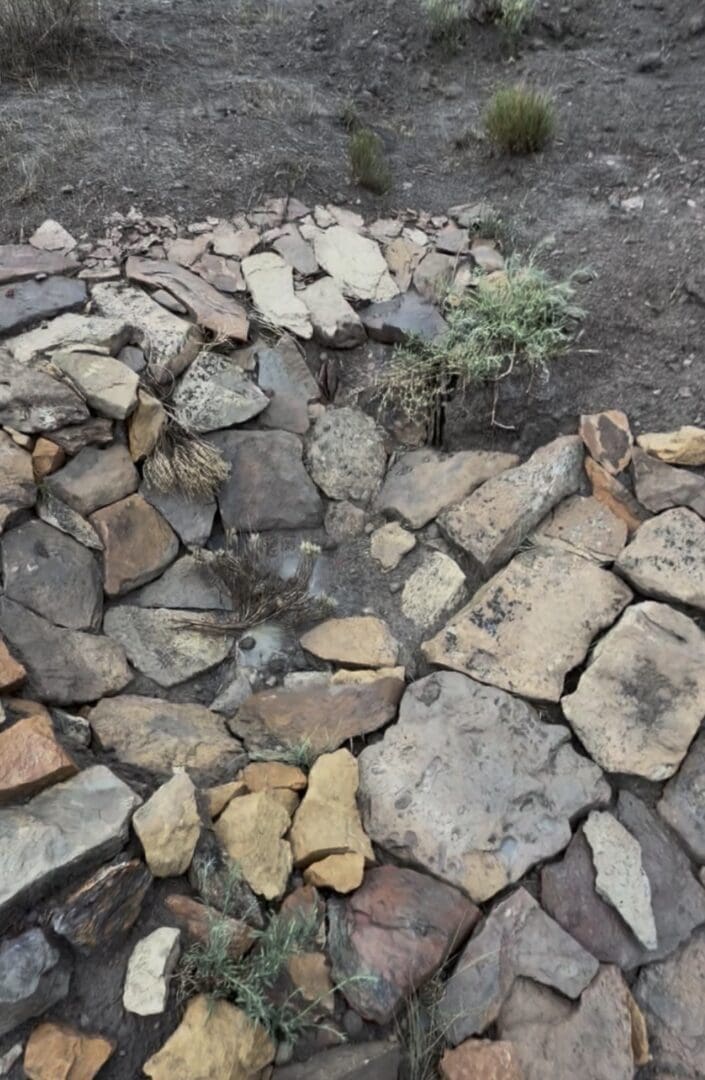
The morning after the storm hit, the crew walked the watershed together to survey the aftermath. New grasses had sprouted between rocks placed months earlier. It didn’t take long for someone to point them out. Those sprouts offered real proof that the rock placement was doing what it was designed to do: hold moisture in areas that had been dry all season. Earlier in the session, the team had made native seed pellets and scattered them across the structures. The holding of moisture was a great sign for the vegetation that will be taking root.
This storm wasn’t heavy enough to send water flowing through the washes, but there was still plenty of pooling in and around the structures. Navajo Bowls and roadside Rock Rundowns held the most water. The wool-incorporated structures also seemed to be hanging onto moisture effectively.
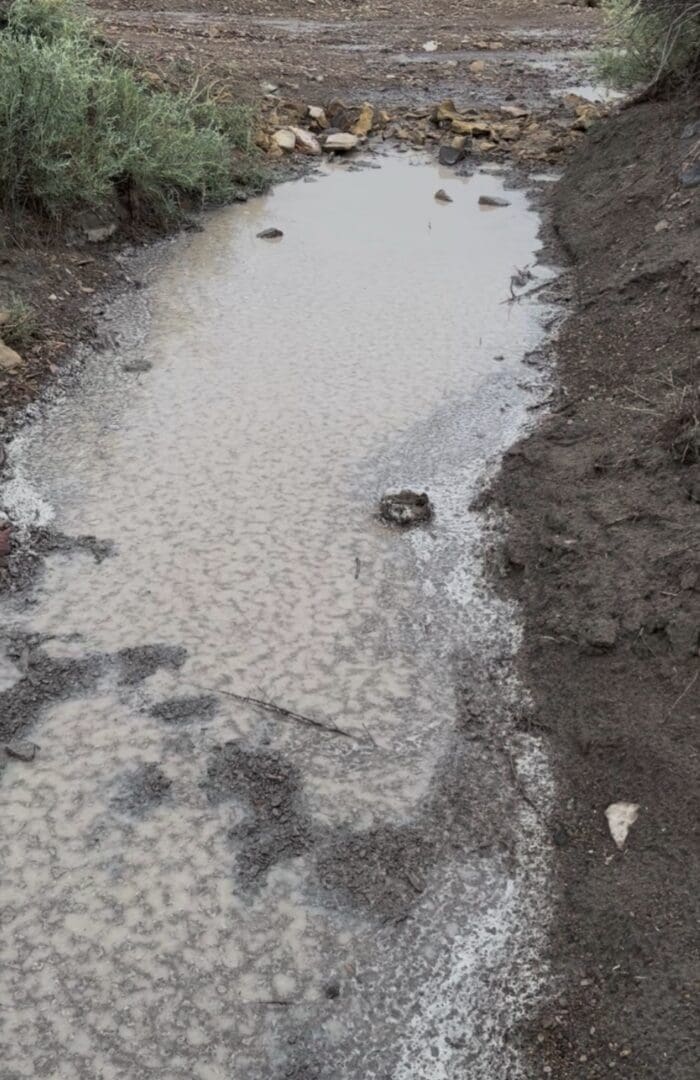
A large puddle near a road crossing caught the crew’s attention as well. That crossing was built just a month before this session. Finding water pooled beside the structure confirmed that it was holding solid.
Outside of the regular watershed work, much of this session went towards getting ready for TNA’s volunteer day on July 15th. The team utilized a tractor to haul big loads of building material out and staged areas where volunteers will be able try their hand at building. Wool Dams, Media Luna Spreaders, and One-Rock Dams will make up most of the volunteer building projects. A very approachable way for newcomers to learn the basics.
The rain was a good break in routine and added some extra motivation at camp. Days are usually sunny and hot, so the cloud cover and cooler weather were a welcome change on their own.
Every structure is built with rain and eventual flooding in mind, so seeing the water pool was satisfying. Everyone at TNA is hoping for more storms just like this to hit the valley this season. The combination of summer monsoonal events like these, and region wide winter events later in the year will, with sustained effort, bring health and long-term equilibrium to this watershed.
